
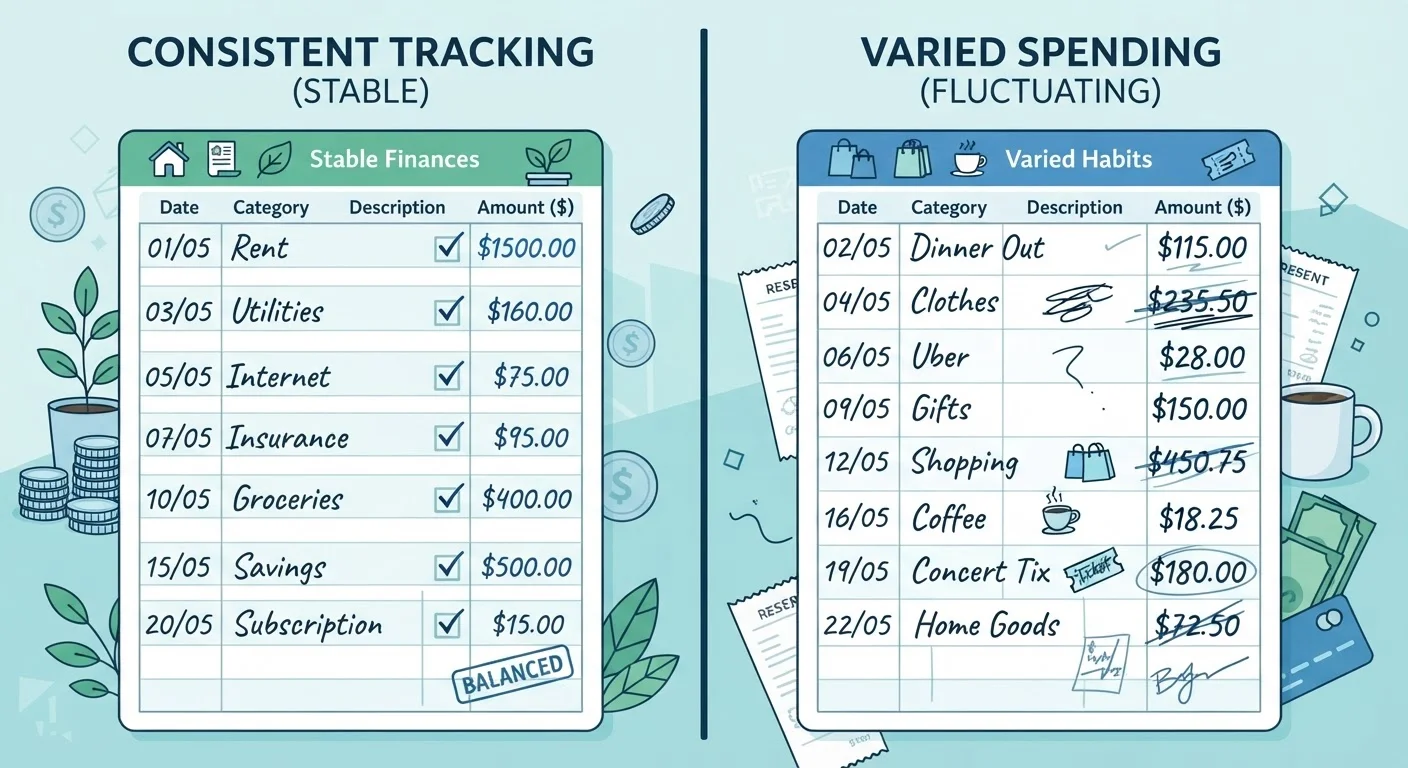
What Makes an Expense Fixed or Variable?
A fixed expense is a cost that stays the same amount every billing cycle. Rent, mortgage payments, car loans, and most insurance premiums are classic examples. You agreed to these amounts - often through a lease or loan contract - and they don't change based on how much you use them or how careful you are with money in a given month.
A variable expense is one that fluctuates. Groceries, gas, utilities, dining out, clothing, and entertainment all fall here. The amount you spend depends on your behavior - how often you cook at home, how far you drive, how many streaming services you keep active.
For a full plain-English breakdown of these and related terms, see our budgeting glossary. Understanding the labels is the foundation - but the real payoff comes from knowing what each category means for your ability to cut costs.
| Criterion | Fixed Expenses | Variable Expenses |
|---|---|---|
| Amount each month | Stays the same | Changes based on behavior |
| Examples | Rent, car loan, insurance | Groceries, gas, dining out |
| How to reduce | Renegotiate, refinance, or move | Spend less, track habits |
| Speed of impact | Slow - requires bigger action | Fast - adjust immediately |
| Ongoing effort required | Low once changed | High - requires daily decisions |
| Potential savings size | Often larger per item | Smaller per item, but many targets |
| Predictability | High - easy to plan around | Low - varies month to month |
Why the Distinction Matters for Cutting Costs
When most people decide to spend less, they start making small daily sacrifices - skipping a coffee, eating out less. That works, but it's slow and requires constant decisions. The reason is that these are variable expenses: they respond quickly to behavior but require ongoing effort to maintain.
Fixed expenses work the opposite way. You can't trim your rent by deciding to sleep less. Reducing a fixed cost usually requires a bigger action - moving, refinancing, canceling a contract, or renegotiating terms. That's harder to do, but the payoff is automatic. Cut $150 off a monthly bill once, and that savings appears every single month without further effort.
This asymmetry matters. Variable expenses give you immediate flexibility. Fixed expenses offer structural, lasting change. A sound cost-cutting approach uses both - and it helps to know which lever you're pulling at any given time.
It's also worth noting that not every expense fits neatly into one box. Utilities like electricity are technically variable, but many households treat them as near-fixed because they don't fluctuate much. Gym memberships are contractually fixed but may be negotiable. When in doubt, ask: Does this amount change based on my choices this month?
Practical Strategies for Each Type
For variable expenses, start by tracking. Most people underestimate how much they spend on categories like takeout or impulse purchases because these costs are scattered and small individually. A week of honest tracking - even just using a notes app - usually reveals a few clear targets. Common approaches include setting a weekly cash envelope for discretionary spending, meal planning to reduce grocery and restaurant costs, and auditing subscriptions monthly.
For fixed expenses, the strategy is less frequent but more impactful. Review your fixed costs once or twice a year. Ask whether you can:
- Refinance a loan at a lower rate (keeping in mind that refinancing has costs and isn't always worthwhile - consult a financial professional for your situation)
- Shop your insurance policies at renewal time for comparable coverage
- Downsize a service tier you're not fully using
- Negotiate your internet or phone plan - providers sometimes offer retention discounts
Once you've freed up money from either category, having a plan for those savings is essential. Cutting expenses alone won't fix your finances without a strategy for what the savings do next.
You might also consider pairing your cost-cutting work with a clear savings target. Our articles on fixed vs. percentage-based saving targets and saving a fixed amount vs. a percentage of income can help you decide what to do with the room you create.
This article is for general informational and educational purposes only. It is not personalized financial advice. For guidance specific to your financial situation, consider speaking with a qualified financial professional.