
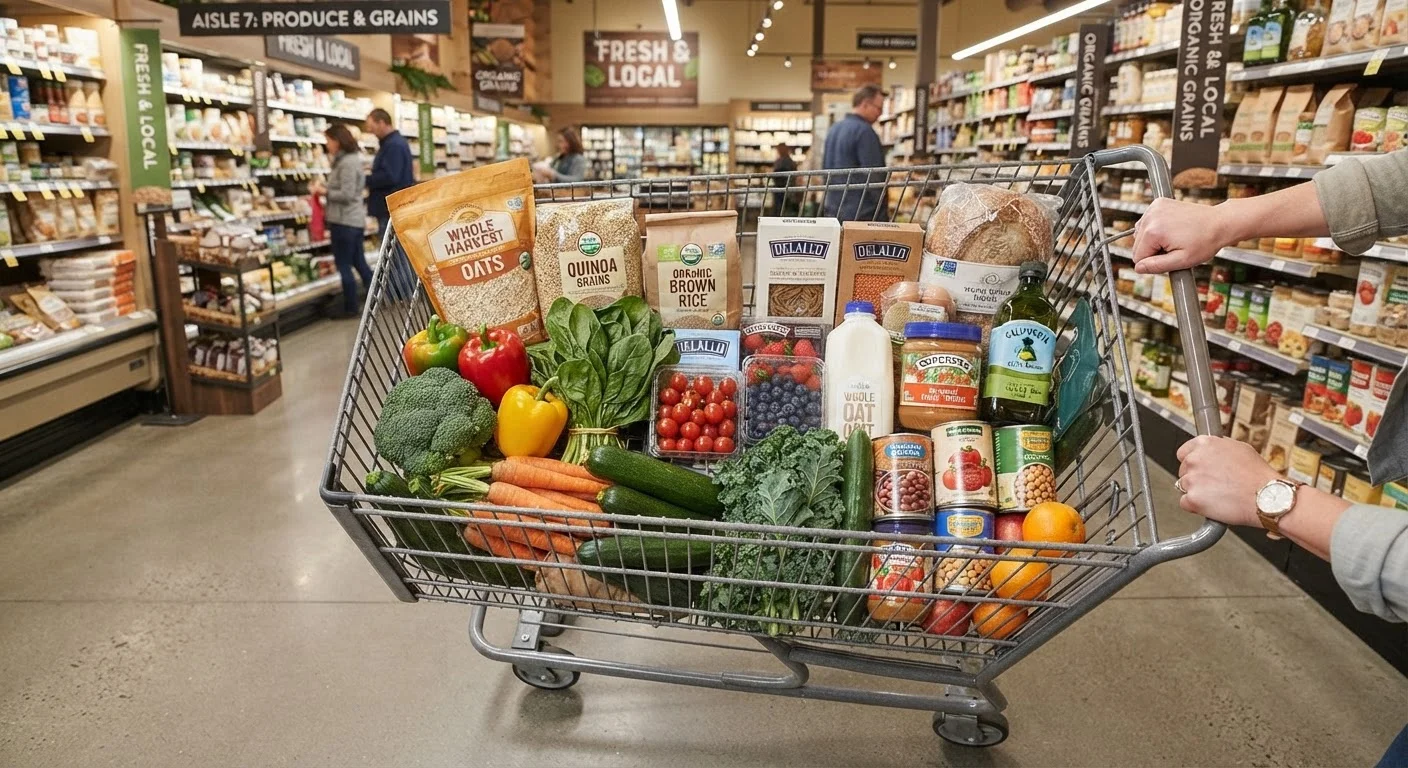
Why grocery spending is one of the best places to start cutting costs
Housing and transportation are typically your two biggest monthly expenses - but they're also the hardest to change quickly. Groceries are different. Your food budget is flexible, adjustable week to week, and entirely within your control without requiring long-term commitments or major life changes.
That makes it one of the first areas worth examining when you're trying to free up savings. If you're new to actively managing your spending, our guide to cutting expenses for the first time offers useful context on where grocery savings fit into a broader plan.
Importantly, reducing your grocery bill doesn't require extreme couponing - a time-intensive approach that many people simply can't sustain. The strategies below focus on habits and decisions that are straightforward to maintain long term.
What you will need
Step-by-step: building a grocery approach that costs less
Track what you're actually spending on food right now
Before you can cut your grocery bill, you need to know what you're actually spending. Pull up your bank or credit card statements and total every grocery and food-related purchase from the past two to four weeks. Include restaurant takeout only if it substitutes for groceries in your budget.
Write that number down. Many people are surprised to find their real spending is noticeably higher than what they guessed. This baseline is your starting point - not a judgment, just information.
Build a simple weekly meal plan before you shop
A meal plan doesn't have to be elaborate. Write down what you'll eat for dinners across the week, then work backward to figure out lunches (often last night's leftovers) and breakfasts. Once you know your meals, you know exactly what to buy - and nothing more.
Planned shopping removes the guesswork that leads to buying items you already have or forgetting something essential and making a second trip, which almost always results in extra purchases.
Write a detailed list and set a spending target before you leave home
From your meal plan, write a specific shopping list - not just "chicken" but the quantity you need. Then set a rough target number before you walk into the store. Even a loose target like "I want to stay under $80 this week" creates a mental boundary that changes how you shop.
Studies on consumer behavior consistently find that shoppers who enter a store without a list spend considerably more than those who do. A list keeps you anchored to what you planned.
Shift toward store-brand and generic products
Store-brand or generic products are typically manufactured to similar standards as name-brand equivalents and cost meaningfully less - sometimes 20-30% less per unit. Start by swapping generics into low-stakes categories: canned goods, dried pasta, rice, frozen vegetables, oats, and cooking oils.
If a particular generic disappoints you, switch back for just that item. Over time you'll find a handful of staples where the store brand works just as well, and those consistent swaps add up across a year.
Anchor your meals to low-cost, high-nutrition staples
Certain foods offer excellent nutrition at low cost: dried beans and lentils, eggs, canned fish, oats, brown rice, frozen vegetables, and seasonal fresh produce. Making these items the foundation of your meals - rather than an afterthought - structurally lowers your weekly bill without requiring sacrifice at every meal.
This doesn't mean eating the same thing every day. A bag of dried lentils, for instance, can become soup, tacos, or a rice bowl depending on what else you have on hand.
Actively reduce food waste
The USDA estimates that American households waste a significant portion of the food they purchase. Every item that spoils before you eat it is money lost. Treat reducing waste as a direct savings strategy.
Practical habits include: storing produce correctly so it lasts longer, moving items close to expiry to the front of the fridge, freezing bread and meat before they go bad, and scheduling at least one "use it up" meal per week built around whatever is left over. Small shifts here can save $20-$40 or more per month without changing what you buy at all.
These steps work best applied together, but even adopting two or three of them consistently can produce a noticeable difference. If you want to see how grocery savings connect to your overall picture, the guide to budgeting on a tight income addresses how food costs fit when every dollar is already accounted for.
Turning grocery savings into lasting financial progress
Cutting $30, $50, or $80 from your monthly grocery bill only matters if that money goes somewhere deliberate. The moment you identify savings, redirect them - even if it's a modest amount - toward a savings goal or paying down a debt balance. Money that stays in a checking account without a destination tends to get absorbed into other spending.
For a broader look at how small expense reductions compound into real financial progress, see reducing everyday expenses without feeling deprived. And if you're thinking about how food savings connect to longer-term goals, saving more without earning more explains how everyday adjustments can widen your savings gap over time.
Small Habits Beat Big One-Time Changes
A single dramatic grocery overhaul is hard to maintain. Instead, pick one or two changes from this guide and practice them for a full month before adding more. Consistency with a few habits reliably outperforms occasional extreme efforts. Over several months, the cumulative savings can be substantial.
This article is for general informational and educational purposes only. It does not constitute personalized financial advice. For guidance specific to your situation, consider speaking with a qualified financial professional.