
How Each Method Works
Before choosing a budgeting approach, it helps to understand the core logic behind each one. Both frameworks aim to help you spend intentionally and make progress toward financial goals - they just get there differently.
Zero-Based Budgeting
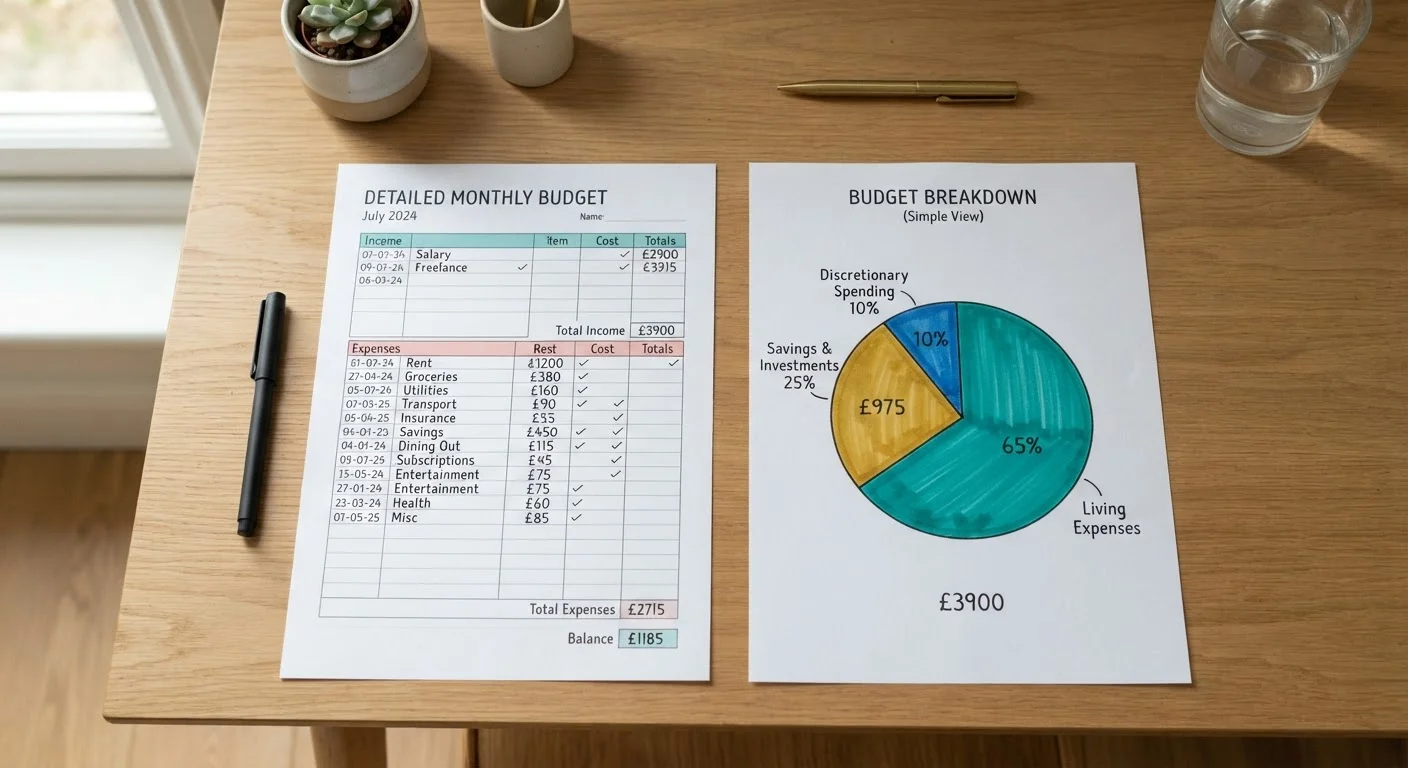
With a zero-based budget, you start each month by listing your total expected income, then assign every dollar to a specific category - rent, groceries, utilities, savings, debt payments, entertainment - until you reach zero. That doesn't mean spending everything; it means every dollar has a job, including dollars earmarked for savings or emergencies. You rebuild the plan from scratch each month rather than rolling the same numbers forward.
The 50/30/20 Rule
The 50/30/20 rule, popularised in part through personal finance literature, divides your after-tax income into three broad categories: 50% toward needs (housing, utilities, groceries, transportation), 30% toward wants (dining out, subscriptions, hobbies), and 20% toward savings and debt repayment. You don't track individual line items - you just monitor whether your spending stays within those three bands. For a deeper look at how the percentages work in practice, see The 50/30/20 Rule Explained.
| Criterion | Zero-Based Budget | 50/30/20 Rule |
|---|---|---|
| Core principle | Every dollar assigned a specific job | Income split into three percentage bands |
| Monthly setup time | 30-60 minutes or more | Minutes once percentages are set |
| Level of spending detail | Granular - individual categories | Broad - three buckets only |
| Best income type | Variable or irregular income | Stable, predictable income |
| Beginner-friendliness | Steeper learning curve | Easy to understand and start |
| Savings visibility | Savings is an explicit named line item | Savings grouped with debt repayment at 20% |
| Flexibility month to month | Rebuilt each month - highly adaptable | Fixed percentages - less adaptable |
Key Differences: Control, Effort, and Flexibility
The most meaningful distinction between these two methods is the trade-off between control and convenience.
Level of detail: Zero-based budgeting gives you granular visibility into your spending. If you're overspending on takeout, you'll see it immediately because it has its own line. The 50/30/20 rule lumps many decisions into broad buckets, which is easier to manage but masks the detail.
Time commitment: Setting up and maintaining a zero-based budget typically requires 30-60 minutes at the start of each month, plus periodic check-ins. The 50/30/20 rule can be reviewed in minutes once your baseline percentages are set.
Adaptability: Zero-based budgeting naturally accommodates variable income - you build a new plan each month based on actual earnings. The 50/30/20 rule assumes a relatively stable income; if your paycheck fluctuates significantly, calculating consistent percentages becomes trickier.
Savings intentionality: Both approaches can support saving, but zero-based budgeting makes savings an explicit, named line item from the start. The 20% savings category in the 50/30/20 rule serves a similar purpose, though it also folds in debt repayment, which can dilute how much actually goes toward building wealth. To explore how the 20% slice connects to longer-term goals, see how the 50/30/20 budget relates to retirement saving.
For a broader comparison of budgeting frameworks beyond just these two, Budgeting Frameworks Compared covers additional approaches worth considering.
Which Approach Is Right for You?
There's no universally superior method. The right choice depends on your habits, goals, and how much complexity you're willing to manage.
Consider starting with a zero-based budget if you feel like money disappears without explanation each month, you're carrying debt you want to reduce faster, or your income varies from month to month. The discipline of assigning every dollar can surface spending leaks that feel invisible under a broader system.
Consider starting with the 50/30/20 rule if you've never budgeted before and need something approachable, your income is consistent, and you're comfortable with less granularity. Getting into the habit of budgeting at all is more valuable than using the theoretically perfect method.
Some people also combine elements: using the 50/30/20 rule's categories as a high-level framework while tracking a few priority line items - like savings contributions or debt payments - with zero-based precision. The Budgeting 101 hub offers practical guidance on building and sticking to whichever structure you choose.
This article is for general informational and educational purposes only. It is not personalised financial advice. Consider speaking with a qualified financial adviser to determine which approach best fits your individual circumstances.