
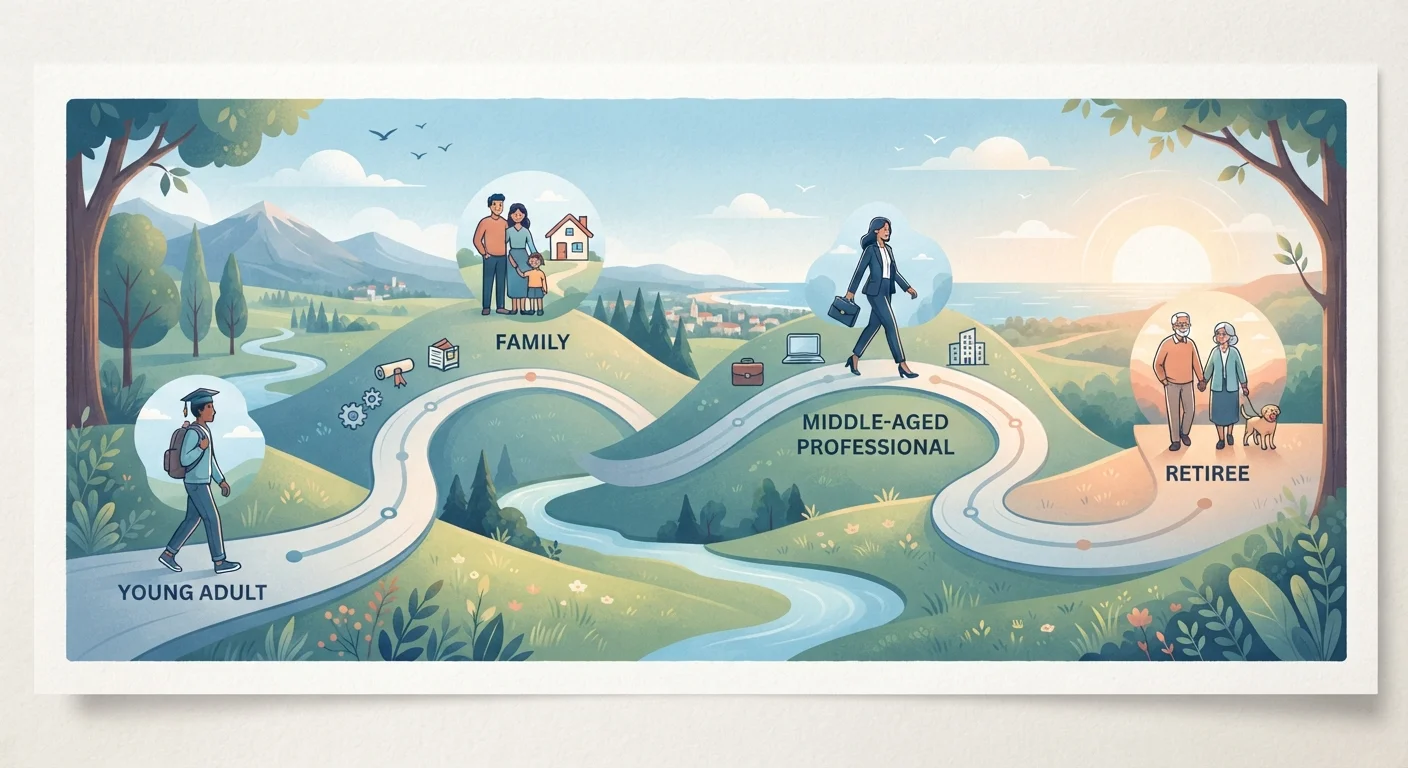
Why Life Stage Matters for Financial Goals
Financial goals aren't one-size-fits-all. A 24-year-old managing student debt and a 55-year-old accelerating retirement contributions are both doing the right thing - for their stage. Understanding how priorities naturally shift helps you focus your limited dollars instead of spreading them too thin.
This reference guide maps common financial priorities by decade. It's a starting point, not a prescription - your circumstances, income, and obligations will shape what fits. For a fuller look at building a plan around your goals, see our complete financial planning guide.
| 20s Priority | Emergency fund + high-interest debt payoff + early retirement contributions |
| 30s Priority | Balancing debt, saving, and income protection |
| 40s-50s Priority | Maximising retirement contributions and reducing investment risk gradually |
| Catch-Up Contribution Age | 50+ (allows higher annual limits for 401(k)s and IRAs) (IRS rules; verify current limits at IRS.gov) |
| 60s Priority | Retirement income planning, RMDs, and estate basics |
| Emergency Fund Target | 3-6 months of essential expenses (Common guidance from financial planning professionals) |
Your 20s: Build the Foundation
Early adulthood is the best time to form habits that compound - financially and behaviorally. The dollar amounts may be small, but the structure you build now matters.
- Emergency fund first. Aim for three to six months of essential expenses in a dedicated savings account. This buffer keeps a car repair or job loss from derailing everything else.
- Eliminate high-interest debt. Credit card balances charging 20%+ interest are a guaranteed negative return. Paying them off is one of the most impactful moves available.
- Start retirement contributions early. Even small amounts invested in a workplace retirement account take advantage of decades of potential growth. If your employer offers a match, contributing enough to capture it is generally worth prioritising.
- Learn the basics. Understanding budgeting, compound growth, and how tax-advantaged accounts work pays off for life. Check out ten common financial goals explained to orient yourself.
Past investment performance does not guarantee future results. All investing involves risk, including potential loss of principal.
Your 30s: Manage Competing Priorities
The 30s often bring higher income alongside bigger obligations - a mortgage, children, or career transitions. The challenge isn't knowing what to do; it's deciding what to do first.
- Build on your emergency fund. Life gets more expensive. Reassess whether three months of coverage still reflects your actual fixed costs.
- Balance debt payoff and saving. Moderate-interest debt (like some student loans) doesn't always need to be eliminated before you save. Weigh the interest rate against potential investment growth, and consider splitting contributions.
- Increase retirement contributions. As income rises, resist lifestyle inflation and redirect raises toward long-term saving goals.
- Protect what you've built. Term life insurance and disability coverage become relevant if others depend on your income.
Juggling multiple goals at once is genuinely hard. Our article on ranking competing financial priorities offers a structured approach to sequencing.
Your 40s and 50s: Accelerate and Protect
These decades are typically peak earning years - and peak opportunity to close any savings gaps before retirement comes into focus.
- Maximise retirement contributions. From age 50, the IRS allows "catch-up contributions" to accounts like 401(k)s and IRAs, letting you contribute above the standard annual limit.
- Review your investment mix. As retirement approaches, many financial planners suggest gradually reducing exposure to high-volatility assets - though the right balance depends on your timeline and risk tolerance. Consult a licensed financial adviser for guidance specific to your situation.
- Pay down the mortgage strategically. Whether to prioritise mortgage payoff over retirement saving depends on your interest rate, tax situation, and timeline. There's no universal answer.
- Plan for care costs. Long-term care is expensive and often underestimated. Starting to think about it in your 50s gives you more options than waiting until your 60s.
For decade-by-decade retirement benchmarks, see Mapping Your Retirement Journey.
Your 60s and Beyond: Transition and Sustain
The focus shifts from accumulation to distribution - making sure what you've saved lasts and works for you in retirement.
- Clarify your retirement income picture. Understand how Social Security, any pensions, and your savings accounts will work together. Timing Social Security can significantly affect your total benefits - a qualified financial adviser can model your options.
- Understand required minimum distributions (RMDs). The IRS requires withdrawals from most tax-deferred retirement accounts once you reach a certain age. Failing to take them triggers penalties.
- Revisit your budget. Retirement spending often follows a "smile" pattern - higher early on, lower in the middle years, then rising again with healthcare costs. Build a plan that accounts for that shape.
- Estate planning basics. A will, beneficiary designations, and a durable power of attorney are foundational documents. An estate attorney can help you get these right.
For more on age-specific savings checkpoints, see Retirement Milestones Explained. And because life rarely follows a clean decade-by-decade script, adapting your plan when life changes is worth reading at any stage.
This article is for general informational and educational purposes only and does not constitute personalised financial, tax, legal, or investment advice. Speak with a qualified, licensed financial adviser, tax professional, or attorney before making decisions specific to your situation.