
Why One Review a Year Is Worth More Than You Think
Monthly check-ins keep your day-to-day finances tidy, but they rarely give you the altitude to see the bigger picture. An annual review is different - it's the one moment each year where you step back and ask whether the overall direction of your financial life still makes sense. Think of it less like balancing a checkbook and more like reading a map.
For beginners especially, the annual review builds a habit of intentional reflection. It transforms personal finance from something that happens to you into something you actively steer. If you already run a monthly self-audit, your annual review should build on that foundation - not repeat it.
The goal isn't perfection. It's clarity: knowing where you stand, what's working, and what genuinely needs to change.
What to Assess: The Core Categories
Start by gathering your numbers before drawing any conclusions. You'll want recent bank and investment statements, a record of your income, and a rough sense of your debts. Then work through each of these areas systematically.
For a deeper look at your retirement-specific numbers, the annual retirement saving health check is a strong companion resource.
What to Adjust - and When to Hold Steady
Once you've assessed, the temptation is to fix everything at once. Resist that urge. Not every gap you find requires immediate action, and not every area that feels uncomfortable is actually broken.
One of the most common mistakes beginners make is adjusting their investment portfolio in response to short-term market movements. If your original allocation - the mix of stocks, bonds, or other assets - still fits your timeline and risk tolerance, leaving it alone is often the right call. Frequent trading based on recent performance tends to hurt long-term returns, not help them. Past performance does not guarantee future results, and markets move in ways no one can reliably predict.
What does warrant adjustment: your savings rate if your income has risen, your emergency fund target if your expenses have grown, and your insurance coverage if your life situation has changed. These are concrete, controllable levers - and they're where your annual review energy is best spent.
For a structured look at what your annual money plan review should cover, that resource walks through the goal-setting side in detail.
Building a Repeatable Review Routine
Consistency matters more than thoroughness in any single year. A review you actually complete annually is more valuable than an exhaustive one you abandon after year one. Consider scheduling it around the same recurring event - tax season, your birthday, or the start of a new calendar year all work well as anchors.
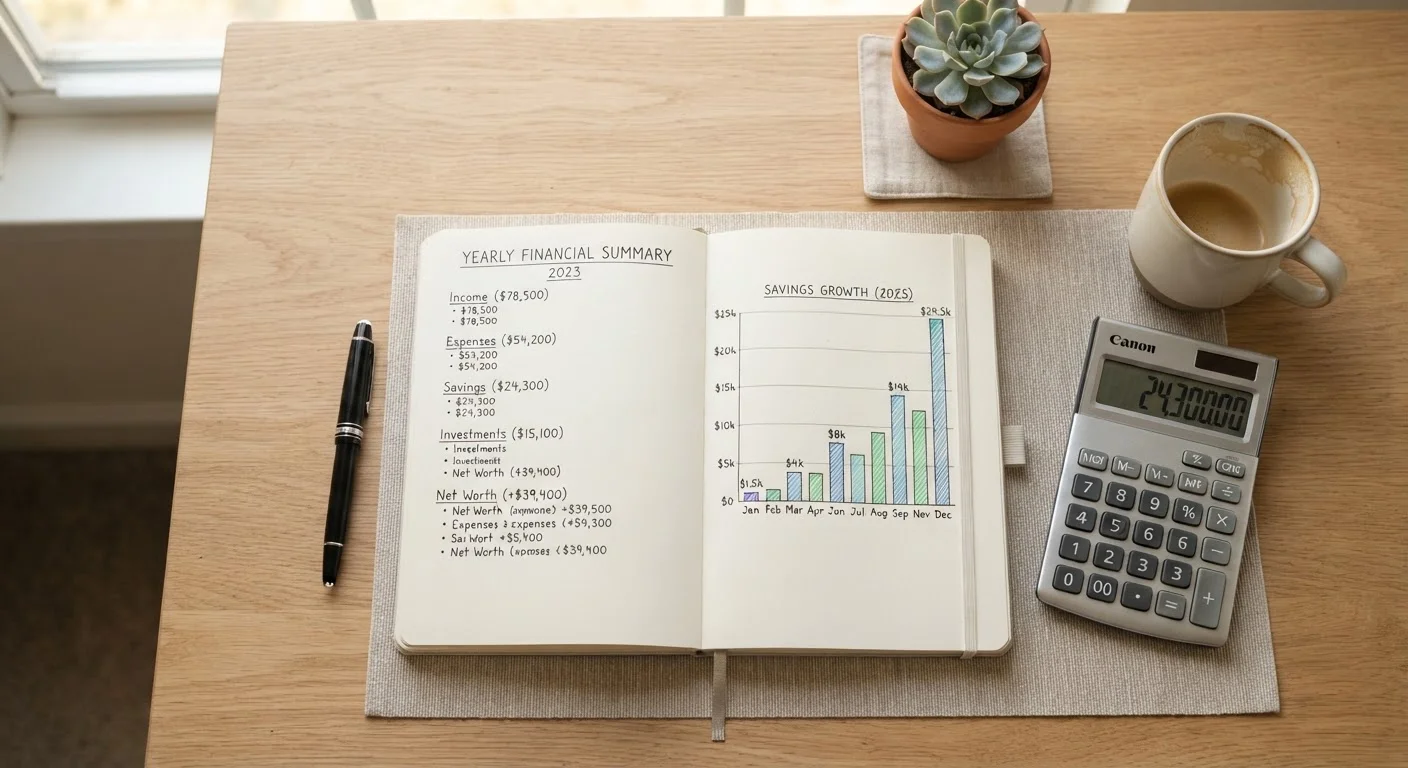
Keep a simple document - even a notes file on your phone - where you record your key numbers each year: total savings, total debt, net worth, and your top three financial goals. Reviewing that same document twelve months later makes progress (and drift) immediately visible.
If you want a structured monthly companion to keep you on track between annual reviews, the monthly financial review checklist for beginners offers a simple, repeatable format. And for broader saving habits that support your annual goals, smart saving habits is a useful reference throughout the year.
This article is for general informational and educational purposes only. It does not constitute personalised financial, investment, tax, or legal advice. For guidance tailored to your individual circumstances, consult a qualified financial adviser or other licensed professional.