
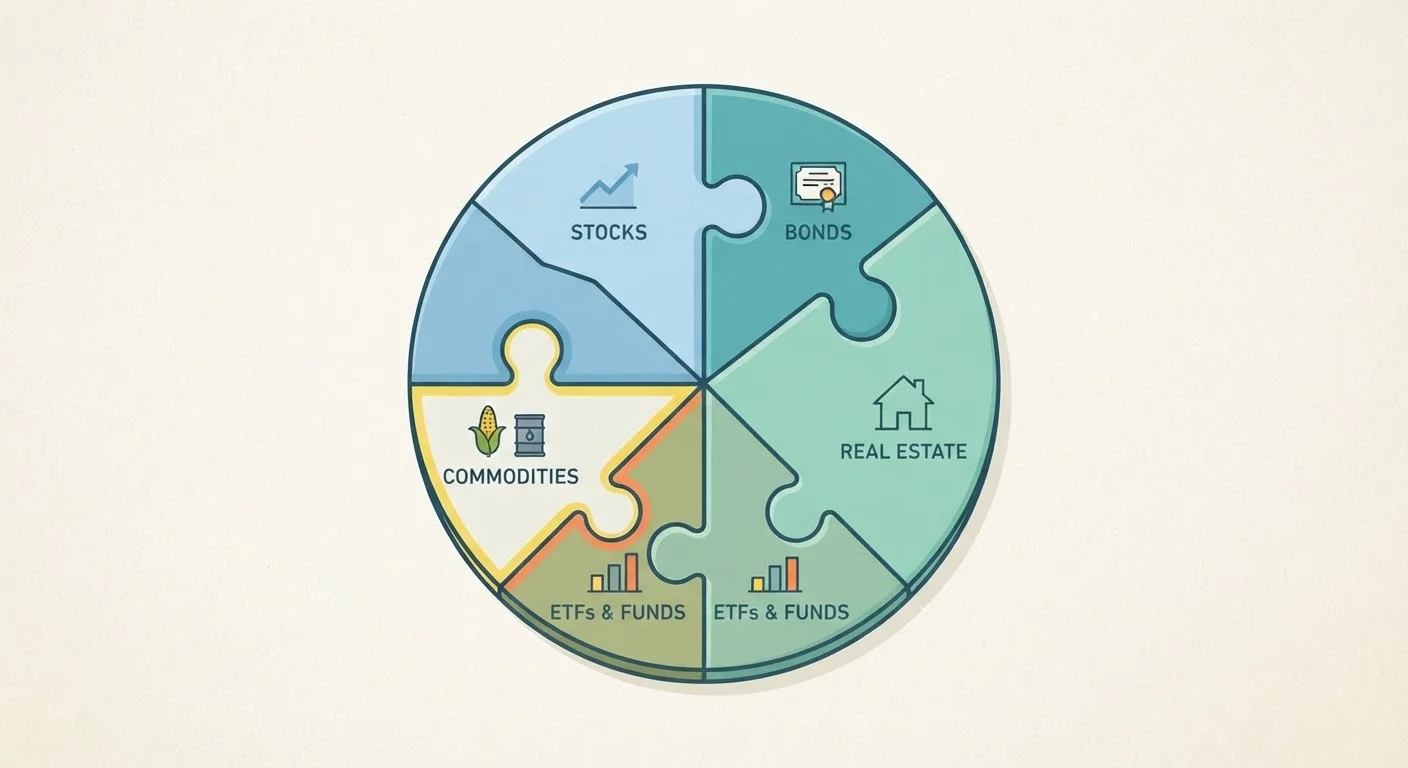
Why No Single Investment Does Everything Well
Every investment involves a trade-off between potential return and the risk of loss. Stocks can grow significantly over time, but they can also fall sharply. Bonds tend to be more stable, but they offer lower long-term growth. Cash preserves your principal but loses purchasing power to inflation over time.
The key insight for new investors is this: these asset types often don't move in the same direction at the same time. When stock markets fall sharply, bonds frequently hold their value or even rise. When inflation picks up, certain assets are hit harder than others. This is why combining different investment types isn't just sensible - it's foundational.
Learn how each asset class behaves on its own first. Stocks, bonds, and cash each play a distinct role in a portfolio, and understanding those roles is the starting point for mixing them intelligently.
Best Practices for Combining Investment Types
The following practices reflect widely accepted principles in portfolio construction. They are general guidelines, not personalized advice - your own situation, goals, and risk tolerance matter. Consider speaking with a licensed financial adviser before making decisions about your own money.
Choose assets with different return drivers, not just different names.
Two investments can look different on the surface but respond identically to the same economic event - which means holding both offers little real protection. True diversification means owning assets whose values are influenced by different forces, so that a shock to one doesn't automatically damage the others.
Set a target allocation before you invest, not after.
Deciding what percentage of your money goes into each asset type in advance removes emotion from the process. Without a plan, it's easy to chase recent winners or panic out of assets that have temporarily fallen - both of which tend to hurt long-term results.
Spread exposure within each asset type, not just across types.
Even within stocks, concentrating in one industry or country adds unnecessary risk. A single sector can collapse while the broader market remains stable. Diversifying within each category compounds the protective effect of diversifying between categories.
Resist the urge to move everything into whatever performed best recently.
Asset classes cycle in and out of favor. Last year's top performer frequently underperforms the following year, a pattern documented repeatedly across markets. Chasing performance often means buying high and selling low - the opposite of sound investing.
Match the level of risk in your mix to the time you have before you need the money.
A portfolio meant to fund a goal 30 years away can absorb more short-term volatility than one you'll need in three years. Time is a critical variable: it allows you to ride out downturns that would be devastating if they occurred right before you needed to withdraw funds.
Quick Actions to Get Started
If you're early in your investing journey, these steps can help you begin thinking in terms of a portfolio rather than individual picks.
For a deeper look at how diversification works as a deliberate strategy, see why spreading your money around is a strategy, not indecision. And once you have a portfolio in place, rebalancing helps keep your mix on track as markets shift over time.
This article is for informational and educational purposes only. It does not constitute personalized financial, investment, tax, or legal advice. All investing involves risk, including the possible loss of principal. Past performance does not guarantee future results. Consult a qualified financial adviser before making decisions about your own investments.