
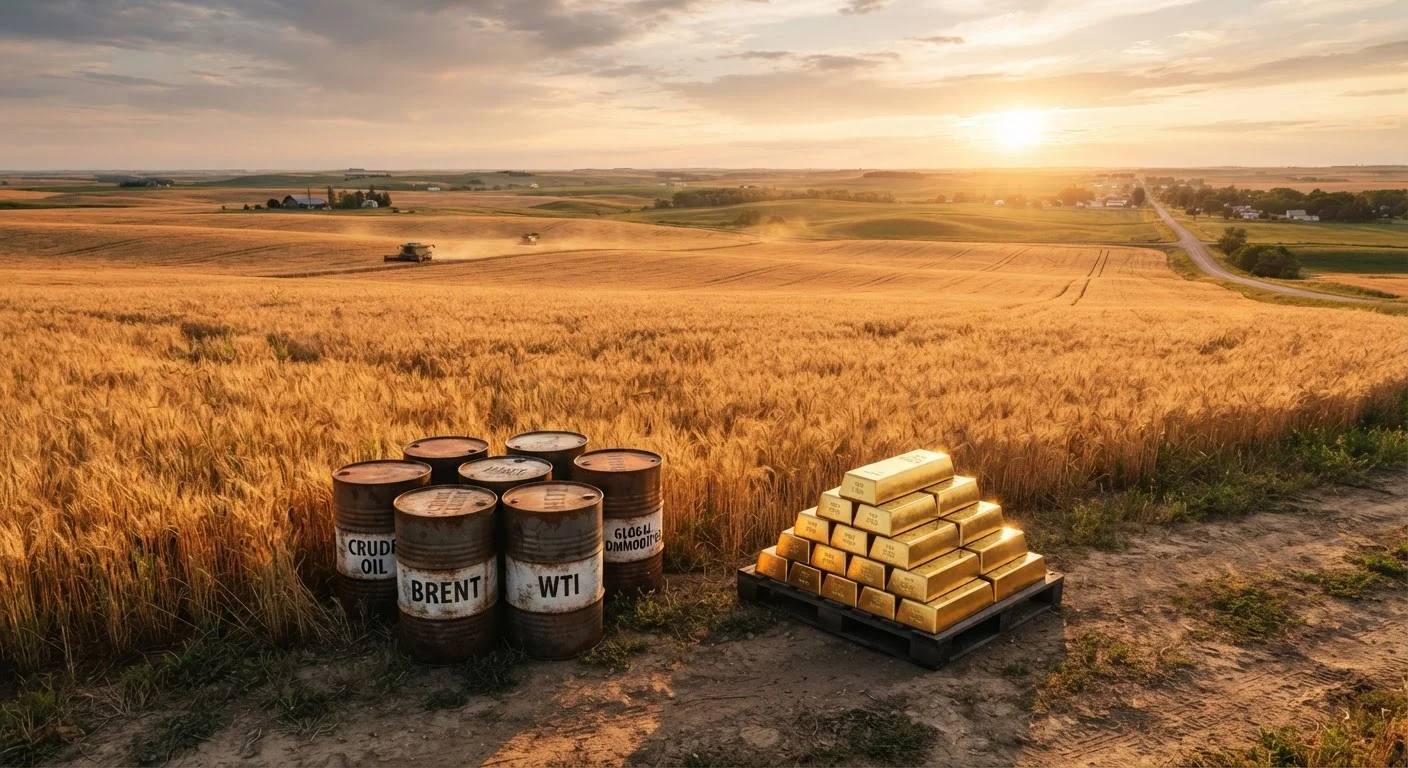
The Four Major Commodity Categories
Commodities are typically grouped into four broad categories, each driven by distinct forces:
- Energy: Crude oil, natural gas, gasoline, and heating oil. Prices here are sensitive to OPEC production decisions, geopolitical tensions in oil-producing regions, and broader economic growth.
- Metals: Gold, silver, copper, and platinum. Gold is often treated as a safe-haven asset during uncertainty; copper, sometimes called "Dr. Copper," is watched as an indicator of industrial demand and economic health.
- Agriculture: Wheat, corn, soybeans, coffee, sugar, and cotton. Weather patterns, crop disease, and trade policy can all shift prices dramatically within a single growing season.
- Livestock: Live cattle, feeder cattle, and lean hogs. Feed costs, disease outbreaks, and consumer demand all influence this category.
Understanding these distinctions matters because a drought in the Midwest affects grain prices but has little direct impact on gold. Each category responds to its own set of real-world conditions.
Commodities vs. Commodity Company Stocks
Buying shares in a copper mining company is not the same as buying copper. The stock price is influenced by the company's management quality, debt levels, and operational efficiency - on top of copper's market price. Both can fall at the same time if the company has internal problems, even if copper prices are rising. Understanding this distinction helps set realistic expectations.
Why Commodity Prices Move Differently Than Stock Prices
Stock prices rise and fall largely based on corporate performance - revenue, profits, and expectations about future growth. Commodity prices, by contrast, are set by the physical realities of production and consumption worldwide.
Consider oil: if tensions in a major oil-producing region threaten supply, prices can spike within hours - regardless of how well any particular company is performing. Similarly, an unexpectedly large wheat harvest in North America can push grain prices lower across global markets, affecting farmers and food producers everywhere.
This independence from corporate earnings is part of what makes commodities interesting to investors. They can behave differently from stocks and bonds, especially during inflationary periods or geopolitical crises. That said, independence from stock market forces does not mean safety - commodities can be highly volatile and are not suitable for everyone. Anyone considering commodity exposure should understand the risks thoroughly before committing money.
Unlike tracking a broad index - as explained in our guide to market indexes - there is no single "commodity index" that captures the whole space in a standardized way.
How Investors Actually Access Commodity Markets
Most individual investors do not physically buy barrels of oil or store sacks of wheat. Instead, they gain exposure through several vehicles:
- Futures contracts: Agreements to buy or sell a commodity at a set price on a future date. Futures are the primary way professional traders operate in commodity markets, but they involve significant complexity and leverage - meaning losses can exceed the original amount invested. These are generally not appropriate for most beginners.
- Commodity ETFs: Exchange-traded funds that track commodity prices or invest in related companies. Some ETFs hold futures contracts; others invest in the stocks of miners, energy producers, or agricultural firms. This is a more accessible entry point for everyday investors.
- Stocks of commodity-related companies: Buying shares in a gold mining company or an oil producer gives indirect commodity exposure. The stock price is still influenced by corporate performance, however, not just raw commodity prices.
Start With Exposure, Not Direct Trading
If you are new to investing, commodity ETFs generally offer a more accessible introduction than futures contracts. Futures involve leverage - a mechanism that amplifies both gains and losses - and require a solid understanding of contract mechanics before use. Starting with an ETF allows you to observe how commodity prices behave relative to your other holdings before taking on more complexity.
Each method carries its own risk profile. Consulting a licensed financial adviser before making any investment decisions is strongly recommended, particularly given the volatility of commodity markets.
This article is for general informational purposes only and does not constitute personalized investment, tax, or legal advice. Commodity investing involves risk, including the possible loss of principal. Always consult a qualified financial professional before making investment decisions.