
What a Budget Actually Is (and Isn't)
A budget is simply a plan for how you'll spend and save your money each month. That's it. It's not a financial straitjacket, a sign that you're struggling, or something only accountants understand. Think of it as giving each dollar a job before the month begins rather than wondering where it all went afterward.
Many beginners assume budgeting means cutting out everything enjoyable. That's a myth. A good budget includes spending on things you enjoy - it just makes those choices intentional. The goal isn't to spend as little as possible; it's to spend in ways that match what actually matters to you.
If you want to dig into the vocabulary before going further, our budget terms glossary covers plain definitions for everything from net income to discretionary spending.
Net income
The money you actually take home after taxes and other deductions are removed from your paycheck. This is the number your budget should be based on.
Fixed expense
A cost that stays the same every month, such as rent or a car loan payment. These are the easiest to plan for because they don't change.
Variable expense
A cost that changes from month to month, like groceries, gas, or dining out. You'll estimate these based on past spending patterns.
Discretionary spending
Money spent on things you want but don't strictly need - entertainment, hobbies, restaurant meals. Budgeting doesn't eliminate this; it gives it a defined limit.
Zero-based budget
A budgeting method where you assign every dollar of income to a specific category - including savings - so that income minus all allocations equals zero.
Cash flow
The movement of money in and out of your accounts each month. Positive cash flow means more comes in than goes out; negative means the opposite.
Know Your Numbers: Income and Expenses
Before you can plan anything, you need two pieces of information: how much money comes in and how much goes out. Both matter, and neither is negotiable to skip.
Start with net income
Net income is your take-home pay - the amount deposited in your account after taxes and any deductions. This, not your gross salary, is the number your budget is built on. If your income varies month to month (freelance work, tips, hourly shifts), use a conservative average based on your last three to six months.
List every expense
Go through your last two or three bank and credit card statements and list every category you spent money on. Group them into two types:
- Fixed expenses: Same amount every month - rent, loan payments, insurance premiums.
- Variable expenses: Fluctuate month to month - groceries, gas, dining out, utilities.
Don't forget irregular expenses like annual subscriptions or car registration fees. These are easy to overlook but they're real costs. Divide annual amounts by 12 and include that monthly slice in your plan.
Once you have both sides laid out, subtract total expenses from net income. If the result is positive, you have room to save or pay down debt. If it's negative or zero, you'll need to look at where adjustments are possible - our introduction to cutting expenses is a good starting point for that conversation.
Choosing a Budgeting Framework
There's no single correct way to budget. Different systems suit different people. What matters is picking one simple enough to actually use.
The 50/30/20 rule
One of the most beginner-friendly frameworks divides your take-home pay into three buckets: 50% for needs (housing, food, utilities, transportation), 30% for wants (entertainment, dining out, hobbies), and 20% for savings and debt repayment. These percentages are guidelines, not laws - your rent might make 50% for needs unrealistic, and that's okay. Adjust proportionally and revisit as your income grows.
Zero-based budgeting
In a zero-based budget, you assign every dollar a category until nothing is unaccounted for - income minus all assigned spending and saving equals zero. This isn't about spending everything; savings and investments count as categories. It's a more detailed approach that works well for people who want precise control.
The envelope method
Originally done with physical cash envelopes, this approach allocates a set amount to each spending category. When an envelope is empty, spending in that category stops for the month. Many budgeting apps replicate this digitally for people who prefer not to carry cash.
Start with pen and paper if apps feel overwhelming
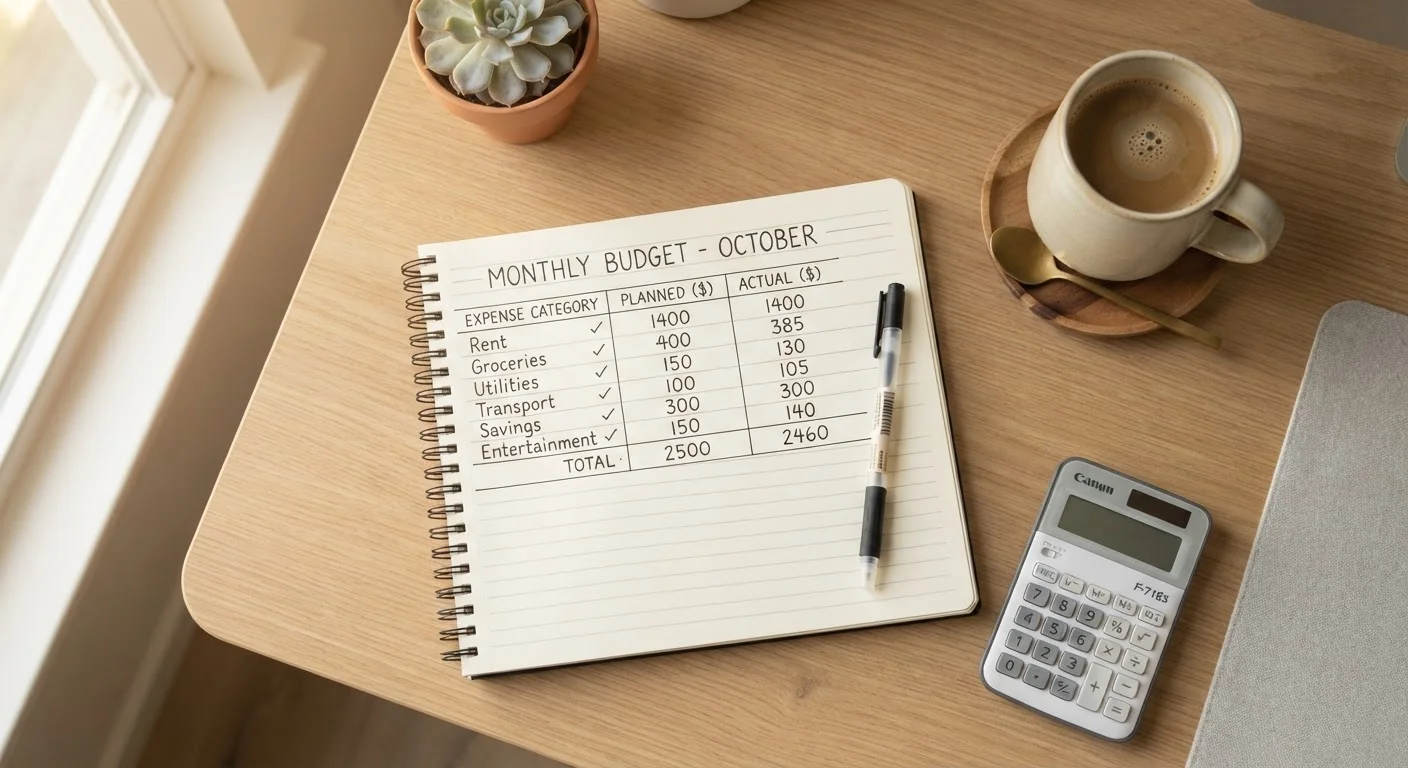
There's no requirement to use a budgeting app or spreadsheet when you're just beginning. A notebook and a pen work fine for your first month. Once you understand the basics, you can decide whether a digital tool would make things easier or just add complexity.
For a hands-on walkthrough of putting one of these frameworks into practice, see Your First Monthly Budget, Built from Scratch.
Building Habits That Make Budgets Stick
Creating a budget is step one. Sticking to it is an ongoing practice. The difference between people who succeed with budgeting and those who give up usually comes down to a few consistent habits, not willpower or financial genius.
Review spending weekly
Set aside 10 minutes each week to check what you've spent against your plan. Catching a problem mid-month leaves time to correct it. Waiting until month-end means you're just doing a post-mortem on decisions already made.
Automate what you can
If your savings or bill payments require manual action each month, they're likely to slip. Automating transfers to a savings account on payday removes the temptation to spend that money first. Automation isn't a substitute for attention, but it reduces friction significantly. Pair this with the guidance in our smart saving foundation for a complete picture.
Budget for something you enjoy
A budget with zero fun money is a budget you'll eventually abandon. Even a small amount set aside for discretionary spending each month makes the whole system feel sustainable rather than punishing.
Expect imperfection
Your first budget will almost certainly be wrong in some categories. That's not failure - it's data. Adjust the numbers, keep going, and recognize that a budget is a living document, not a fixed rule carved in stone.
Your Next Steps
You now have the foundation. The most important thing you can do next is take one concrete action today - not next week, not when things settle down.
Here's a simple starting sequence:
- Pull up last month's bank statement and write down your total take-home income.
- List your top five spending categories and estimate what you spent in each.
- Pick one budgeting framework from this guide and apply it to next month's income.
From there, build outward. Connect your budget to your broader financial goals using our financial goals starter map, and track your progress over time with help from Monitoring Your Financial Goals. When you're ready to think beyond budgeting, building a saving habit is the logical next step.
Budgeting is a skill. Like any skill, it improves with repetition. The version you build today doesn't need to be perfect - it just needs to exist.
This article is for general informational and educational purposes only. It does not constitute personalized financial, tax, or investment advice. Consider speaking with a qualified financial professional about decisions specific to your situation.