
Why This Distinction Matters More Than You Think
Every budgeting system - whether you use a spreadsheet, an app, or a notebook - eventually asks you to sort your expenses. And at the heart of almost every framework is one fundamental question: Is this a need or a want?
Get this right, and the rest of your budget becomes clearer. Get it fuzzy, and you'll find yourself wondering why the numbers never quite add up. But here's the honest part: this line is not as obvious as personal finance textbooks make it sound. The grey area most budgets ignore is real, and acknowledging it is the first step toward making smarter decisions without beating yourself up.
This article won't give you a rigid list of what's allowed. Instead, it gives you a thinking framework you can apply to your own situation - because your life is the context that matters.
The Classic Definitions - and Their Limits
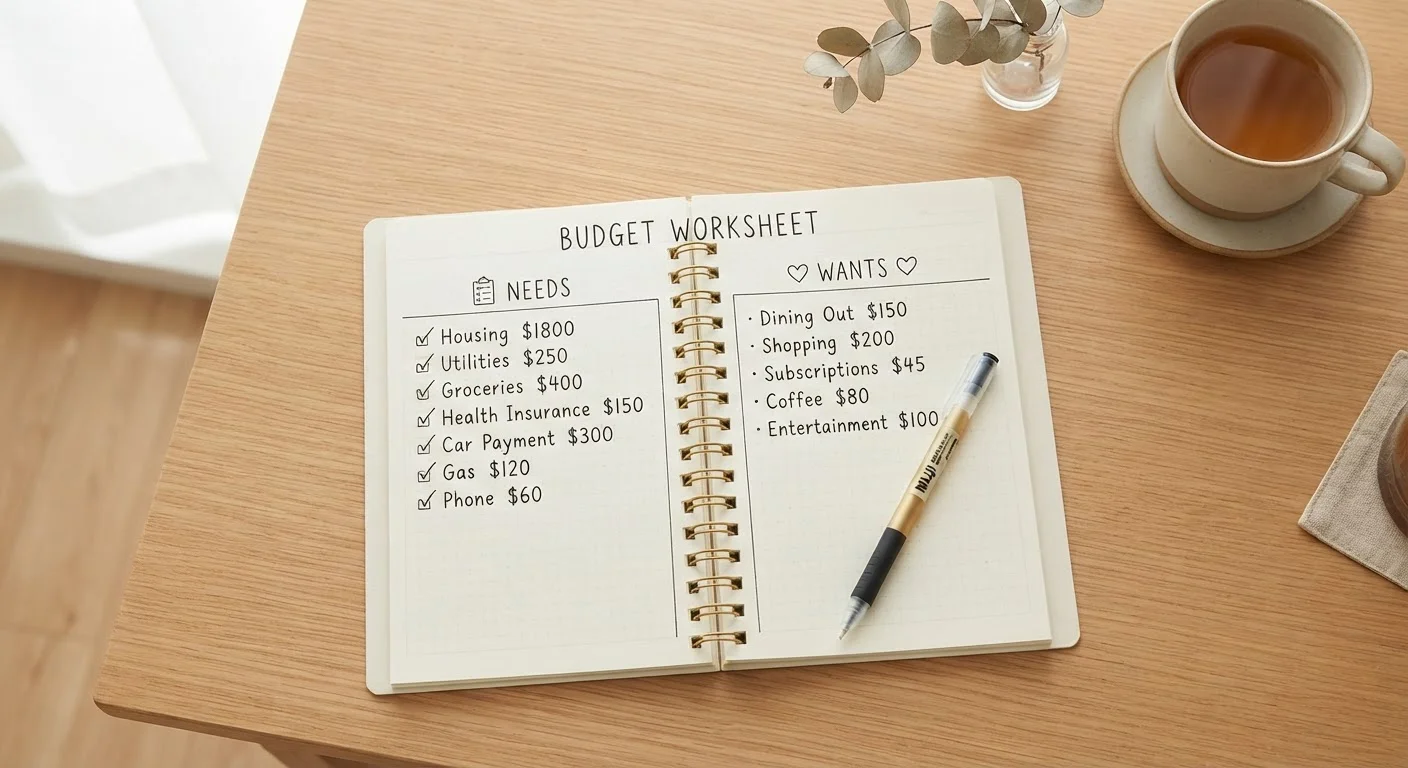
Needs are typically defined as expenses necessary to maintain basic health, safety, and the ability to earn income. This includes:
- Rent or mortgage payments
- Groceries (basic food, not restaurant meals)
- Utilities: electricity, heat, water
- Health insurance and essential medications
- Minimum debt payments
- Transportation required to get to work
Wants are expenses that improve your quality of life but aren't required for survival or employment:
- Dining out and takeaway coffee
- Streaming subscriptions
- Gym memberships
- Clothing beyond the basics
- Vacations and hobbies
This split works well as a starting point. But problems appear quickly. Is internet service a want? For someone who works remotely, it's clearly a need. Is a car a want if you live in a city with good transit? Maybe - but maybe not if you have a disability or work night shifts. Context shapes every answer.
Where Does Savings Fit In?
Savings aren't usually classified as either a need or a want in budgeting frameworks - they occupy a third category. Treating savings like a non-negotiable recurring expense (rather than whatever's left over) is one of the most consistent pieces of advice across personal finance educators. Even small, regular contributions build meaningful habits over time.
The 50/30/20 framework treats savings as a third, separate category rather than folding it into either needs or wants - which is a helpful distinction worth keeping in mind as you build your own system.
A Better Way to Classify: Ask Three Questions
Instead of forcing every expense into a binary box, try asking these three questions when you're unsure where something belongs:
- Would a significant consequence follow if I stopped paying this? Lost housing, inability to work, a health crisis - these point to a need.
- Is there a meaningfully cheaper alternative that covers the core function? If yes, the basic version is the need; the upgrade is the want. A functional used car meets a transportation need. A new luxury model satisfies a want layered on top.
- Am I spending this because I have to, or because I've decided to? Honest answers to this question reveal where genuine choice exists - and choice is where budgeting leverage lives.
You won't always land on a clean answer. That's fine. The goal isn't perfect categorization - it's developing the habit of thinking before spending, which is the real skill budgeting teaches.
The Guilt Problem - and How to Avoid It
One of the biggest mistakes new budgeters make is treating wants as moral failures. They cut every discretionary expense, last two weeks, then overspend in a rebound. This cycle is common, and it's predictable - restriction without flexibility rarely works long-term.
A sustainable budget makes deliberate room for wants. The 50/30/20 rule allocates roughly 30% of take-home income to wants - not because wants are frivolous, but because a livable budget is one you'll actually stick to. Enjoyment isn't the enemy of financial health; unplanned, unconscious spending is.
The practical shift is from shame to intention. You're not judging whether a want is worthy. You're deciding how much of your income you're choosing to allocate there - and whether that aligns with your longer-term financial goals.
Try the 'Core Function' Test
When you're unsure if something is a need or a want, ask: what core function does this serve, and what's the lowest reasonable cost to meet that function? The gap between the lowest reasonable cost and what you're actually spending is often where wants are hiding inside apparent needs. This test makes trade-offs visible without making you feel bad about them.
Putting It Into Practice
Start with one month of real spending data. Pull your bank and credit card statements and tag every transaction as a need, want, or savings. Don't aim for perfect - aim for honest. You'll learn more from your actual patterns than from any hypothetical budget.
Once you have a picture of where money goes, you can make intentional adjustments. Maybe your needs category is consuming 65% of income because rent is high in your city - that's a constraint, not a character flaw, and it changes what's realistic for the wants and savings buckets. If you're navigating that kind of pressure, our guide to budgeting on a tight income walks through what to adapt.
For readers ready to go deeper on trimming discretionary costs without misery, explore the Cutting Expenses hub - it's full of practical, non-judgmental approaches.
This article is for general informational and educational purposes only. It is not personalized financial advice. For guidance tailored to your specific situation, consider consulting a qualified financial professional.