
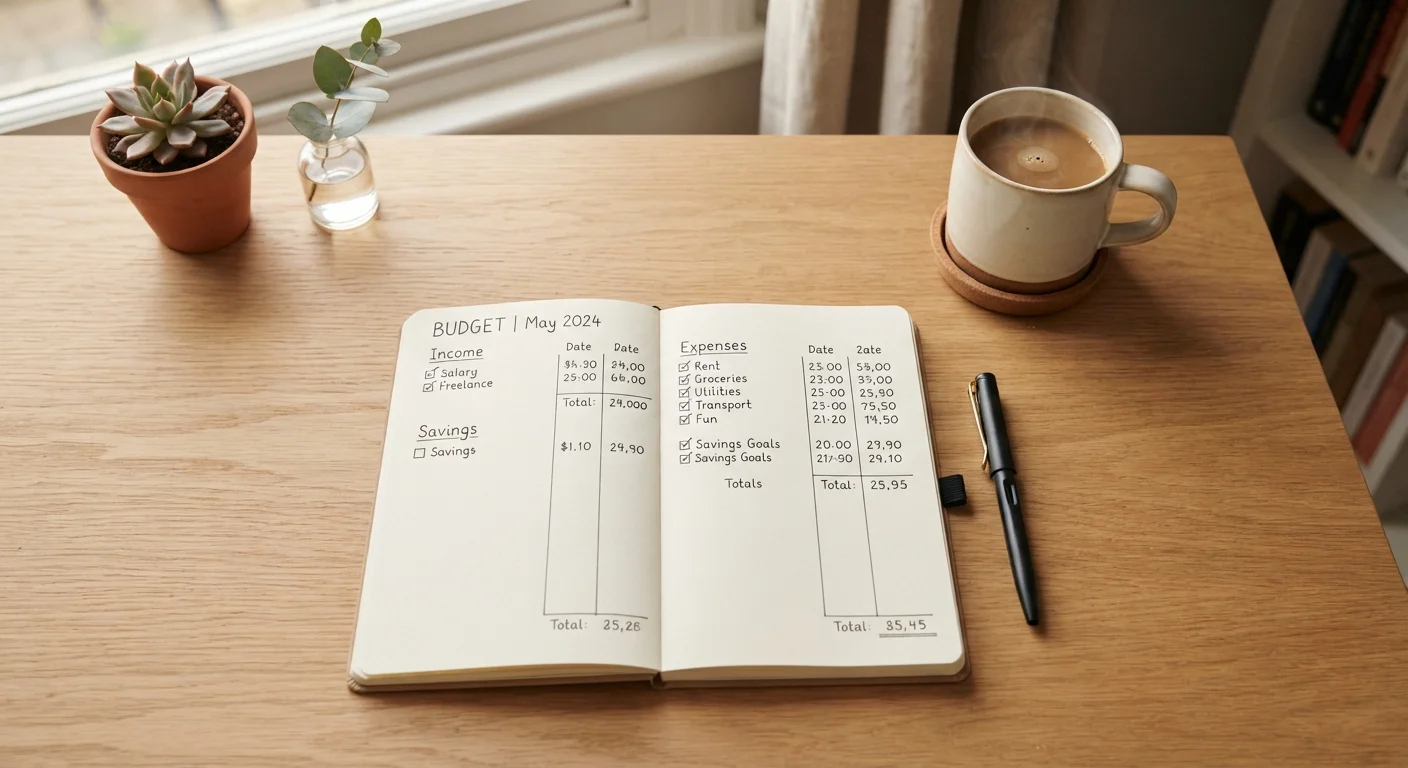
The Real Definition of a Budget
Strip away all the baggage and a budget is simply this: a plan for your money. You write down what you expect to earn, decide in advance how much goes to each category of spending, and track whether reality matches your plan.
That's it. No shame attached. No requirement to give up everything you enjoy. A budget doesn't judge your choices - it just makes them visible so you can make them deliberately.
If you've avoided budgeting because it sounded restrictive or complicated, you're not alone. Many people hold onto misconceptions that get in the way - see our look at common budgeting myths for a full breakdown of what's actually true.
Start With One Month of Honest Tracking
Before building a budget, spend one month writing down every dollar you spend - no changes, just observation. Most people are genuinely surprised by what they find. This one step transforms budgeting from a guessing game into a plan grounded in your real life.
Two Numbers That Start Everything
Every budget - no matter how simple or elaborate - is built on two figures:
- Income: The money that comes in each month (after taxes). This includes wages, freelance pay, benefits, side income, or any other reliable source.
- Expenses: Everything you spend money on. Fixed expenses like rent stay the same each month. Variable expenses like groceries and gas fluctuate.
The goal is to make sure your expenses are less than your income - and that the gap between them is directed somewhere useful, like savings or paying down debt. When expenses exceed income, a budget makes that problem visible so you can address it.
It's worth noting that a budget is not a complete financial plan on its own. For the bigger picture - goals, investing, long-term security - see what a personal money plan actually is.
A Simple Framework: The 50/30/20 Rule
If starting from scratch feels overwhelming, a percentage-based framework removes a lot of the guesswork. The 50/30/20 rule - a widely recognized budgeting guideline - divides your after-tax income into three buckets:
- 50% Needs: Rent or mortgage, utilities, groceries, transportation, minimum debt payments - the non-negotiables.
- 30% Wants: Dining out, entertainment, subscriptions, hobbies - things that enrich your life but aren't essential.
- 20% Savings & Debt Repayment: Emergency fund, retirement contributions, and paying down debt faster than the minimum.
These percentages are guidelines, not rules carved in stone. Someone with high rent in an expensive city may need to shift more toward needs and trim the wants category. The point is to have a structure, not to hit every number perfectly.
~1 in 3
Americans report having no budget at all
Surveys consistently find that a large share of U.S. adults manage money reactively rather than from a written plan, according to consumer financial research.
74%
Budgeters say it reduces financial stress
A National Foundation for Credit Counseling survey found that a strong majority of people who budget reported feeling more in control of their finances as a result.
Why It's Not a Punishment
The word "budget" carries a lot of cultural weight. People associate it with deprivation, with being broke, with spreadsheets and guilt. But that framing gets it backwards.
A budget is a tool for freedom, not restriction. When you know exactly where your money is going, you can spend on what matters to you without anxiety - because you've already accounted for it. You stop wondering whether you can afford something; your budget tells you.
People often resist budgeting for emotional reasons that have nothing to do with math - avoidance, anxiety, or a feeling that it's already too late. Our article on why people resist budgeting unpacks those barriers honestly.
The bottom line: budgeting is something you do for yourself, not to yourself. Explore the full Budget Basics hub to keep building from here.
This article is for general informational and educational purposes only. It is not personalized financial advice. For guidance specific to your situation, consider speaking with a qualified financial professional.