
Where the Rule Comes From
The 50/30/20 rule was popularized by bankruptcy expert and U.S. Senator Elizabeth Warren alongside her daughter Amelia Warren Tyagi in their book All Your Worth, published in 2005. Their core argument was straightforward: most budget systems fail because they're too complicated to maintain. A simple three-bucket split, they argued, gives people a sustainable framework without demanding spreadsheet expertise.
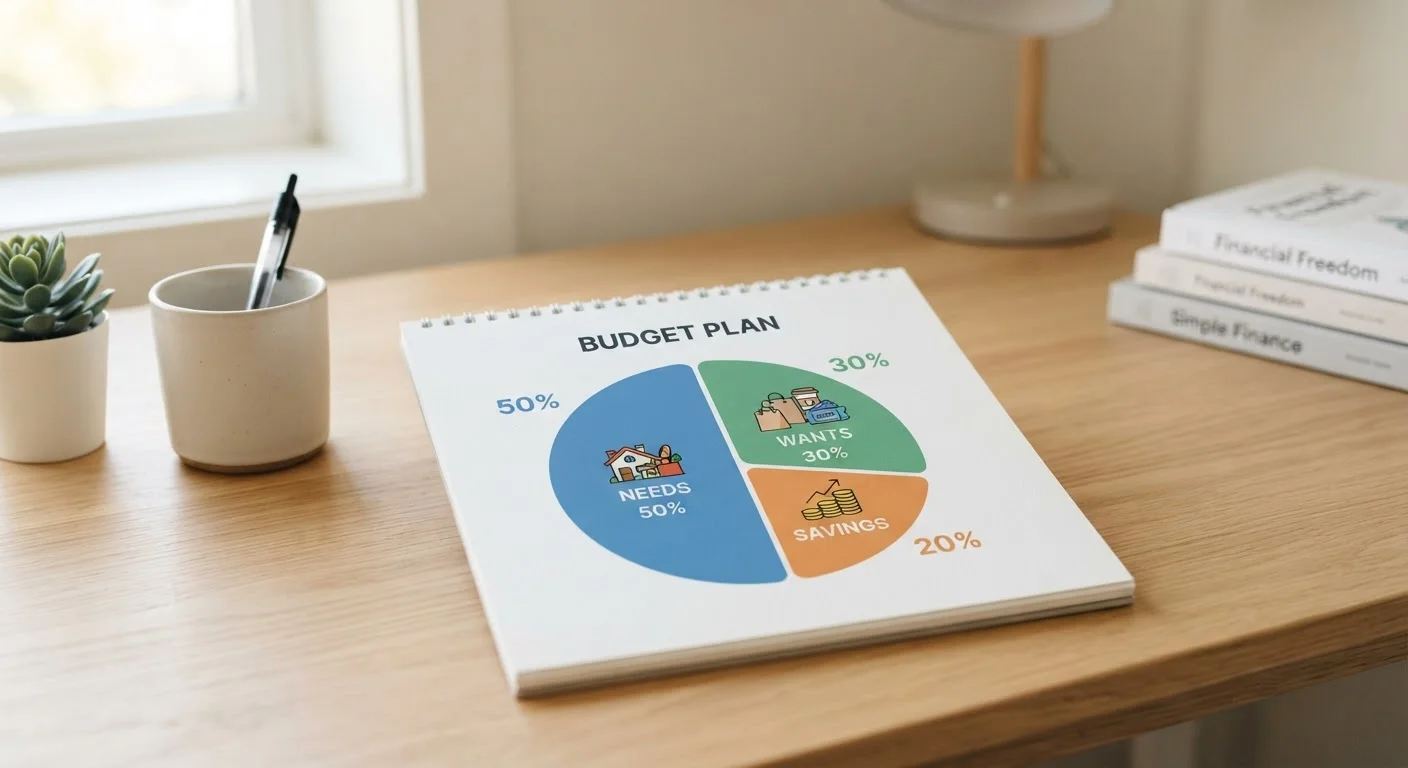
The framework isn't a rigid law - it's a rule of thumb. Think of it as a default setting you can fine-tune once you understand your own numbers. Before adjusting anything, though, it helps to see how each bucket is defined.
Breaking Down the Three Categories
50% - Needs
Needs are the non-negotiable expenses that keep your life running. These include:
- Rent or mortgage payments
- Groceries and basic household supplies
- Utilities (electricity, water, heat, internet if required for work)
- Health insurance premiums and essential medical costs
- Minimum monthly payments on loans or credit cards
- Basic transportation (car payment, insurance, or transit pass)
If skipping a payment would have a serious consequence - eviction, service cutoff, loan default - it's a need.
30% - Wants
Wants are the spending choices that enrich daily life but aren't strictly essential. This includes dining out, streaming subscriptions, hobbies, travel, clothing beyond the basics, and entertainment. This category is where most people find room to cut if they need to redirect money elsewhere.
20% - Savings and Debt Repayment
The final slice covers building financial security. That means contributions to an emergency fund, retirement accounts, or other savings goals. It also includes any debt payments above the required minimums. If you're working to pay down a credit card faster, those extra payments come from here.
For more on how this savings slice connects to long-term retirement goals, see how the 50/30/20 budget maps onto retirement saving.
~57%
Average share of income spent on necessities
According to U.S. Bureau of Labor Statistics Consumer Expenditure data, housing, food, and transportation alone typically consume more than half of average household spending.
20%
Savings rate most financial educators recommend
The 20% savings target in the 50/30/20 rule aligns with a commonly cited benchmark among personal finance educators for building long-term financial security.
$1,000
Common starter emergency fund goal
Many personal finance resources suggest a $1,000 starter emergency fund as an achievable first milestone within the 20% savings category before tackling larger goals.
How to Apply It to Your Own Income
Start with your monthly take-home pay - the amount deposited into your account after taxes. If your income varies month to month, use a conservative average based on recent pay periods.
- Calculate each slice. Multiply your net monthly income by 0.50, 0.30, and 0.20 to get your target dollar amounts for each category.
- List your current spending. Review your last two or three bank and credit card statements and sort each expense into needs, wants, or savings.
- Compare targets to actuals. Where are you over or under? Most people find wants running higher than 30% and savings running lower than 20%.
- Adjust gradually. You don't have to hit every percentage on day one. Identify one or two wants you can trim and redirect that amount toward savings.
Start With One Small Change
You don't need a perfect budget on day one. Pick a single want you can reduce - like one fewer takeout meal per week - and redirect that amount to savings. Small, consistent shifts add up faster than an overhaul you can't sustain. Once the habit sticks, revisit and adjust again.
If you're unsure how much to save each month more generally, this overview of common savings rate rules walks through several approaches alongside the 50/30/20 framework.
When the 50/30/20 Rule May Not Fit
The rule works best for people whose basic expenses are manageable relative to their income. It runs into friction in a few common situations:
- High cost-of-living areas. In cities where rent alone can exceed 40% of take-home pay, hitting the 50% needs target may be impossible without significant adjustments elsewhere.
- Lower incomes. When income barely covers essentials, there may be little left for wants or savings regardless of the percentages.
- High debt loads. Significant student loan or credit card debt often demands more than 20% dedicated to payoff to make meaningful progress.
In these cases, treat the percentages as long-term targets rather than immediate requirements. Even saving 5% of income consistently is a better outcome than saving nothing because a 20% goal felt out of reach.
You might also prefer a framework that assigns every dollar a specific role. If so, our comparison of zero-based budgeting and the 50/30/20 rule can help you decide which approach suits your style better.
The Rule Is a Guide, Not a Guarantee
No budgeting framework guarantees financial security, and results will vary based on income, expenses, and individual circumstances. The 50/30/20 rule is a useful structure, but it works best when you adapt it to your real situation rather than forcing your life to fit the percentages perfectly.
This article is for general informational purposes only and does not constitute personalized financial, tax, or investment advice. Consider speaking with a qualified financial professional about your specific situation.