
The Simple Truth About What a Budget Is
A monthly budget is a plan - written down before the month begins - that matches the money coming in with how you intend to use it. That's it. Income on one side, expenses and savings on the other. When those two sides balance, you have a budget.
The key word is plan. A budget is forward-looking. You're deciding in advance where your money goes rather than wondering afterward where it went. This distinction matters more than it might seem. Most people who feel stressed about money are reacting to what already happened. A budget gives you a chance to be proactive instead.
You don't need special software, a finance degree, or a large income to make a budget work. If you know roughly how much you earn each month and can list your regular expenses, you already have the raw material. For a calm, step-by-step approach to putting those numbers together, see Your First Monthly Budget, Built from Scratch.
Start With What You Know
You don't need every number to be exact before you begin. Start with your take-home pay and your three or four biggest expenses - rent, groceries, utilities, transportation. Fill in smaller categories as you go. An imperfect budget you actually use beats a perfect one you never start.
What a Budget Is Not
Here's where a lot of beginners get tripped up: a budget is often misunderstood as a financial punishment - a list of things you're not allowed to do. That framing makes people avoid budgeting entirely, which helps no one.
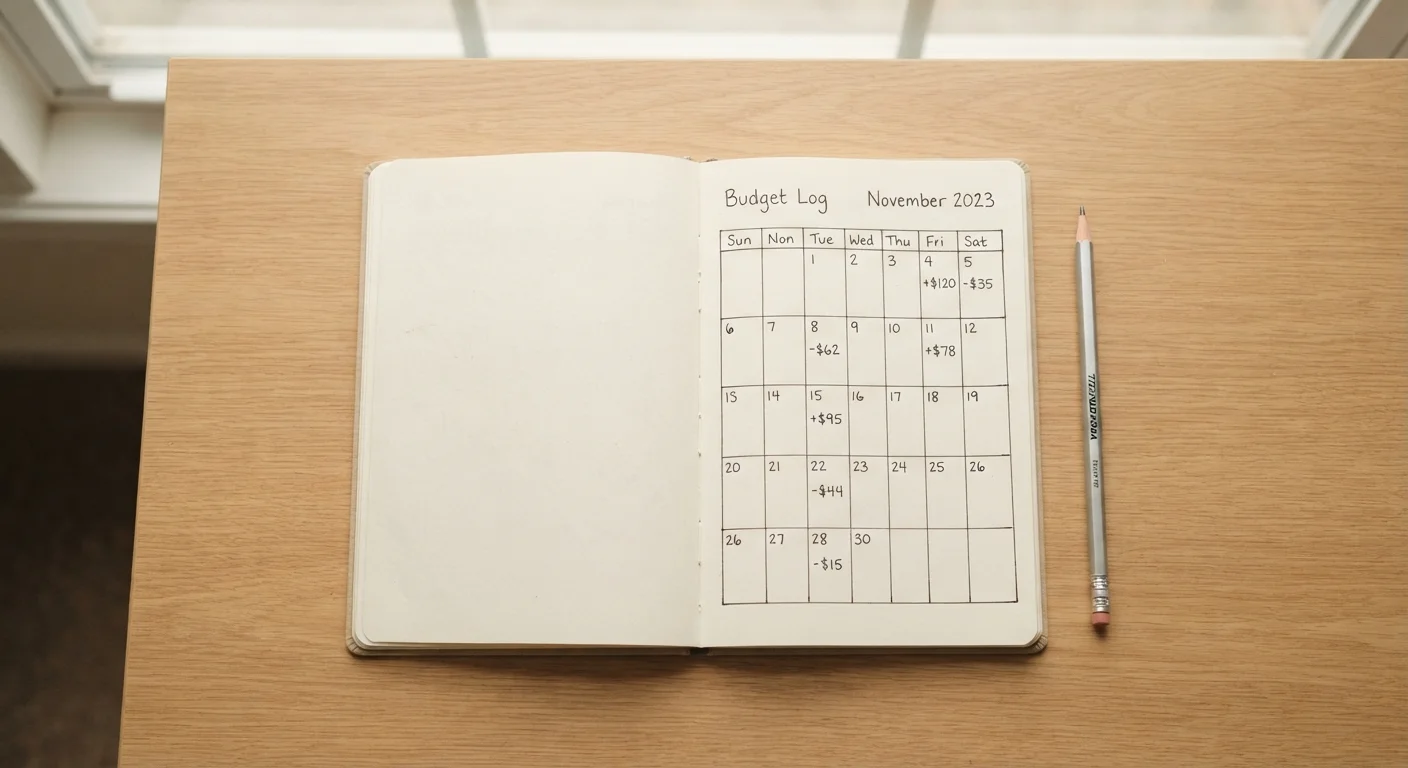
A budget is not a record of past spending. If you're logging transactions that already happened, you're tracking - a useful habit, but a different one. A budget is also not a rigid contract with yourself. Life changes month to month, and a good budget adapts with it. Missing a target one week doesn't mean the whole plan has failed.
A budget also can't predict every expense. The car needs a repair. A medical bill shows up. These things happen, and a realistic budget accounts for them with a small buffer or a separate irregular-expense category rather than pretending they won't occur. For a deeper look at where surprise spending tends to hide, Where Does Your Money Actually Go Each Month? walks through the most common blind spots.
Finally, a budget is not the same as a full financial plan. A monthly budget manages your cash flow right now. A broader money plan addresses longer-term goals - paying off debt, building an emergency fund, saving for retirement. The two work together, but they're not interchangeable. What a Personal Money Plan Actually Is explains that distinction clearly.
Why a Monthly Timeframe Makes Sense
Most bills, paychecks, and financial obligations run on a monthly cycle - rent, utilities, subscriptions, loan payments. Budgeting monthly aligns your plan with how money actually moves through your life, which makes the numbers easier to track and the plan easier to maintain.
A month is also long enough to smooth out week-to-week variation in spending, but short enough to stay relevant. A yearly budget can hide the fact that you overspent in March by showing a fine annual average. A monthly budget surfaces those gaps while you still have time to respond.
~32%
Americans with a detailed household budget
Gallup polling has consistently found that fewer than a third of U.S. adults maintain a detailed household budget, despite widespread acknowledgment that budgeting is important.
$500+
Average monthly spending underestimate
Research on consumer spending recall suggests people routinely underestimate their monthly discretionary spending by several hundred dollars when asked to recall it from memory.
Once a month is up, reviewing what happened is just as important as planning what comes next. That review - comparing what you planned against what actually occurred - is how your budget improves over time. The Monthly Budget Review: What to Check and Why guide walks through exactly what to look at and why it matters.
This article is for general informational purposes only and does not constitute personalized financial advice. For guidance specific to your situation, consider speaking with a qualified financial professional.