
Why Your Gut Feeling About Spending Is Usually Wrong
Ask someone how much they spend each month and they'll often give you a confident number. Ask them to break it down and things get murky fast. That gap between what we think we spend and what we actually spend is one of the most consistent patterns in personal finance - and it affects people at nearly every income level.
The problem isn't carelessness. It's that our brains naturally anchor on big, predictable costs: rent, car payment, phone bill. Those feel like "our budget." But spending doesn't stop there. It seeps out in smaller amounts - a lunch here, a streaming add-on there, an app subscription you forgot you started - and those amounts rarely make it into our mental tally.
Understanding what a monthly budget actually is helps clarify why tracking spending is so important: a budget is a plan, but tracking is the reality check that tells you whether that plan is working.
~$300
Average monthly subscription spending per US household
Research by West Monroe Partners found that US consumers significantly underestimate what they pay for recurring subscriptions each month.
80%
Americans who underestimate their monthly spending
Studies by personal finance researchers consistently find that the vast majority of people cannot accurately recall their actual monthly expenditures without reviewing records.
1 month
Minimum tracking period for a useful spending baseline
Financial educators generally recommend tracking all spending for at least 30 days before drawing conclusions about spending patterns or adjusting a budget.
The Categories Most People Forget to Count
When people sit down to write out their monthly expenses, certain categories consistently get left off the list. These aren't unusual purchases - they're everyday costs that just don't feel like "expenses" in the moment.
- Subscriptions and memberships: Streaming services, fitness apps, cloud storage, news sites, and software tools each charge small amounts monthly. Individually they seem trivial. Together, they often total $80-$150 or more for the average household. See how subscription creep quietly erodes your budget.
- Irregular but predictable expenses: Annual fees, quarterly insurance premiums, car registration, and back-to-school costs don't show up every month - but they exist. Without a monthly placeholder, they feel like emergencies when they arrive.
- Food beyond groceries: Work lunches, coffee stops, takeout, and food delivery can easily double or triple what people budget for food.
- Convenience costs: Parking, toll roads, last-minute shipping upgrades, and convenience store runs are small individually but persistent.
These gaps are exactly what the hidden costs beginners consistently underestimate explores in more depth.
How to Actually See Where Your Money Goes
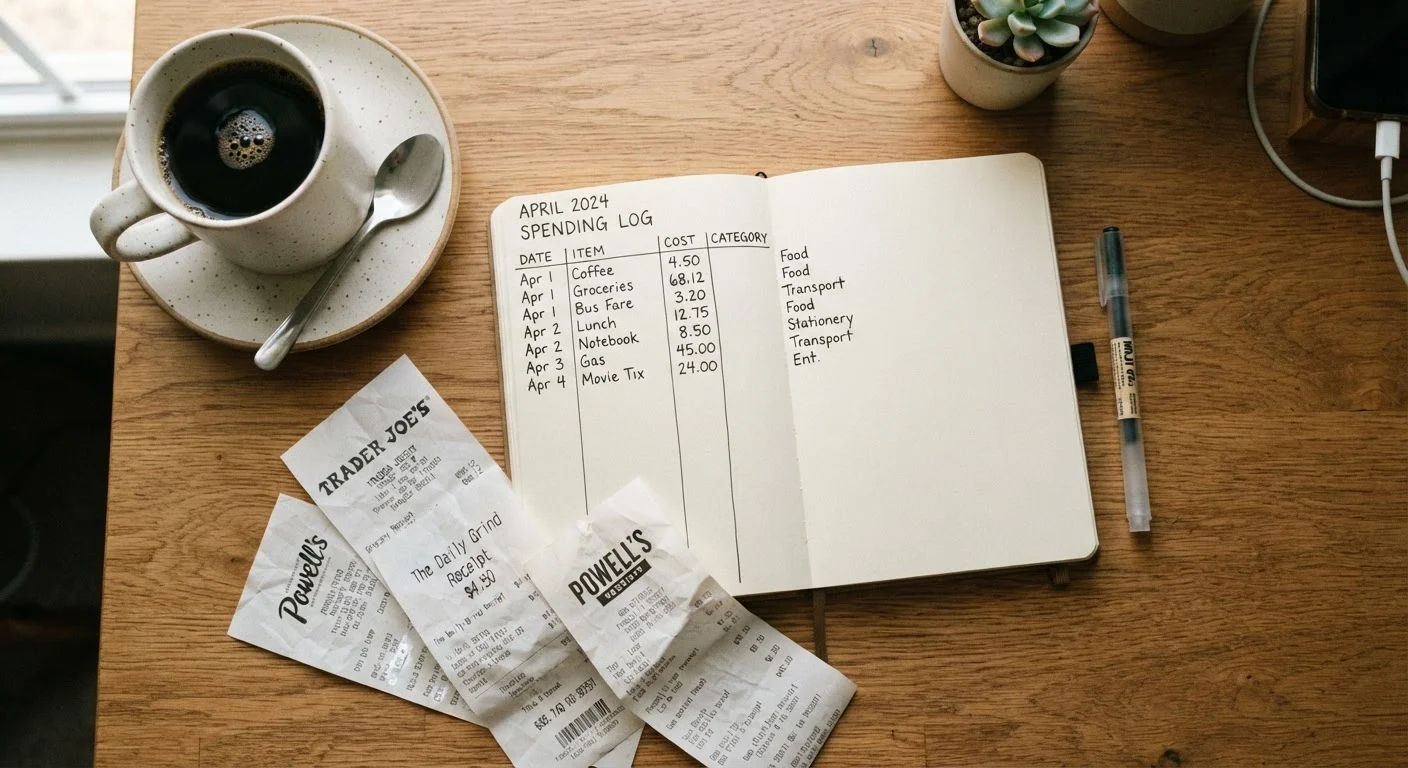
The simplest approach is also the most effective: for one full month, record every dollar you spend. You don't need a budgeting app. A notebook, a spreadsheet, or your phone's notes app works fine. What matters is consistency - logging each purchase before the day ends.
At the end of the month, group your transactions into broad categories: housing, food, transportation, subscriptions, personal care, entertainment, and debt payments. Then add each category up. Most people find at least one number that surprises them.
Tracking every dollar you spend doesn't have to be complicated. The goal is simply to get the numbers out of your head and onto paper where you can actually see them.
Once you have a real picture, you can start asking useful questions: Is this category higher than I expected? Is it something I value? Could part of it be redirected toward savings?
Turning Awareness Into Action
Seeing your spending clearly isn't the end goal - it's the starting point. Once you know where your money actually goes, you can make deliberate choices rather than discovering shortfalls at month's end.
Start with one or two categories where the numbers surprised you. You don't need to overhaul everything at once. Canceling one forgotten subscription or setting a weekly food budget can free up real money without requiring dramatic lifestyle changes.
From there, smart saving habits give you practical ways to put that recovered money to work consistently each month.
It also helps to build in a regular check-in. A monthly budget health check - even a quick 15-minute review - keeps you honest and helps you adjust before small drifts become bigger problems.
This article is for general informational purposes only and does not constitute personalized financial advice. For guidance tailored to your specific situation, consider speaking with a qualified financial professional.