
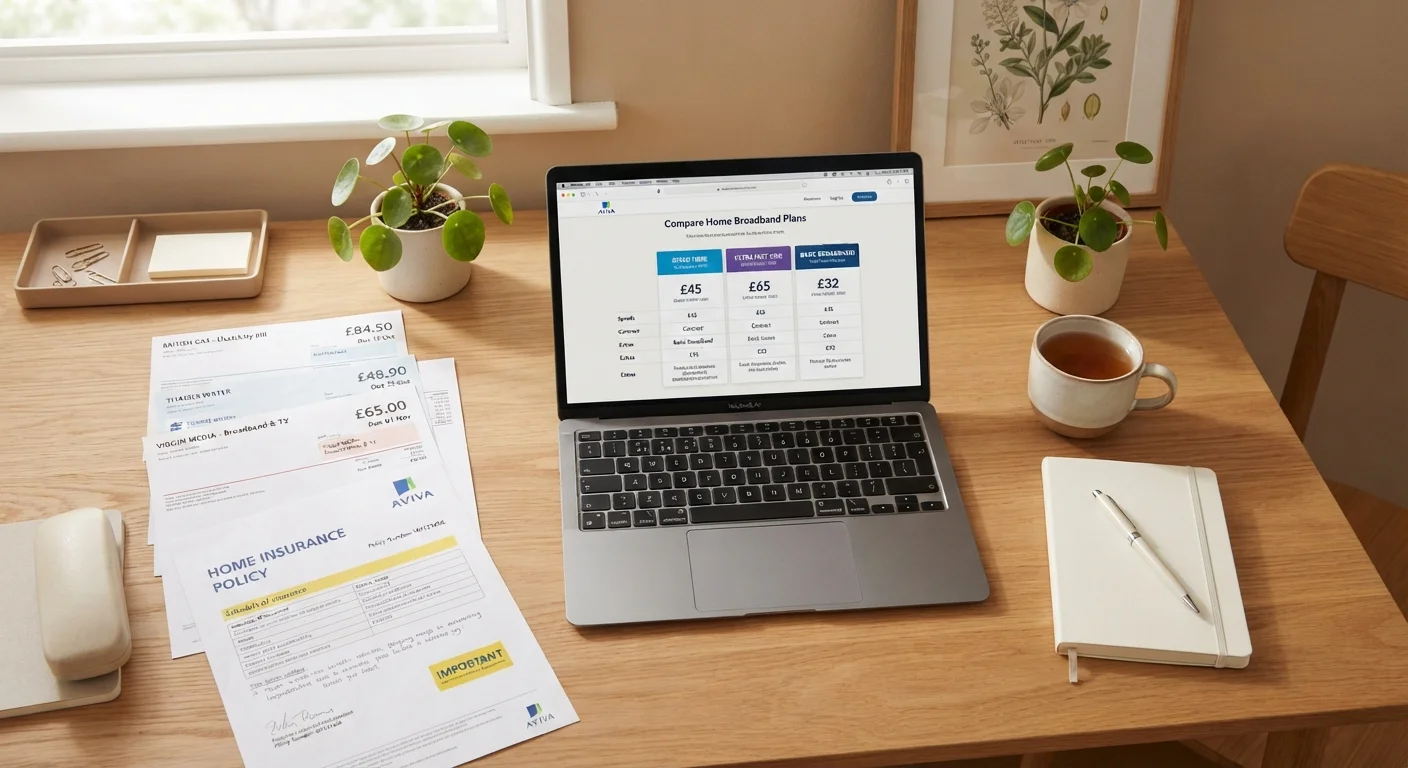
Why Some Bills Feel Fixed But Aren't
Most households treat monthly bills as facts of life - numbers that arrive, get paid, and repeat. But several recurring costs are more flexible than they appear, and providers often count on customers not pushing back. Understanding which bills have room to move - and which genuinely don't - is a practical first step toward freeing up savings.
This isn't about aggressive haggling. It's about knowing the leverage you already have and using it calmly. See our spending audit guide for a broader look at where household costs tend to hide.
| Broadband contract length (typical) | 12-24 months |
| Best time to negotiate broadband | 30-60 days before contract ends |
| Insurance renewal review window | At least 3-4 weeks before renewal date |
| Energy bill negotiability | Limited; switching providers beats negotiating |
| Key phrase for retention departments | "I'm considering canceling - what can you offer?" |
| Loyalty penalty (insurance) | Long-term customers often pay more than new ones (Consumer reports and state insurance commissioner studies have documented this pattern) |
Broadband: Highly Negotiable
Internet service is one of the most negotiable bills in a typical household budget. Providers invest heavily in acquiring new customers - which means existing customers paying higher post-promotional rates are often subsidizing deals for newcomers. That imbalance works in your favor.
When to act
The ideal window is 30 to 60 days before your current contract ends. At that point, you're not locked in, and the provider has reason to keep you. Call the retention or cancellations department directly - not general customer service - and ask plainly what they can offer. Have a competing quote ready if possible; even a printed ad from a rival provider strengthens your position.
What's realistic
- A rate match to a competitor's advertised price
- A new promotional rate for another 12-24 months
- A speed upgrade at your current price
If the provider won't budge and a comparable alternative exists in your area, switching is often the most straightforward path. Note that in areas with only one broadband provider, your leverage is limited - that's one situation where negotiation has real constraints.
Insurance: Negotiable at Renewal
Auto and home insurance premiums are reset at renewal, and that's your annual opportunity. The loyalty penalty - where long-term customers quietly pay more than new ones - is well-documented, which means simply staying put can cost you.
The renewal review habit
Set a reminder three to four weeks before your renewal date each year. Use that time to get two or three quotes from other insurers for the same coverage level. Then call your current insurer and share what you found. Many will adjust your rate rather than lose you.
What to watch for
- Bundling discounts: combining auto and home with one insurer can reduce both premiums
- Coverage creep: over time, coverage can expand beyond what you actually need - review deductibles and limits annually
- Claims history: a recent claim may limit your negotiating room in the short term
What's less negotiable mid-term: most insurers won't renegotiate a rate outside of the renewal window unless your circumstances change significantly (moving, buying a car, adding a driver).
For a broader approach to cutting costs without sacrificing quality of life, see reducing everyday expenses without feeling deprived.
Energy Bills: Less Room to Negotiate, More Room to Switch
Electricity and natural gas are commodity services - the electrons or gas molecules arriving at your home are identical regardless of who bills you for them. That changes the negotiation dynamic significantly.
In deregulated energy markets (available in a number of US states), you can choose your supplier, which means comparison shopping is a genuine option. In regulated markets, you're locked into the local utility's rate structure, and direct negotiation is essentially off the table.
Where savings are actually available
- Budget billing plans: Utilities often offer averaged monthly payments so you avoid seasonal spikes. This doesn't reduce your total bill but helps with predictability.
- Low-income assistance programs: Federal and state programs - such as LIHEAP - provide bill assistance for qualifying households. These are worth knowing about if money is tight.
- Efficiency upgrades: Reducing consumption through weatherization, programmable thermostats, or appliance upgrades often delivers more reliable savings than any negotiation could.
If you're managing energy costs on a genuinely constrained income, budgeting on a tight income covers approaches designed for that reality.
A Quick Reference: What's Worth Challenging
Use this as a simple lookup when you're deciding where to spend your negotiating energy:
| Bill type | Negotiable? | Best approach |
|---|---|---|
| Broadband | Yes - regularly | Call retention dept. near contract end |
| Auto insurance | Yes - at renewal | Get competing quotes, then call insurer |
| Home insurance | Yes - at renewal | Same as auto; ask about bundling |
| Electricity (regulated) | No | Focus on efficiency and assistance programs |
| Natural gas (regulated) | No | Same as electricity |
| Energy (deregulated states) | Indirectly | Compare suppliers; switch if better rate exists |
Small recurring charges - streaming services, app subscriptions, gym memberships - follow a similar logic to broadband: the provider wants to keep you, and cancellation threats often unlock better offers. Subscription creep explains how those smaller charges accumulate and how to audit them systematically.
Introductory rate
A temporarily lower price offered to attract new customers. Once the promotional period ends, the rate typically rises to a standard - often higher - price.
Retention offer
A discount or incentive a company extends to an existing customer who signals they may cancel. These are often not advertised but can be unlocked simply by calling and asking.
Auto-renewal
When a policy or contract renews itself automatically at the end of its term, sometimes at a higher rate. Reviewing before renewal gives you a chance to negotiate or switch.
Commodity service
A service that is functionally identical regardless of which provider delivers it - electricity and natural gas are common examples. Providers compete primarily on price.
This article is for general informational purposes only and does not constitute financial, legal, or regulatory advice. Rates, program availability, and market structures vary by state and provider. Consult a qualified financial adviser for guidance specific to your situation.