
How Lifestyle Inflation Sneaks Up on You
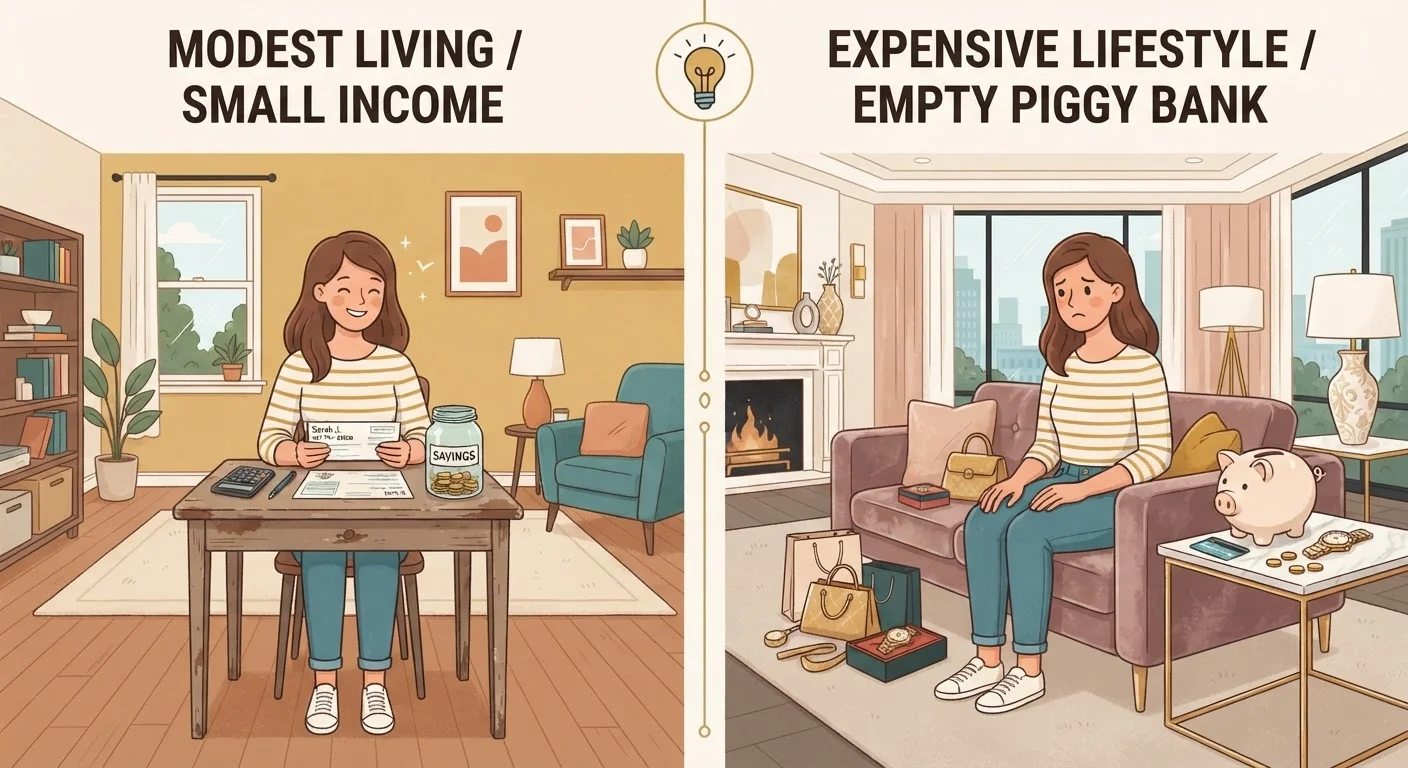
Picture this: you get a $5,000 raise. You feel good, and reasonably so. But over the next few months, without really planning it, you upgrade your streaming subscriptions, start ordering lunch instead of packing it, move to a pricier apartment, and finance a newer car. Each choice seems small and justified on its own. Together, they quietly absorb the entire raise.
That is lifestyle inflation in action. It rarely arrives all at once. It accumulates through a series of individually reasonable-looking decisions - each one anchored to the feeling that you can now afford it. The problem is not any single upgrade; it is the pattern of automatically expanding spending whenever income grows.
This is one of the most common reasons savings balances stay flat even when careers progress. For a closer look at the blind spots that stall savings growth, see why savings balances stay flat.
Lifestyle Inflation vs. Price Inflation
Lifestyle inflation and economic inflation are two different things. Price inflation means the cost of the same goods rises over time - that's outside your control. Lifestyle inflation means choosing to buy more expensive things as income grows - that's a behavioral pattern you can influence. Both can affect your financial picture, but they call for different responses. For more on how economic inflation interacts with your money, see how inflation affects your money.
Common Spending Upgrades That Fuel the Cycle
Lifestyle inflation tends to cluster around a handful of spending categories. Housing is often the biggest jump - moving to a larger or more upscale home when income rises is common, even when the current space is perfectly functional. Transportation is another: trading a paid-off car for a new financed one adds a recurring expense that can last years.
Smaller, recurring costs add up just as powerfully. Subscription services, gym memberships, food delivery apps, and premium versions of everyday purchases layer on top of each other. Because each individual charge is modest, they rarely trigger scrutiny. But a dozen small upgrades totaling $300 a month is $3,600 a year that isn't growing in a savings account.
Social dynamics also play a role. When friends and colleagues spend more, it creates quiet pressure to match that level - on trips, restaurants, and events. This is worth recognizing as an external force, not a personal failing. Managing social spending without isolation can help you navigate this without withdrawing from the people around you.
~70%
Of Americans living paycheck to paycheck
Multiple surveys over recent years have consistently found that a large share of US adults - across income levels - report spending most or all of what they earn each month.
3.5%
Average US personal savings rate (recent years)
The US Bureau of Economic Analysis has recorded personal saving rates well below historical averages in recent periods, suggesting that income growth is not reliably translating into savings growth.
Strategies for Keeping Lifestyle Inflation in Check
The goal is not to avoid all spending upgrades - some improvements to daily life are genuinely worth it. The goal is to make those choices deliberately, rather than by default. A few practical approaches:
- Automate savings first. When your income rises, direct a set percentage to savings before adjusting your spending. If you never see the extra money in your checking account, you're less likely to spend it. This is sometimes called paying yourself first.
- Apply a percentage rule to raises. Some financial educators suggest directing at least half of any income increase toward savings or debt repayment, and allowing the other half for lifestyle improvements. The exact split depends on your situation, but the habit of splitting - rather than spending all of it - is what matters.
- Audit subscriptions regularly. Set a reminder every six months to review recurring charges. Cancel anything you don't actively use and value.
- Delay upgrades intentionally. When tempted by a lifestyle upgrade, wait 30 days. Many impulse upgrades feel less necessary after a short cooling-off period.
Building consistent habits around savings - regardless of income level - is the foundation. The monthly saving habits worth building at any income level covers specific behaviors that hold up across different financial situations.
It's also worth noting that lifestyle inflation compounds over time. Money not saved in your thirties doesn't just sit idle - it's money that could have been invested and potentially grown. If you're also considering longer-term habits, habits that quietly undermine retirement saving shows how lifestyle creep fits into the broader picture.
This article is for general informational and educational purposes only and does not constitute personalized financial, tax, or investment advice. Consider speaking with a qualified financial professional about decisions specific to your circumstances.