
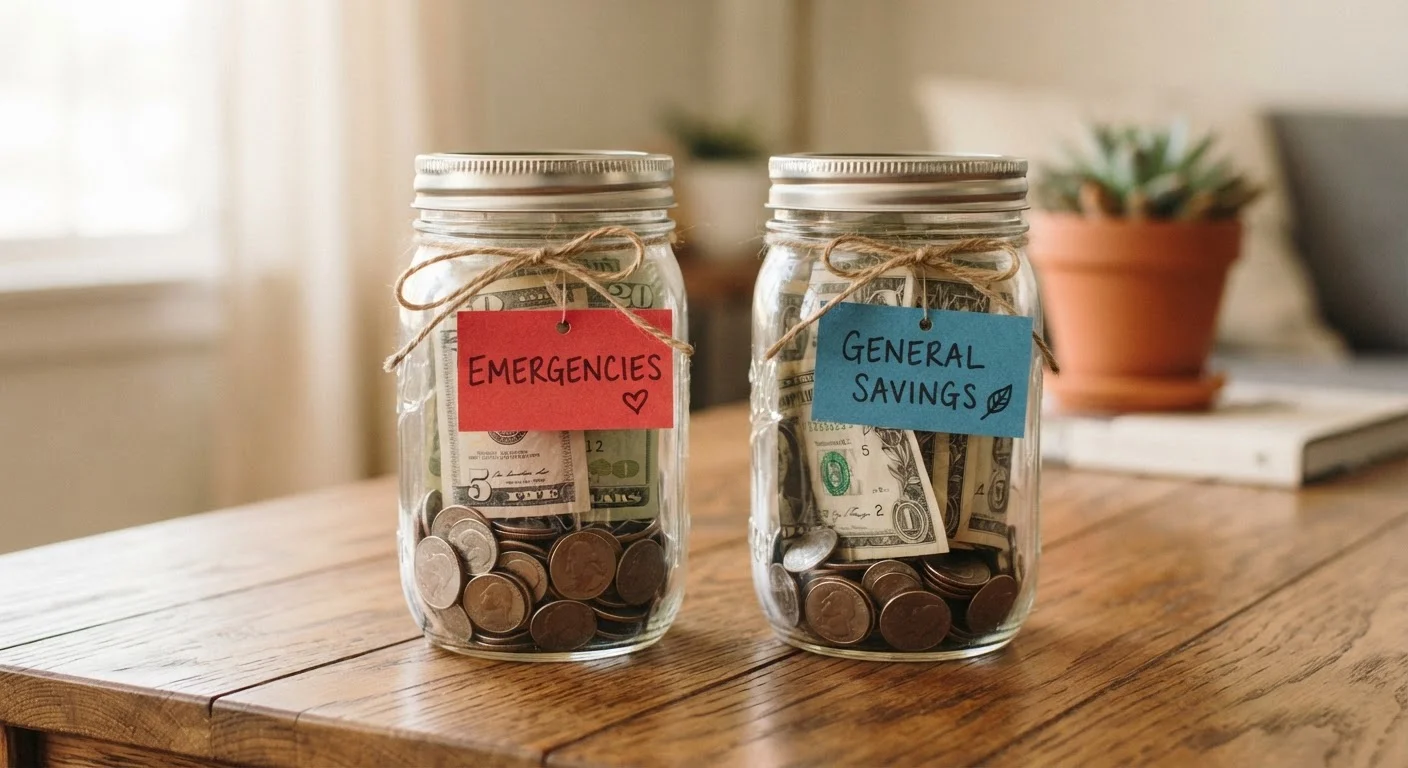
What Each One Actually Does
Both terms involve setting money aside, but they serve completely different jobs - and treating them as the same account is one of the most common beginner mistakes in personal finance.
An emergency fund exists for one purpose: protecting you when something goes wrong that you did not see coming. A sudden layoff, an unexpected medical bill, a broken furnace in January - these are the events an emergency fund is designed to absorb. The money sits untouched until a genuine crisis arrives. It is not a reward fund, a travel fund, or a home improvement fund. It is a financial firewall.
General savings, by contrast, are money you are actively accumulating for something specific you plan to do. That might be a vacation, new furniture, a wedding, or a down payment on a car. You know the goal ahead of time, you estimate the cost, and you save toward it with a rough timeline in mind. These funds are meant to be spent - just at the right moment and for the right reason.
If you want to go deeper on how different savings goals stack up against investing goals, see Saving Goals vs Investment Goals for a clear breakdown.
| Criterion | Emergency Fund | General Savings |
|---|---|---|
| Purpose | Cover unexpected financial crises | Fund planned future purchases |
| When you use it | Only in genuine emergencies | When your goal timeline arrives |
| Target amount | 3-6 months of essential expenses | Estimated cost of your specific goal |
| Spending frequency | Rarely - replenished after use | Once goal is reached; then restart |
| Account setup | Dedicated, do-not-touch account | Separate labeled savings account |
| Emotional role | Reduces financial anxiety and risk | Builds motivation toward a reward |
Why Keeping Them Separate Matters
When emergency money and goal-based savings share the same account, both suffer. Imagine you have been saving for six months toward a weekend trip. A car repair bill arrives. You pull from the same pot. Now you have no trip fund and no emergency buffer. You are back to zero on both.
Separation creates clarity. When each bucket has its own account - even if the balances start small - you always know exactly where you stand. You can see your emergency fund growing toward its target independently of the vacation fund you are building for next summer.
Practically speaking, many people use a straightforward approach: one high-yield savings account dedicated solely to emergencies, and one or more separate accounts labeled for specific goals. Most banks and credit unions allow multiple savings accounts at no extra cost, and some let you nickname each one.
For a practical look at how an emergency fund fits into your monthly spending plan, check out Building an Emergency Fund Inside Your Budget. And if you are weighing whether to prioritize the emergency fund or retirement contributions, Emergency Fund vs. Retirement Savings: Which Comes First? walks through those trade-offs honestly.
How Much to Keep in Each
For your emergency fund, widely cited guidance from financial educators suggests aiming for three to six months of essential living expenses - meaning rent or mortgage, utilities, groceries, insurance, and minimum debt payments. That range exists because the right amount depends on your job stability, household size, and whether you have other income sources. Someone with a variable freelance income may want to lean toward six months; someone with a stable salaried job and a working partner may feel secure at three.
If that target feels intimidating, start smaller. Even $500 to $1,000 set aside exclusively for emergencies meaningfully reduces the chance that a surprise expense sends you to a credit card. Build from there over time.
For general savings, the amount depends entirely on the goal. Estimate what the thing costs, decide when you want it, and divide accordingly. If you want $1,200 for a vacation in 12 months, that is $100 per month. Simple math, but it only works if that money is not sitting in the same account as your emergency fund - where it might get spent before you get there.
Not sure what goal to tackle first? Your First Savings Goal: What It Should Be and Why It Matters offers a grounded starting point for beginners.
~57%
Americans unable to cover a $1,000 emergency
A Bankrate survey found that fewer than half of U.S. adults could pay for a $1,000 unexpected expense from savings alone.
3-6 months
Recommended emergency fund coverage
Financial educators and consumer protection agencies commonly recommend keeping three to six months of essential expenses in a dedicated emergency account.
$500
Meaningful starter emergency cushion
Even a modest $500 dedicated fund can prevent a common small emergency from turning into high-interest credit card debt.
This article is for general informational purposes only and does not constitute personalized financial advice. Please consult a qualified financial professional for guidance tailored to your specific situation.