
Why the Distinction Actually Matters
At first glance, saving and investing feel like two words for the same thing: putting money aside. But they have fundamentally different jobs, and assigning a goal to the wrong approach can quietly undermine your plan.
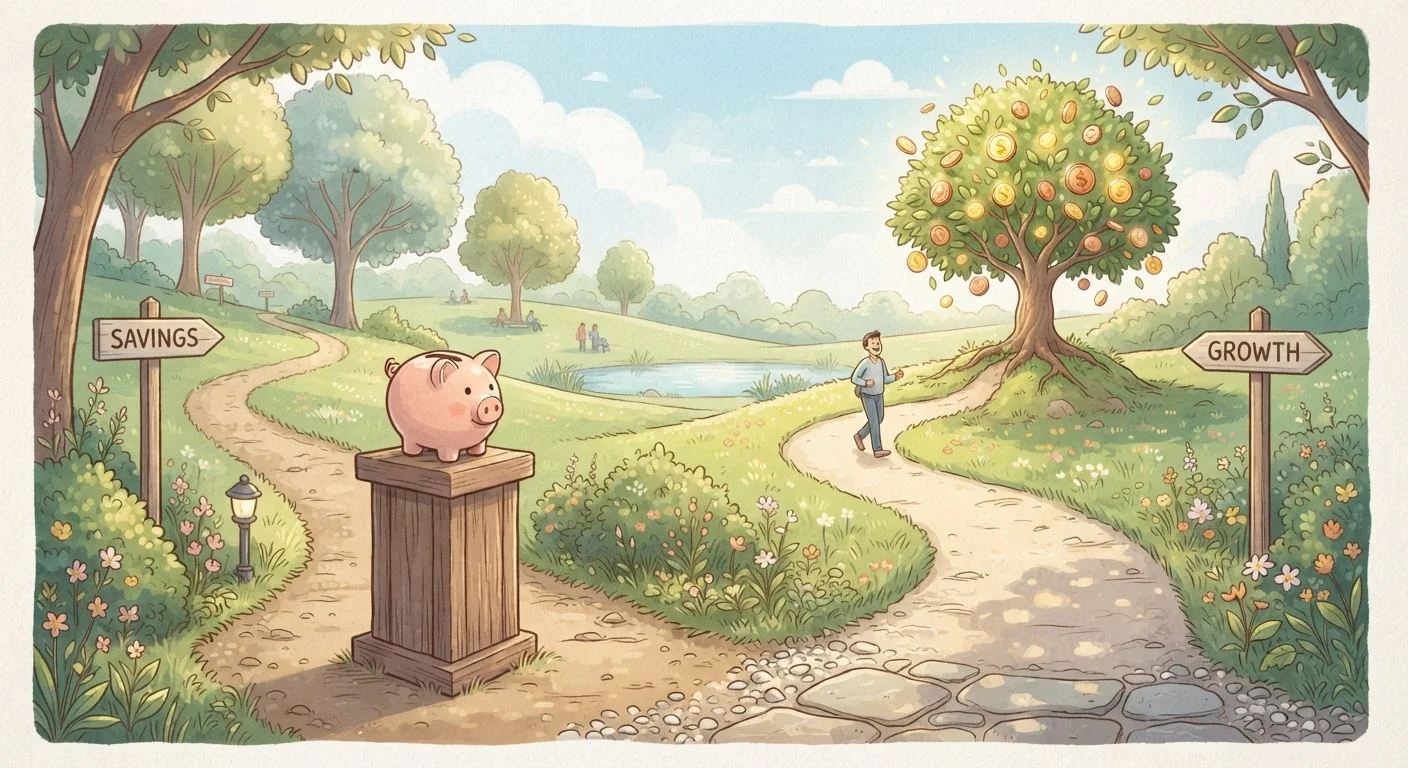
Saving is about preserving what you have. When you save, you're setting aside money in a low-risk account - typically something like a high-yield savings account or a money-market account - where the balance won't shrink overnight. The trade-off is modest growth: you're not going to double your money, but you're also not going to lose half of it when markets fall.
Investing is about growing what you have over time. When you invest, you're putting money into assets - such as stocks, bonds, or funds - that can increase in value, but can also decrease. The expectation is that over a long enough period, growth will outpace what a savings account could offer. The risk is that markets don't follow a schedule, and a goal with a near-term deadline doesn't give you time to recover from a downturn.
Understanding this difference is one of the most practical foundations of a solid financial plan. For a deeper look at how to categorize your goals by timeline, see how short, medium, and long-term goals differ.
How to Tell Which Approach a Goal Needs
The single most important factor is time horizon - how long before you'll need the money. A secondary factor is flexibility: can you adjust the amount or delay the goal if market conditions are unfavorable?
| Criterion | Saving Goals | Investment Goals |
|---|---|---|
| Primary purpose | Preserve capital | Grow wealth over time |
| Typical time horizon | Under 3 years | 5+ years |
| Risk level | Very low | Moderate to higher |
| Liquidity (ease of access) | High - funds readily available | Variable - selling may take time or cost value |
| Growth potential | Low (interest income) | Higher (but not guaranteed) |
| Can you lose principal? | Typically no (in insured accounts) | Yes - market value can fall |
| Example goals | Emergency fund, vacation, down payment | Retirement, college fund, long-term wealth |
Use saving when the goal is near, the amount is fixed, or you genuinely cannot afford to lose any of the principal (the money you put in). Typical saving goals include an emergency fund, a vacation you're taking next year, or a down payment due in 18 months.
Use investing when the goal is years away and you can tolerate fluctuations along the road. Typical investment goals include retirement, a child's college fund with a 15-year runway, or building long-term wealth. For a broader look at pairing saving and investing timelines, the guide to planning short-term and long-term savings goals together walks through how to hold both at once.
This article is for general educational purposes only and is not personalized financial, investment, or tax advice. Consult a qualified financial professional before making decisions about your own situation.
Running Both at the Same Time
Here's what trips many beginners up: you don't choose between saving and investing - you do both, for different goals, simultaneously. A person in their thirties might be saving for a home purchase in two years and investing for retirement three decades away. These aren't competing priorities; they're parallel tracks.
The key is to be intentional about which bucket each dollar goes into. Money earmarked for a near-term goal belongs in a savings vehicle. Money that won't be touched for a decade or more is better positioned to work harder in an investment account - where it has time to recover from any short-term losses and benefit from potential compounding (growth building on growth).
What About an Emergency Fund?
An emergency fund is always a saving goal, never an investment. It exists to cover unexpected expenses - a job loss, a medical bill, a car repair - and needs to be accessible immediately and in full. Investing emergency funds introduces the risk that you'd need to withdraw during a market downturn, potentially locking in a loss at the worst possible moment. For more on this distinction, see emergency fund vs. general savings.
One common mistake is keeping long-horizon money in savings because it feels safer. While it is safer in the short run, inflation - the gradual rise in prices over time - can erode the purchasing power of cash sitting idle. A dollar saved today may buy less in 20 years than it does now. Investing for long-term goals is partly a response to that reality, though it comes with its own risks and is never guaranteed to outperform inflation in any given period.
For perspective on how the approach to investing shifts across different time frames, see how short-term and long-term investing differ. And if you want to understand how different investment types serve different goals, growth vs. income investments is a helpful next step.