
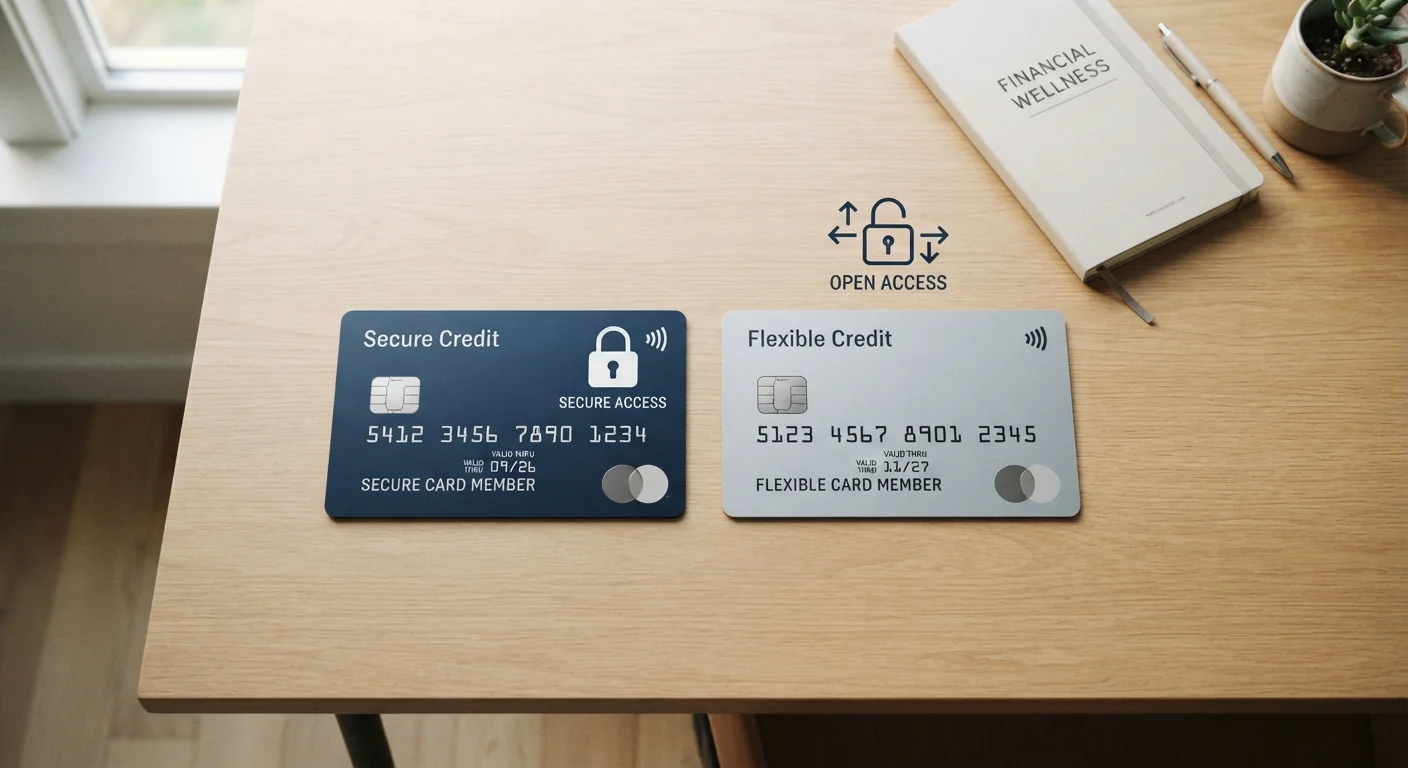
What Separates a Secured Card from an Unsecured Card
At their core, these two card types differ on one key question: does the issuer need collateral to extend you credit?
A secured credit card requires you to make a refundable cash deposit before you can use the card. That deposit - often ranging from $200 to $500 - typically becomes your credit limit. If you stop making payments, the issuer can use the deposit to cover the debt. Because the lender's risk is minimized, approval is much easier to obtain even with little or no credit history.
An unsecured credit card requires no deposit. Instead, the issuer reviews your credit history, income, and other factors to decide how much credit to extend and at what interest rate. This is the type most people picture when they think of a credit card. To understand the broader mechanics of how credit cards work before choosing either type, see our beginner's roadmap to credit cards.
| Criterion | Secured Credit Card | Unsecured Credit Card |
|---|---|---|
| Deposit required | Yes - typically $200-$500 | No deposit needed |
| Approval difficulty | Easier - good for no/low credit | Requires established credit history |
| Credit limit | Usually equals deposit amount | Set by issuer based on creditworthiness |
| Reports to credit bureaus | Yes | Yes |
| Path to upgrade | Can graduate to unsecured card | May qualify for higher limits over time |
| Typical fees | Often higher relative to limit | Varies widely by card terms |
| Risk of overspending | Lower - limit is naturally small | Higher - limits can be larger |
How Each Card Affects Your Credit Score
Here's the important part for beginners: both card types report your payment activity to the three major credit bureaus - Equifax, Experian, and TransUnion. This means responsible use of either card can help you build a positive credit history.
The factors that matter most are consistent regardless of card type:
- Payment history: Paying on time every month is the single largest factor in your credit score.
- Credit utilization: Keeping your balance below 30% of your credit limit is generally recommended. On a secured card with a $300 limit, that means carrying no more than $90 at a time.
- Account age: The longer you keep an account open and in good standing, the more it benefits your score over time.
For a deeper look at how interest and minimum payments interact with your balance, our article on credit cards and debt explains the mechanics clearly.
Costs, Fees, and What to Watch For
Secured cards sometimes carry higher annual fees relative to their low credit limits, which can eat into the value of the card. Before applying for any card, review these key terms:
- Annual fee: Some secured cards charge this; some do not. Factor it into your decision.
- APR (Annual Percentage Rate): This is the interest rate applied if you carry a balance. Paying your statement in full each month avoids interest entirely.
- Deposit terms: Confirm when and how your deposit is returned - typically when you close the account in good standing or graduate to an unsecured product.
Unsecured cards may offer more features, but they also introduce more risk for beginners who aren't yet comfortable managing a revolving balance. Our article on credit card trade-offs walks through both benefits and risks in a balanced way.
Graduating From Secured to Unsecured
Many card issuers review secured card accounts after 12 to 18 months of on-time payments and responsible use. If your credit profile has improved, they may offer to convert your account to an unsecured card and return your deposit. Ask your issuer about their upgrade process so you know what milestones to work toward.
It's also worth understanding the broader difference between secured and unsecured debt - the same secured/unsecured principle applies to mortgages and personal loans too. See our explainer on how collateral changes the picture for context.
This article is for informational and educational purposes only and does not constitute personalised financial advice. Consult a qualified financial professional for guidance specific to your situation.