
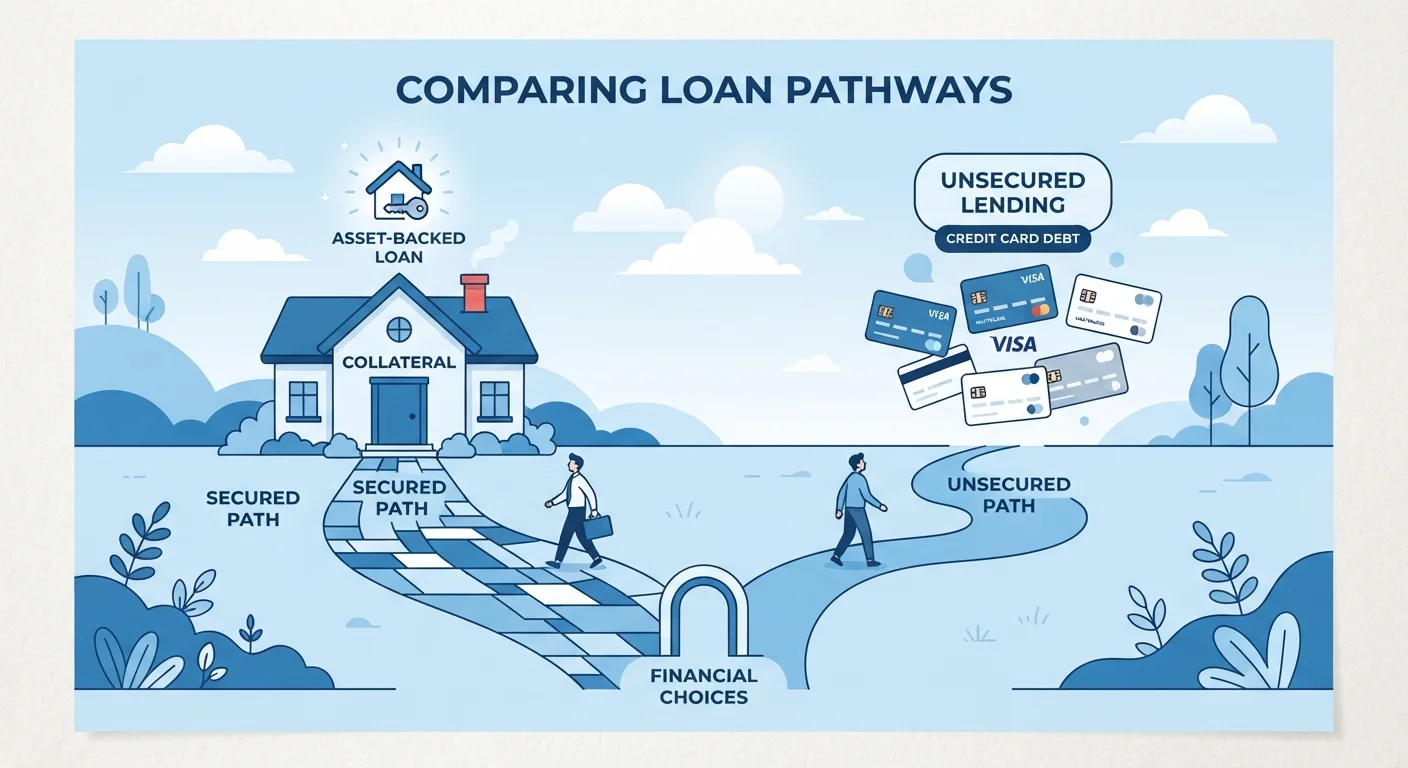
What Makes Debt 'Secured' or 'Unsecured'?
When a lender gives you money, they're taking a risk. The way they manage that risk is what separates secured from unsecured debt.
Secured debt is backed by collateral - a specific asset you agree to hand over if you stop making payments. A mortgage uses your home as collateral. An auto loan uses your car. If you default (meaning you stop paying), the lender has a legal right to repossess or foreclose on that asset to recover what they're owed.
Unsecured debt has no collateral attached to it. The lender is extending credit based purely on your creditworthiness - your credit score, income, and debt history. Credit cards, student loans, and most personal loans fall into this category. If you default, the lender can't immediately seize property, but they can pursue collection actions and report the default to credit bureaus, damaging your credit score.
For a broader look at how these debt categories fit into the bigger picture, see Understanding the Different Types of Debt.
How Collateral Changes Interest Rates and Risk
Collateral acts like a safety net for lenders - and that safety net has a direct effect on what you pay.
Because secured lenders have a way to recover their money even if you default, they're willing to accept lower interest rates. That's why mortgage rates are generally far lower than credit card rates. The lender's risk is reduced, and that reduction gets passed on to you in the form of cheaper borrowing costs.
Unsecured lenders take on more risk, so they charge more. Credit card interest rates are typically much higher because if you walk away from the debt, the lender has no property to claim - only legal remedies that take time and money.
| Criterion | Secured Debt | Unsecured Debt |
|---|---|---|
| Collateral required | Yes - specific asset pledged | No collateral needed |
| Typical interest rate | Lower (lender risk is reduced) | Higher (lender takes more risk) |
| Default consequence | Asset repossession or foreclosure | Credit damage, collections, potential lawsuit |
| Common examples | Mortgage, auto loan | Credit card, personal loan |
| Approval basis | Credit + value of collateral | Credit score and income |
| Repayment priority if finances are tight | High - asset directly at risk | Also important, but less immediate |
This risk equation also affects you as a borrower. With secured debt, the stakes are concrete and immediate - miss enough mortgage payments and you could lose your home. With unsecured debt, the consequences are serious (damaged credit, collections, potential lawsuits) but your physical assets aren't immediately on the line. Neither is consequence-free, but they carry different types of urgency.
Common Examples You'll Encounter
Recognizing which category your debts fall into helps you make smarter decisions about managing them.
Secured debt examples
- Mortgage: Your home secures the loan. Lenders can foreclose if you default.
- Auto loan: Your vehicle is the collateral. Lenders can repossess it.
- Secured credit card: You deposit cash that becomes your credit limit. That deposit protects the lender. This can be a useful tool for building credit - see Secured vs. Unsecured Credit Cards for details.
Unsecured debt examples
- Credit cards: No asset attached - approval is based on creditworthiness.
- Personal loans: Lump-sum loans without collateral, typically at higher rates than secured alternatives.
- Student loans: No asset secures them, though federal loans come with their own unique protections and repayment rules.
For a full breakdown of each debt type and what it costs you, Types of Personal Debt and How Each One Works is a useful next read.
What This Means for How You Manage Debt
Knowing your debt types isn't just academic - it shapes how you should prioritize repayments.
If you're ever in financial difficulty and can only pay some of your bills, secured debts generally deserve attention first. Falling behind on your mortgage or auto loan can result in losing your home or your only way to get to work. Unsecured debts carry serious consequences too, but the immediate physical impact is different.
This doesn't mean unsecured debt is harmless. High-interest credit card debt can quietly compound into a much larger balance than what you originally borrowed, trapping you in a cycle that's hard to break. You can explore how different borrowing fits into your overall financial health in our article on Good Debt vs. Bad Debt.
Not All Unsecured Debt Works the Same Way
Federal student loans, for example, are unsecured but come with income-driven repayment plans and forgiveness programs not available on most other unsecured debts. Medical debt and credit card debt also follow different collection rules. Always look at the specific terms of any debt - not just its category - to understand what you're agreeing to.
This article is for general informational purposes only and does not constitute personalized financial, legal, or investment advice. If you're managing significant debt or facing financial hardship, consider speaking with a licensed financial counselor or advisor about your specific situation.