
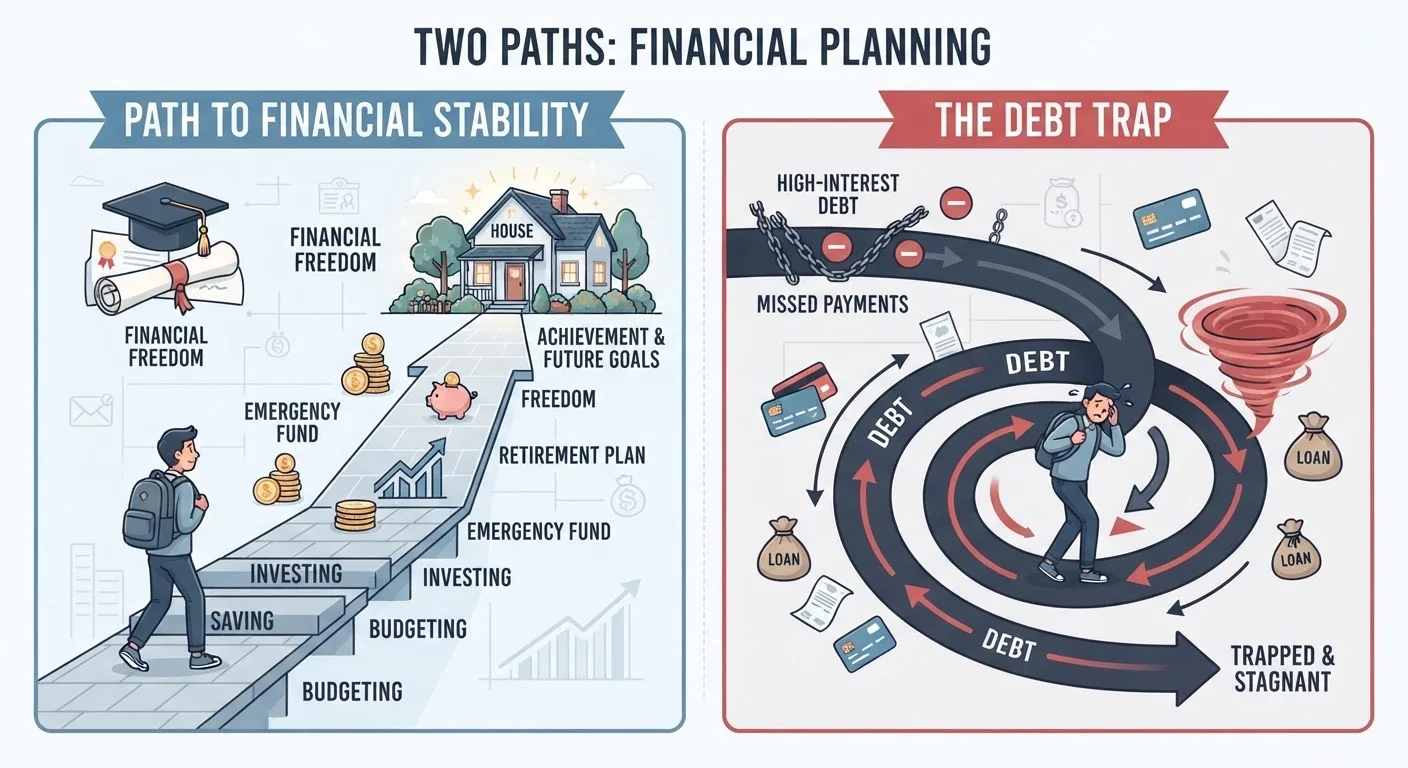
Why the Good Debt vs. Bad Debt Framework Exists
Most people are taught that debt is something to fear and avoid. That instinct makes sense - borrowing money costs money. But the reality is more nuanced. Personal finance educators often distinguish between debt that works for you and debt that works against you. Understanding this difference can reshape how you think about credit entirely.
The core idea is simple: good debt is borrowing that has the potential to improve your financial position over time. Bad debt is borrowing that costs you more than you gain - usually tied to high interest rates and purchases that lose value fast.
That said, the labels are shortcuts, not guarantees. For a deeper look at how this framework holds up in practice, see whether the good debt vs. bad debt idea actually holds up. For now, let's break down what each category looks like in the real world.
| Criterion | Good Debt | Bad Debt |
|---|---|---|
| Typical interest rate | Lower (e.g., mortgage, student loan) | Higher (e.g., credit card, payday loan) |
| What it finances | Assets or opportunities with lasting value | Consumables or depreciating goods |
| Effect on net worth | Potentially builds equity or income | Generally reduces net worth over time |
| Repayment structure | Fixed term with a clear payoff date | Often revolving; easy to carry indefinitely |
| Risk level | Moderate - depends on purpose and amount | Higher - especially with minimum payments |
| Common examples | Mortgage, student loan, business loan | Credit card balance, payday loan, high-rate auto loan |
What Makes Debt 'Good'?
Good debt generally shares a few characteristics: a relatively low interest rate, a clear connection to something that grows in value or earning power, and a repayment plan you can realistically manage.
- Mortgages: Borrowing to buy a home means you're building equity - ownership stake - over time as you pay down the loan. Real estate can appreciate, though it doesn't always, and homeownership comes with costs beyond the mortgage.
- Student loans: Education debt is commonly cited as good debt because a degree can increase lifetime earning potential. Whether that holds true depends on the field of study, the total borrowed, and the job market - so it's worth thinking carefully before borrowing large amounts.
- Business loans: Borrowing to start or grow a business can generate income that exceeds the cost of the loan. Risk is real here, but the underlying logic is sound.
Even within these categories, context matters enormously. A mortgage you can barely afford isn't good debt. A student loan that far outpaces your expected salary in your field deserves serious scrutiny. To explore how different loan structures work, see our breakdown of the different types of debt.
What Makes Debt 'Bad'?
Bad debt typically has one or more of these features: a high interest rate, no lasting value in what was purchased, and terms that make it easy to carry a balance indefinitely.
- Credit card debt: When you carry a balance month to month on a high-interest card, you're paying a significant premium on everything you bought. A $500 purchase can cost substantially more over time if you only make minimum payments.
- Payday loans: These short-term, high-fee loans are among the most costly forms of borrowing available. They can trap borrowers in cycles of renewal and escalating fees.
- Auto loans for depreciating vehicles: Cars lose value quickly. Borrowing heavily for a vehicle - especially with a long loan term - can leave you owing more than the car is worth.
None of this means you should never borrow for these things. Sometimes a car loan is unavoidable for getting to work. The goal is to borrow as little as possible, at the lowest rate you qualify for, and pay it off as quickly as you can manage.
For a clear overview of how secured and unsecured borrowing differs in terms of your risk, see how collateral changes the picture with secured vs. unsecured debt.
How to Evaluate Any Debt Before You Take It On
Rather than relying on a label, ask yourself these questions before borrowing:
- What is the interest rate - and what will this actually cost me? Use a loan calculator to see the true total cost, not just the monthly payment.
- Does this purchase or investment have a realistic chance of holding or growing in value? If not, be cautious.
- Can I comfortably make the payments without sacrificing essentials? A general guideline is that total monthly debt payments shouldn't exceed 36% of your gross (pre-tax) monthly income - though your situation may call for a tighter limit.
- Is there a lower-cost alternative? Could you save up for a portion first, borrow less, or find a lower rate?
If you're already carrying debt and figuring out your next move, managing debt without letting it manage you walks through practical repayment strategies. And if you're weighing debt payoff against building savings, this guide on the debt vs. savings trade-off can help you think through that balance.
This article is for general informational and educational purposes only. It is not personalized financial, tax, or legal advice. For guidance specific to your situation, consider speaking with a licensed financial professional.