
What Is a Credit Score, Really?
A credit score is a three-digit number - typically ranging from 300 to 850 - that summarizes how reliably you've managed borrowed money. Lenders, landlords, and even some employers use it to quickly gauge how much financial risk you might represent. The higher the number, the lower the perceived risk.
Think of it as a financial report card that updates constantly based on your behavior. For a deeper look at what the number actually signals, see Credit Scores Explained.
“A credit score is not a measure of your worth as a person - it is simply a statistical tool lenders use to estimate risk. Understanding that distinction is the first step to taking control of it.”
— Consumer Financial Protection Bureau, U.S. Federal Consumer Financial Regulator
Where Credit Scores Come From
Your score doesn't appear out of thin air. It is calculated by a scoring model - a mathematical formula - applied to the data inside your credit report. The three major credit bureaus (Equifax, Experian, and TransUnion) each maintain their own report on you, and your score may differ slightly across all three.
Your Credit Report Is Not Your Credit Score
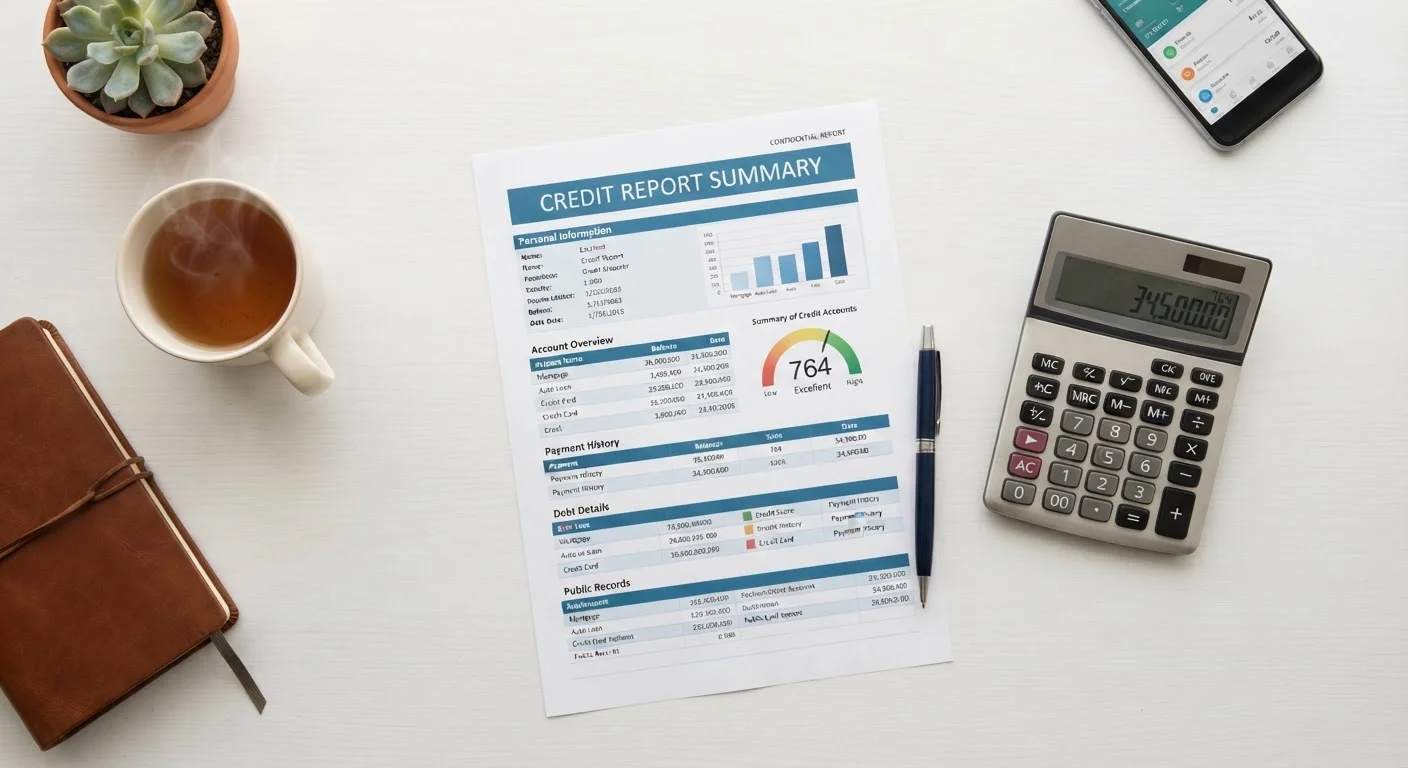
Your credit report is the raw record of your borrowing history maintained by the three major bureaus - Equifax, Experian, and TransUnion. Your credit score is a number calculated from that report using a scoring model. You are entitled to a free copy of your report from each bureau every 12 months at AnnualCreditReport.com, which is the only federally authorized source. Review it for errors before assuming your score reflects your true history.
Scoring models like FICO and VantageScore pull data from those reports and run it through their formula. You don't control the formula, but you do control almost everything that goes into your report.
FICO vs. VantageScore: Two Common Models
FICO and VantageScore are the two most widely used credit scoring models. Both use a 300-850 scale and pull from the same credit report data, but they weight factors slightly differently. Most mortgage lenders rely on FICO, while many free credit monitoring tools show VantageScore. Checking both gives you a fuller picture, but don't stress over small differences between the two.
The Five Factors That Build Your Score
Credit scoring models consider five main categories of information. Understanding each one is the fastest way to understand your score. For a full breakdown, visit our article on the five factors that shape your credit score.
35%
Weight of payment history in FICO score
According to FICO, payment history is the largest single factor in calculating your credit score.
200M+
Americans with a scoreable credit file
The Consumer Financial Protection Bureau (CFPB) estimates that over 200 million Americans have a credit file with at least one major bureau.
30%
Recommended credit utilization ceiling
Credit experts generally advise keeping your utilization rate below 30% to avoid negative score impact.
- Payment History (35%): Whether you pay on time. Late or missed payments have the largest negative impact.
- Credit Utilization (30%): The percentage of your available revolving credit (mainly credit cards) that you're using. Lower is better.
- Length of Credit History (15%): How long your accounts have been open. Older accounts generally help your score.
- Credit Mix (10%): Whether you have a variety of account types - such as credit cards, auto loans, or installment loans.
- New Credit (10%): Recent applications for credit. Each hard inquiry from a lender can slightly lower your score temporarily.
Set up autopay for at least the minimum payment on every account so you never accidentally miss a due date - even one missed payment can stay on your report for seven years.
Payment history carries the most weight in your score, and a single 30-day late payment can drop a good score significantly.
Request a credit limit increase on an existing card rather than opening a new one - this lowers your utilization ratio without triggering a new hard inquiry.
A higher credit limit with the same spending reduces your utilization percentage, which can produce a noticeable score improvement within one billing cycle.
How Your Score Is Used Against You (or For You)
Lenders translate your score into an interest rate. A higher score typically means access to lower rates on mortgages, auto loans, and credit cards - which can save thousands of dollars over a loan's lifetime. A lower score may mean higher rates, larger security deposits, or loan denials altogether.
Landlords commonly pull credit as part of rental applications, and some employers in certain industries check credit reports (though not scores) during background checks. Understanding how the credit and debt system works puts you in a position to navigate it intentionally rather than reactively.
Beware of 'Credit Repair' Promises
Companies that promise to erase accurate negative information from your credit report for a fee cannot legally do what they claim. Under the Credit Repair Organizations Act, you have the right to dispute errors yourself for free through the credit bureaus. Paying for a service that promises overnight fixes is a common scam targeting people with damaged credit.
How to Start Improving Your Score Today
Improving your credit score is not complicated - but it does require patience. Most meaningful changes take three to six months to appear, and some negative items remain on your report for up to seven years. Here's where to focus first:
- Pay every bill on time - even if it's just the minimum. Consistency is everything.
- Pay down revolving balances to bring your utilization below 30%.
- Don't close old accounts unnecessarily - they support your average account age.
- Limit new credit applications to avoid stacking hard inquiries.
- Dispute errors on your credit report directly through the bureaus for free.
Start Building Credit With Low-Risk Options
If you have little or no credit history, a secured credit card or becoming an authorized user on a trusted family member's account are two of the lowest-risk ways to start. Both can help establish a positive payment history without requiring a strong existing score. Make small, planned purchases and pay the balance in full each month.
For habits that sustain improvement over the long term, read Steady Habits That Support a Healthy Credit Score Over Time.
Common Myths That Hold People Back
Misinformation about credit scores is widespread. Here are a few of the most damaging myths:
- Myth: Checking your own score hurts it.
- False. Checking your own score is a soft inquiry and has zero impact. Only hard inquiries from lenders affect your score.
- Myth: You need to carry a balance to build credit.
- False. Carrying a balance means paying interest needlessly. You build credit by using your card and paying the full balance each month.
- Myth: Closing cards you don't use will help your score.
- Usually false. Closing accounts can raise your utilization ratio and shorten your credit history, both of which can lower your score.
If you also want a practical guide to responsible card use, the Credit Cards Basics hub is a useful next step.
This article is for general informational and educational purposes only and does not constitute personalized financial, legal, or credit advice. Consult a qualified financial professional for guidance specific to your situation.