
Why Your Credit Score Isn't a Mystery
A credit score can feel like a judgment handed down from somewhere invisible. But it's actually a calculated number built from five specific factors - and once you know what they are, the score stops being intimidating and starts being manageable.
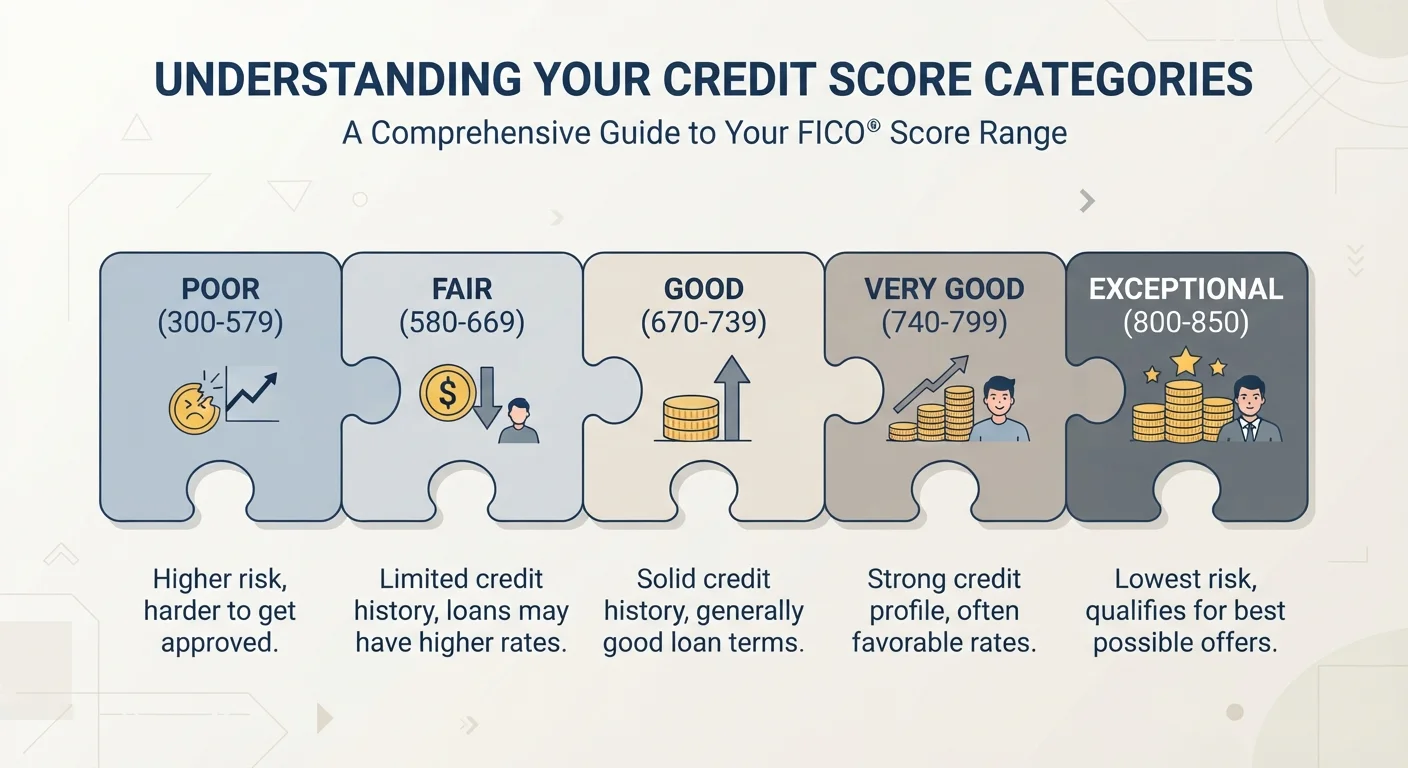
In the United States, the FICO score is the most widely used model, and it ranges from 300 to 850. The higher the number, the lower the risk lenders see when deciding whether to approve you for a loan, credit card, or lease. All five factors are drawn from the information in your credit report - which you can review for free at AnnualCreditReport.com.
Understanding how credit scores work is the first step toward improving yours. Here's a plain-language breakdown of every factor that counts.
| Payment History Weight | 35% of FICO score (FICO scoring model) |
| Credit Utilisation Weight | 30% of FICO score (FICO scoring model) |
| Length of Credit History Weight | 15% of FICO score (FICO scoring model) |
| Credit Mix Weight | 10% of FICO score (FICO scoring model) |
| New Credit Weight | 10% of FICO score (FICO scoring model) |
| FICO Score Range | 300 - 850 (Fair Isaac Corporation) |
| Recommended Utilisation Threshold | Below 30% (General industry guidance) |
| Late Payment Reporting Period | Up to 7 years (Fair Credit Reporting Act (FCRA)) |
The Five Factors, Explained
1. Payment History - 35%
This is the single biggest factor. Lenders want to know: do you pay what you owe, on time? Every on-time payment strengthens this portion of your score. A single missed payment - especially one that goes 30 days or more past due - can cause a noticeable drop. The impact fades over time, but late payments can stay on your credit report for up to seven years.
Quick habit: Set up autopay for at least the minimum due on every account so you never miss a due date by accident.
2. Credit Utilisation - 30%
This measures how much of your available revolving credit (primarily credit cards) you're actually using. If your combined credit limit is $10,000 and your balances total $3,000, your utilisation is 30%. Most guidance suggests keeping this below 30%, and lower is generally better. High utilisation signals financial strain to lenders, even if you pay your bill in full every month. For a deeper look at how your card activity connects to this factor, see how credit card activity shapes your score.
3. Length of Credit History - 15%
The longer your accounts have been open and active, the better this factor looks. It considers the age of your oldest account, the age of your newest account, and the average age across all accounts. This is why closing an old credit card - even one you rarely use - can sometimes hurt your score.
4. Credit Mix - 10%
Lenders like to see that you can handle different types of credit responsibly. A mix of revolving accounts (like credit cards) and installment loans (like a car loan or student loan) typically reflects better than only one type. You don't need to take on debt just to improve this factor - but it helps explain why a thin file with only one account type may score lower.
5. New Credit - 10%
Each time you apply for new credit, lenders run a hard inquiry on your report. A single inquiry has a minor, temporary effect. But several applications in a short window can signal financial desperation and lower your score more noticeably. Rate-shopping for mortgages or auto loans within a short period is generally treated as a single inquiry by most scoring models.
To understand how outstanding balances and debt levels interact with several of these factors, learn how debt affects your credit score in more detail.
What to Focus On First
Because payment history and credit utilisation together account for 65% of a typical FICO score, those two factors deserve your attention first. Paying on time, every time, and keeping card balances well below your limits will move the needle faster than anything else you can do.
The remaining three factors - history length, credit mix, and new credit - matter, but they're harder to influence quickly. In most cases, the best strategy is simply to be patient: keep older accounts open, avoid unnecessary new applications, and let time do its work.
For a full picture of everything that feeds into the score calculation, explore our comprehensive credit score guide.
Your next step today: Pull your free credit report and check which factor is currently hurting you most. If you see a missed payment, note when it was - and know it will carry less weight as time passes. If your utilisation is high, focus on paying down balances before your next statement closes.
This article is for general informational and educational purposes only. It is not personalized financial, credit, or legal advice. For guidance tailored to your situation, consult a qualified financial professional.