
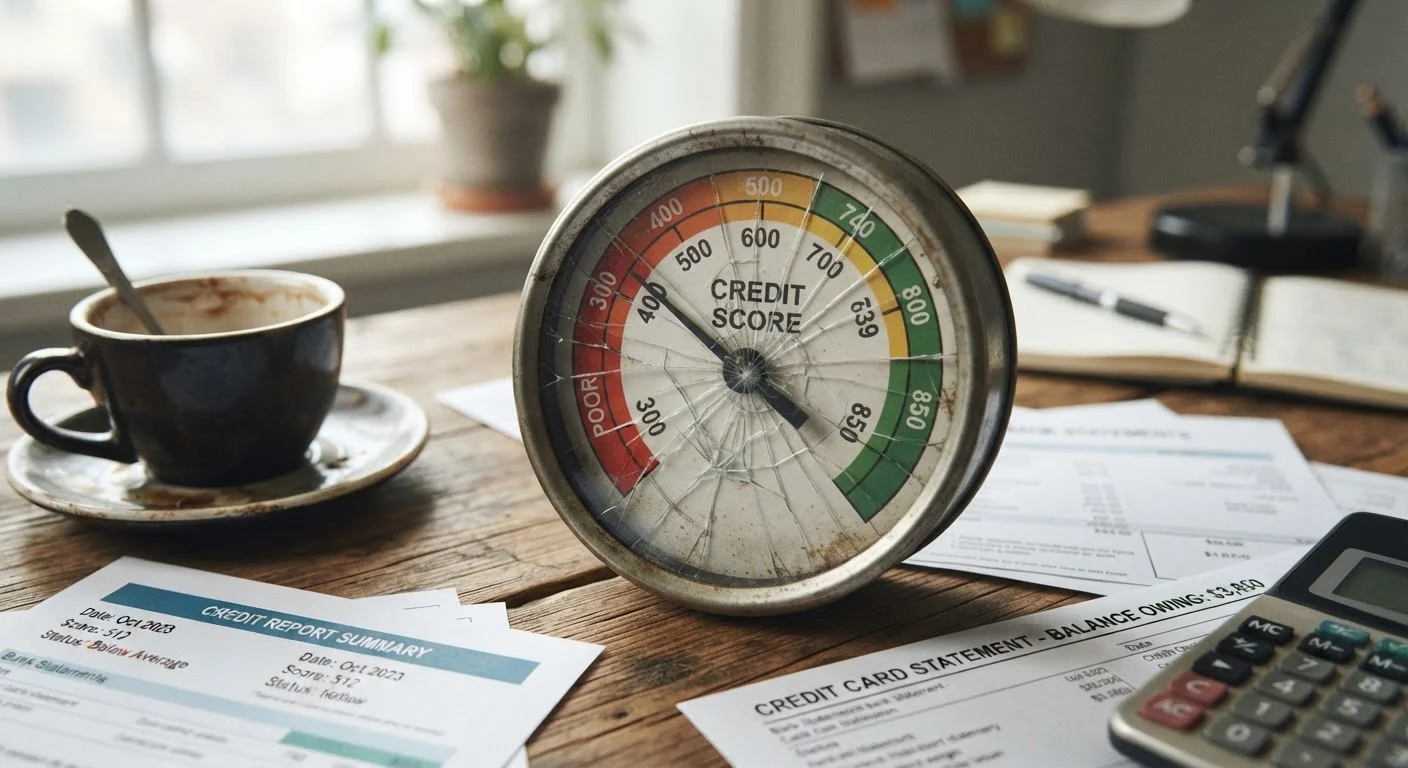
Why Credit Scores Are Easier to Damage Than You Think
Credit scores can feel like a mystery - a three-digit number that seems to move unpredictably. But most score drops follow recognizable patterns, and many are caused by actions that seem perfectly harmless at the time. If you've ever wondered why your score dipped without an obvious reason, the culprit is often something overlooked rather than something dramatic.
Understanding these quiet damagers is the first step toward protecting your score. For a broader look at how a sudden score drop might happen, it helps to first recognize the everyday behaviors that cause gradual erosion. The list below covers the most commonly missed ones.
How Credit Scores Are Calculated
The most widely used credit scores, including FICO scores, are calculated using five main factors: payment history (35%), amounts owed or utilization (30%), length of credit history (15%), new credit inquiries (10%), and credit mix (10%). Different scoring models may weight these factors slightly differently. Understanding these categories helps explain why certain behaviors cause more damage than others.
Overlooked Habits That Quietly Damage Your Credit Score
Carrying a High Credit Card Balance
Credit utilization - the percentage of your available credit you're currently using - makes up roughly 30% of your FICO score, according to myFICO. Many people assume that as long as they pay on time, their balance level doesn't matter. It does. Carrying a balance close to your credit limit signals financial stress to lenders, even if you never miss a payment.
Aim to keep utilization below 30% across all cards, and ideally below 10% for the best scoring outcomes. See how your credit card activity shapes your score for more detail on this calculation.
Carrying a high balance hurts your score even when you pay on time every month.
Closing Old Credit Card Accounts
It feels tidy to close a credit card you no longer use - but it can backfire. When you close an account, you lose the available credit it provided, which raises your overall utilization ratio. You may also shorten your average account age, which affects the 15% of your score tied to credit history length.
Unless a card carries an annual fee that no longer makes sense for you, keeping old accounts open and occasionally using them lightly is generally better for your score. This is one of the most common credit myths turned into harmful action.
Closing an old card can raise your utilization ratio and shorten your credit history simultaneously.
Applying for Several Credit Accounts at Once
Each time you apply for a new credit card or loan, the lender pulls a hard inquiry on your credit report. One inquiry has a small, temporary effect. But applying for multiple accounts in a short window can compound that impact and signal to lenders that you may be in financial difficulty or taking on more debt than you can manage.
Space out applications and only apply for credit when you genuinely need it. If you're shopping for a mortgage or auto loan, multiple inquiries of the same type within a short window are typically treated as one by scoring models - but this grace period does not apply to credit cards.
Multiple credit applications in a short period can make you appear financially stretched to lenders.
Missing a Payment - Even By a Month
Payment history is the single largest factor in your credit score, accounting for about 35% of a FICO score. A payment that is 30 or more days late can trigger a significant negative mark on your report. The damage is compounded if it reaches 60 or 90 days late. A single missed payment can remain on your credit report for up to seven years.
Setting up autopay for at least the minimum payment due is one of the simplest safeguards available. For a full picture of how debt and payment behavior interact, it's worth understanding what each late payment really costs.
A single payment that's 30 days late can leave a mark on your credit report for seven years.
Letting Small Bills Go to Collections
An unpaid gym membership, a forgotten medical co-pay, or an overlooked utility balance may seem trivial, but if a creditor hands the debt to a collections agency, it can appear on your credit report as a collection account. The Consumer Financial Protection Bureau (CFPB) notes that collection accounts can substantially lower credit scores, regardless of the original balance.
Medical debt reporting rules have evolved in recent years, so it's worth checking current guidelines from the CFPB. But for non-medical debts, even small balances sent to collections can have an outsized negative effect - far greater than the dollar amount involved.
A forgotten $40 bill sent to collections can cause more credit damage than its small size suggests.
Co-Signing Without Considering the Risk
When you co-sign a loan or credit card for someone else, that account appears on your credit report as if it were your own. If the primary borrower misses payments or defaults, your score takes the hit - and you may be legally responsible for the debt. Many people don't realize co-signing creates a full credit obligation, not just a reference.
This is especially relevant for understanding what a damaged score can cost you in real terms, from loan rates to rental applications.
Co-signing ties another person's payment behavior directly to your own credit profile.
This article is for general informational and educational purposes only and does not constitute personalized financial, legal, or credit advice. Your situation is unique - consider consulting a certified financial counselor or credit professional for guidance tailored to your circumstances.
Building Awareness Is the First Step Forward
None of these credit-damaging behaviors are difficult to correct once you know about them. The challenge is that most people simply aren't taught how credit scoring works - and the gap in knowledge is where the damage happens. Knowing that utilization matters, that old accounts have value, and that a medical bill can end up on your report changes how you make day-to-day financial decisions.
Pair this awareness with steady, low-effort habits and you'll have a solid foundation. And if you want to separate fact from fiction before going further, our guide on credit score myths is a good companion read.