
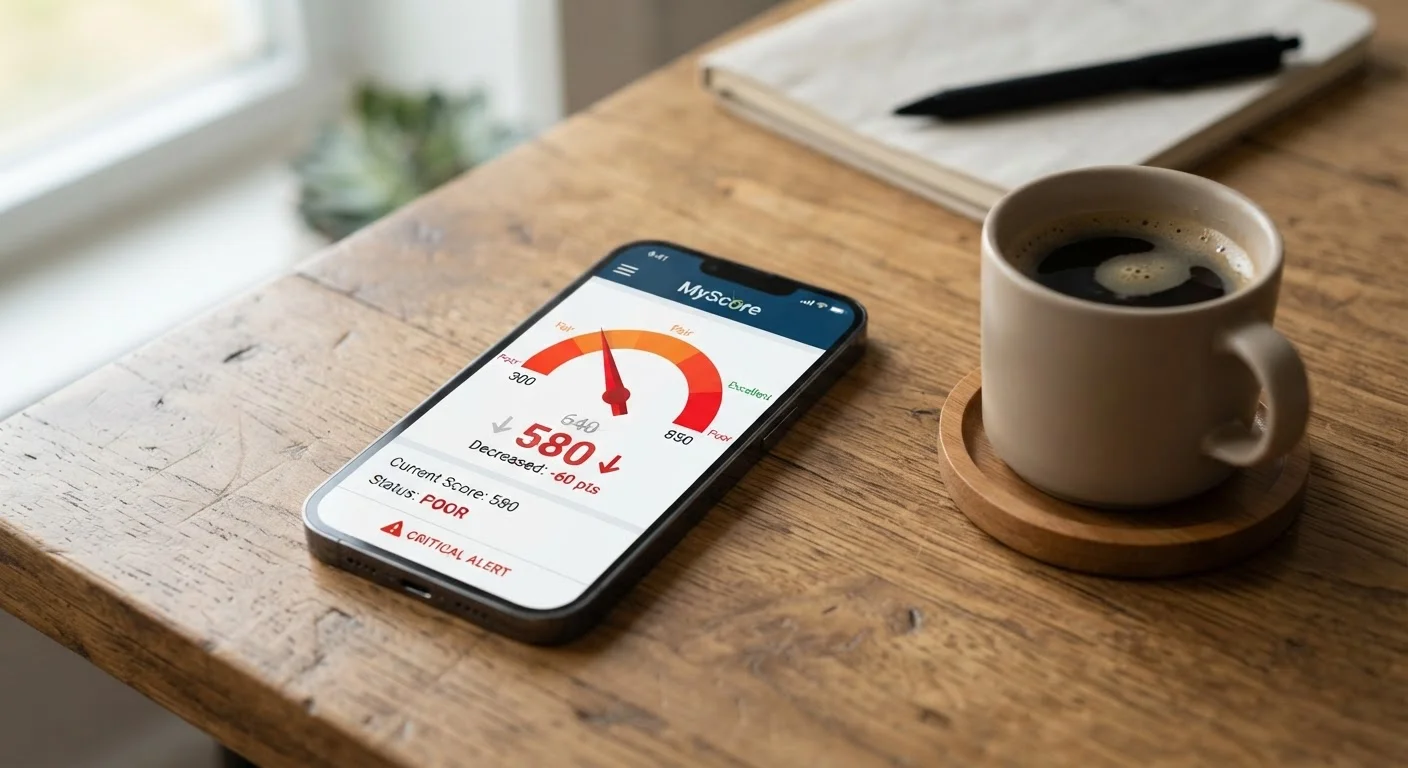
Why Credit Scores Drop - The Basics
A credit score is a three-digit number, typically ranging from 300 to 850, that summarizes how reliably you manage borrowed money. Lenders, landlords, and even some employers use it to assess risk. When your score drops, it means one or more of the inputs the scoring model uses has changed - and not in your favor.
The most widely used model in the US, the FICO score, weighs five main factors: payment history (35%), amounts owed (30%), length of credit history (15%), new credit (10%), and credit mix (10%). A dip in your score almost always traces back to a change in one of these areas. Understanding which factor was affected is the first step to fixing it.
It's worth knowing that a low score touches more than just loan approvals - it can influence rental applications and insurance premiums too. That's why it's worth taking a drop seriously, even if you're not planning to borrow anytime soon.
The Most Common Mistakes That Cause a Drop
Most credit score drops come down to a handful of preventable behaviors. The mistakes below account for the vast majority of sudden or gradual score declines - and all of them are correctable with the right approach.
Missing a payment deadline, even by a few days.
Why it happens: People often forget due dates or assume a few days late won't matter, especially with busy schedules or multiple accounts.
Running up high balances relative to your credit limit.
Why it happens: It's easy to rely on credit cards heavily during expensive months without realizing how the balance-to-limit ratio looks to scoring models.
Applying for several new credit accounts within a short timeframe.
Why it happens: People shopping for the best loan rate or opening store cards impulsively may not realize each application triggers a hard inquiry.
Closing old credit card accounts you no longer use.
Why it happens: It seems logical to tidy up your finances by closing unused cards, but doing so reduces your total available credit and can shorten your average account age.
Ignoring errors on your credit report.
Why it happens: Many people don't check their credit reports regularly and assume the information on file is always accurate.
For a deeper look at how your outstanding balances directly influence your number, see our guide on how debt affects your credit score. And if you're surprised by any of these factors, you're not alone - there are also less obvious habits that quietly damage your score that many people never consider.
Late Payments Stay on Your Report for Seven Years
A single missed payment reported to the credit bureaus can remain on your credit report for up to seven years, according to the Consumer Financial Protection Bureau (CFPB). This makes payment history the single most consequential factor in your score - accounting for roughly 35% of a FICO score. If you've missed a payment, act quickly: paying it before it reaches 60 or 90 days late limits additional damage significantly.
What to Do After Your Score Drops
First, don't panic. Credit scores are dynamic - they respond to your current habits, not just past mistakes. Here's a practical sequence to follow after noticing a drop:
- Pull your credit reports. Visit AnnualCreditReport.com to get your free reports from Equifax, Experian, and TransUnion. Look for inaccurate information, unfamiliar accounts, or late payments you don't recognize.
- Identify the cause. Many credit monitoring services will tell you which factor changed. If not, compare your current report to a previous one and look for new late payments, a higher balance, or a new hard inquiry.
- Address the root issue. If it's a missed payment, bring the account current immediately. If it's high utilization, focus on paying down balances. If it's an error, file a formal dispute with the relevant bureau.
- Be consistent going forward. On-time payments, every month, are the single most reliable way to rebuild a score over time. There are no shortcuts - but there is a clear path.
Don't Ignore Unfamiliar Accounts or Inquiries
If you spot accounts or hard inquiries on your credit report that you don't recognize, don't dismiss them as a glitch. Unauthorized accounts could indicate identity theft or fraud. You're entitled to a free credit report from each of the three major bureaus (Equifax, Experian, and TransUnion) at AnnualCreditReport.com, and disputing inaccurate information is your legal right under the Fair Credit Reporting Act.
This article is for general informational purposes only and does not constitute personalized financial, credit, or legal advice. For guidance tailored to your specific situation, consult a qualified financial professional or credit counselor.