
Why a Written Plan Changes Everything
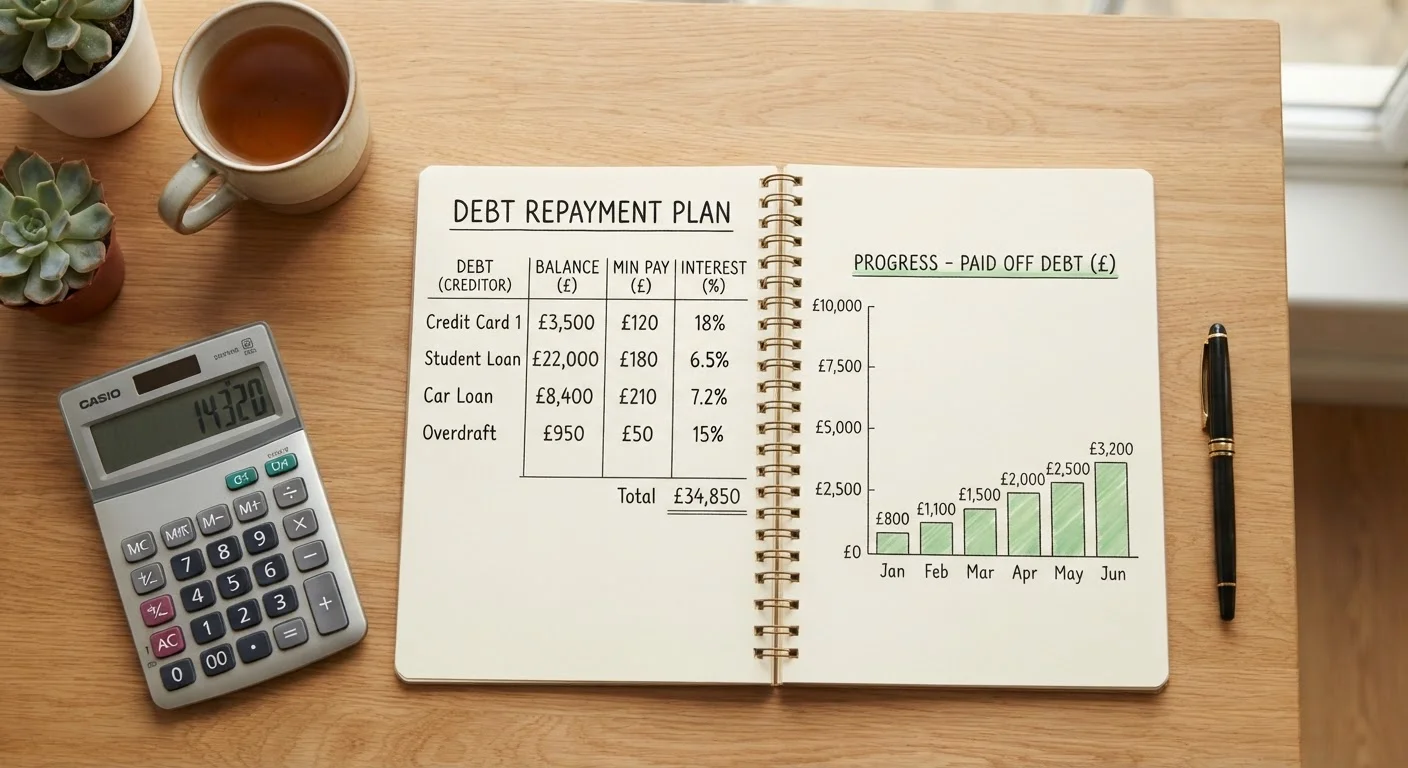
Debt can feel shapeless and overwhelming when it lives only in your head. Writing it down - every balance, every interest rate, every minimum payment - transforms anxiety into a concrete problem you can actually solve. Research from behavioral finance consistently shows that people who articulate specific financial goals and create structured plans are more likely to follow through than those who rely on good intentions alone.
If you're new to this process, the plain-English starting point for debt repayment offers helpful context before you dive into building your plan. For a broader overview of debt types and how repayment affects your credit, the complete reference for managing debt covers all the essentials in one place.
The steps below walk you through creating a personal debt repayment plan from scratch - no financial background required.
What You'll Need Before You Start
Gather the following before working through the steps. Having everything in front of you prevents guesswork and keeps the process moving.
What you will need
Debt inventory worksheet
Records each debt's creditor, balance, interest rate, and minimum payment in one organized table.
Monthly budget summary
Shows your income minus essential expenses so you can identify how much is available for debt repayment.
Calculator or spreadsheet software
Lets you run simple math to project payoff timelines and total interest costs.
Nonprofit credit counseling service
Provides free or low-cost professional guidance if your debt situation feels too complex to navigate alone.
Step-by-Step: Building Your Plan
Work through each step in order. Take your time - accuracy at each stage makes the rest of the plan more reliable.
List Every Debt You Owe
On your worksheet, create a row for each debt with five columns: creditor name, current balance, interest rate (APR), minimum monthly payment, and account type (credit card, personal loan, student loan, medical bill, etc.). Pull exact figures from your statements - don't estimate balances or rates, as even small errors can skew your payoff timeline.
Calculate Your Available Monthly Payment Amount
Write down your monthly take-home income (after taxes). Then subtract all essential, non-negotiable expenses: rent or mortgage, utilities, groceries, insurance, minimum debt payments, and transportation. The amount left over is your discretionary margin - the pool from which you'll fund extra debt payments. Even a small margin, applied consistently, accelerates your payoff significantly over time.
For a structured way to build this budget, the Building a Money Plan hub walks through goal-oriented financial planning step by step.
Choose a Repayment Strategy
Two evidence-supported frameworks are widely used:
- Avalanche method: Pay minimums on all debts, then direct every extra dollar toward the debt with the highest interest rate. This minimizes total interest paid over time.
- Snowball method: Pay minimums on all debts, then target the debt with the smallest balance first. Paying off accounts quickly provides motivational wins that help many people stay consistent.
Neither method is universally superior - choose the one you're most likely to stick with. The best strategy is the one you actually follow.
Assign Payments and Set Up a Monthly Schedule
Using your chosen strategy, record exactly how much you will pay toward each debt each month. Your priority debt gets its minimum payment plus your full discretionary margin. Every other debt gets its minimum payment only. Write the due date next to each payment. When your priority debt is paid off, redirect its full payment amount to the next debt on your list - this is sometimes called a debt cascade or payment rollover.
Project Your Payoff Timeline
For each debt, estimate the number of months until it's paid off under your plan. For fixed-rate loans, divide the balance by the monthly payment for a rough estimate. For revolving debt (credit cards), use a free online amortization calculator - most credit card issuers provide one on their website - to account for interest accruing on the remaining balance. Write the projected payoff date next to each debt on your worksheet. Seeing an end date makes the commitment feel real and achievable.
Review and Adjust Every One to Three Months
Update your worksheet with current balances at each review. Check whether your income or expenses have changed and recalculate your discretionary margin if needed. If you receive a windfall - a tax refund, bonus, or gift - consider applying all or part of it to your priority debt as a lump-sum payment to shorten your timeline. Document any changes so your plan always reflects your actual situation.
This article is for general informational and educational purposes only. It is not personalized financial, legal, or tax advice. For guidance specific to your situation, consider consulting a nonprofit credit counselor or a licensed financial professional.
Keeping the Plan on Track
A debt repayment plan isn't a one-time exercise - it's a living document. Schedule a brief review every one to three months to check your balances, update your budget if your income or expenses change, and celebrate milestones like paying off an individual account. Each paid-off debt frees up cash that can accelerate repayment of the next one.
If you hit a rough patch - a job change, a medical expense, an unexpected bill - revisit your numbers rather than abandoning the plan. Sometimes temporarily reducing extra payments is the right call. In certain situations, speaking directly with your creditors may open options you weren't aware of; the guide to negotiating with creditors explains what's realistic and how to approach those conversations. Your repayment plan and your monthly budget work hand in hand, so revisiting both together is worthwhile - the Budget Basics hub provides straightforward guidance on building and maintaining one.