
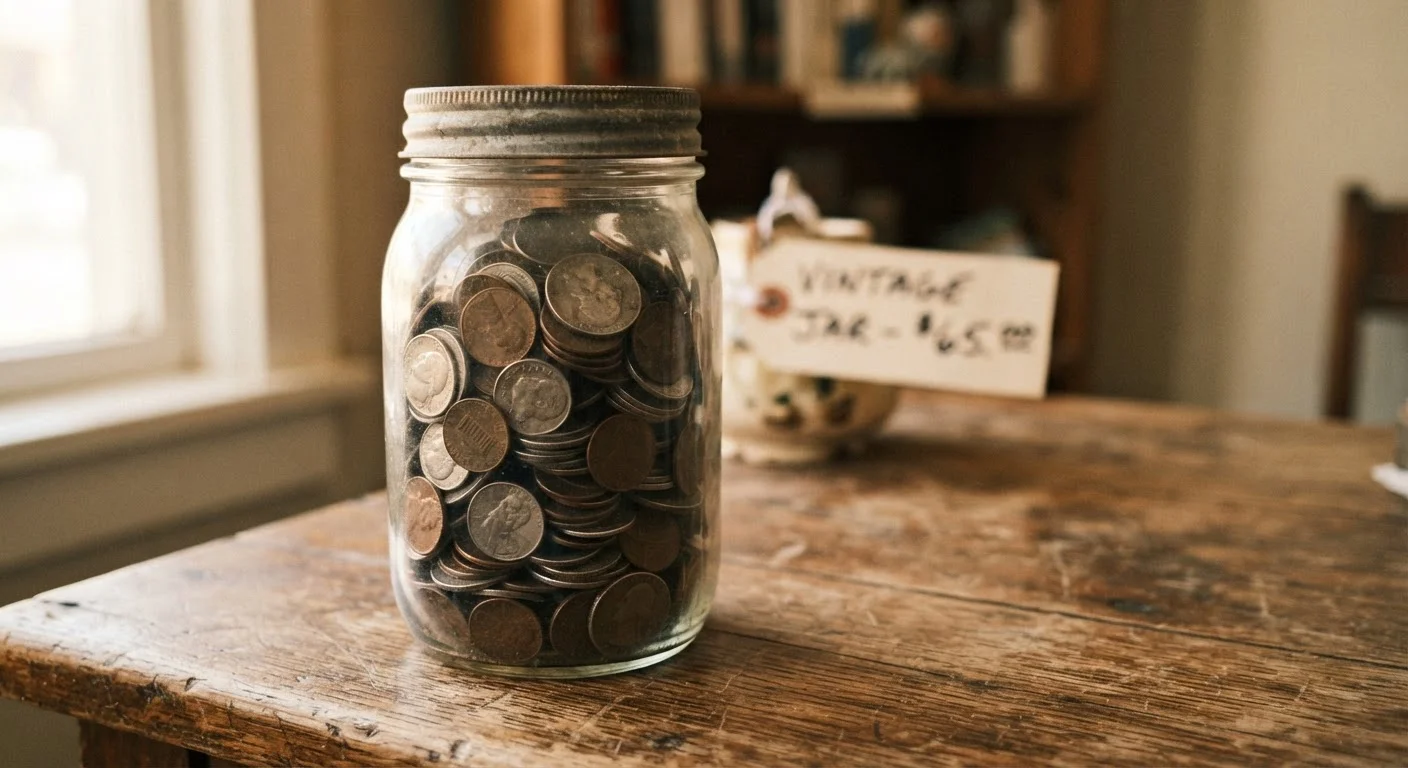
Why Your Money Doesn't Stand Still
Most people think of money as stable. A $100 bill today is still $100 tomorrow. But that overlooks something important: what $100 can buy changes constantly. That's inflation at work.
Consider a simple grocery basket. If that basket cost $100 last year and costs $103 this year, inflation has run at 3%. You need more dollars to buy the same things. Meanwhile, if your cash is sitting untouched - earning little or nothing - you've effectively lost ground without spending a cent.
This is why economists and financial educators often describe cash held over time as having a hidden cost. You don't see the loss on a bank statement, but it's happening. For anyone trying to build financial security, this is one of the most important ideas to understand early. For a closer look at how your savings balance can quietly stall, see what keeps savings flat.
The Gap Between Saving and Investing
Saving and investing are often used interchangeably, but they serve different purposes - and inflation is a big reason why.
When you save, you're preserving dollars. When you invest, you're trying to grow your purchasing power - ideally faster than inflation erodes it. That difference matters over years and decades.
~3%
Average U.S. annual inflation rate (long-run historical average)
The U.S. Bureau of Labor Statistics historical CPI data suggests a long-run average annual inflation rate in the range of 2-3%, though it fluctuates significantly across different periods.
2%
Federal Reserve's inflation target
The Federal Reserve publicly states a long-run inflation goal of 2% per year as part of its dual mandate to promote price stability and maximum employment.
$74
What $100 from 2000 could buy in real terms by 2020
Based on CPI data from the U.S. Bureau of Labor Statistics, a dollar in 2000 had significantly more purchasing power than a dollar two decades later - illustrating the cumulative effect of even moderate inflation.
If a savings account pays 1% annual interest while inflation runs at 3%, the real value of that money shrinks by roughly 2% each year. Over ten years, that's a meaningful reduction in what your savings can actually do for you. Investing - whether in stocks, bonds, real estate, or other assets - is partly a response to this reality. Investors are trying to earn a real return: a gain that beats inflation, not just matches it.
None of this means investing is risk-free. Every investment carries the possibility of loss, and returns are never guaranteed. But understanding why people invest begins with understanding what inflation does to money that doesn't grow.
How Inflation Shapes Investment Thinking
Inflation doesn't just erode cash - it actively shapes how investors evaluate every financial decision. When investors look at a potential return, one of the first questions they ask is: does this beat inflation?
This is why the concept of purchasing power matters so much. A 4% return sounds appealing in isolation. But if inflation is running at 4%, the real gain is close to zero. The investor has more dollars but can buy roughly the same amount as before.
This thinking also explains why long-term investors often accept short-term risk in exchange for the potential of higher returns over time. Keeping money in low-yield instruments may feel safe, but over a long horizon, the steady erosion of purchasing power is its own form of risk - one that's easy to overlook because it happens quietly.
It's also worth noting that inflation affects different assets differently. Some assets have historically kept pace with or outpaced inflation; others have not. Understanding this landscape is part of building financial literacy - not a reason to make any particular investment decision without professional guidance.
For related context on how small, consistent financial actions compound over time, see why small savings add up faster than you think.
Putting It Into Perspective
Inflation doesn't usually feel dramatic day to day. It's slow, incremental, and invisible on a bank statement. That's precisely what makes it worth understanding before it quietly undermines years of careful saving.
The practical takeaway isn't that you should immediately change what you're doing with your money. It's that understanding inflation is foundational to understanding why investing exists as a concept at all. People invest - and accept the risks that come with it - partly because holding cash over long periods has its own risk: the slow loss of purchasing power.
If you're curious about how keeping money at home compares to keeping it in a bank account in light of inflation, savings accounts vs. keeping cash at home explores that comparison directly.
Every person's financial situation is different. This article is general educational information, not personalized financial advice. For decisions about your own money, consider speaking with a qualified, licensed financial adviser who can account for your specific circumstances.
This article is for informational and educational purposes only and does not constitute personalized financial, investment, tax, or legal advice. Consult a qualified financial professional before making decisions about your own money.