
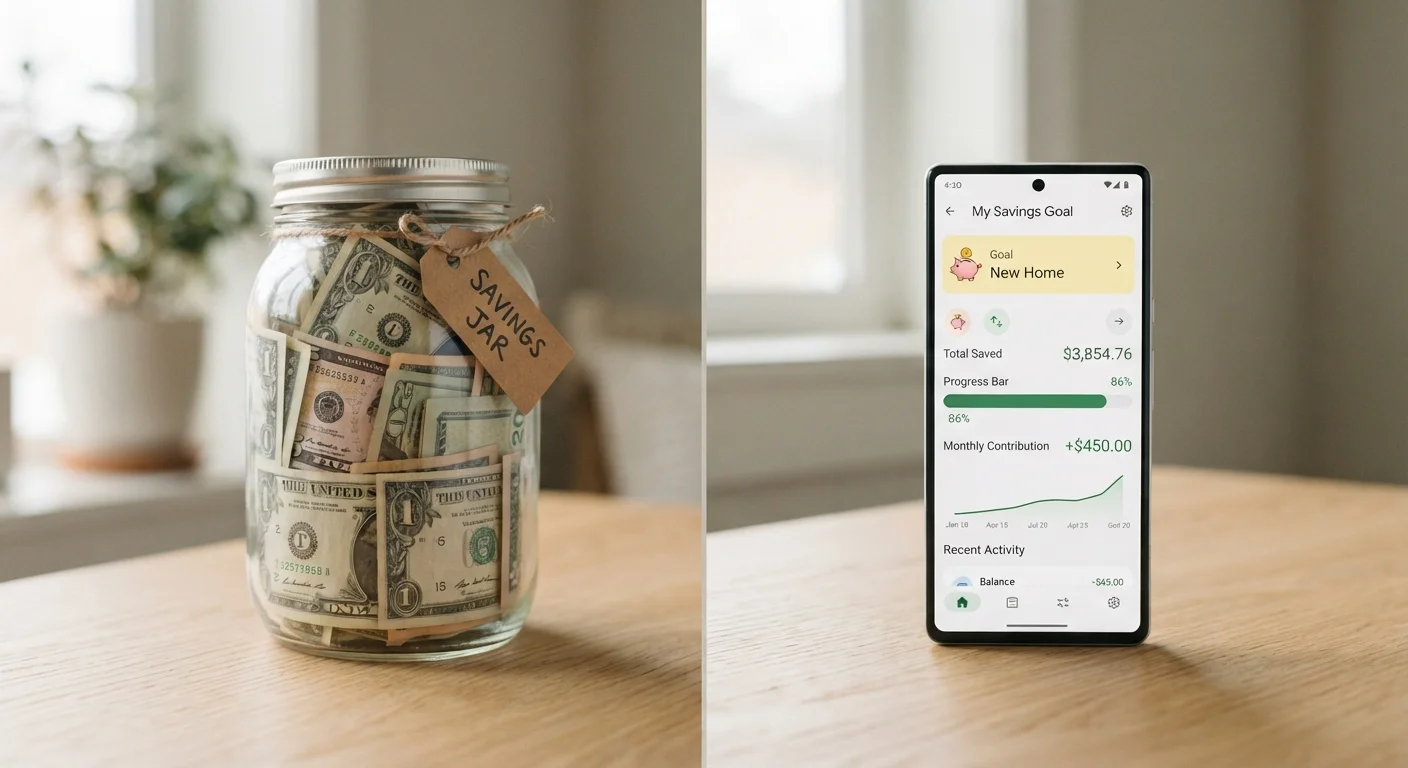
The Core Difference: What Happens to Your Money in Each Place
When you put money in a bank savings account, it doesn't just sit still. The bank pays you interest - a small percentage of your balance - for the privilege of holding your funds. Over time, that interest compounds, meaning you earn a return on both your original deposits and the interest already added. The effect is modest on small balances but grows meaningfully as your savings build up.
Cash kept at home does none of that. It sits exactly as you left it. A $500 bill in an envelope today is still $500 a year from now - nominally. But because of inflation (the gradual rise in prices over time), that $500 buys slightly less than it did before. You haven't lost any bills, but you've lost some of what those bills can actually purchase. To understand this dynamic more fully, see how inflation quietly erodes cash savings.
This is the fundamental trade-off: a savings account is a tool that works for you in the background, while home cash is static and slowly eroded by the economy around it.
Safety and Protection: How Each Option Holds Up
Bank savings accounts at FDIC-insured institutions are protected up to $250,000 per depositor, per institution. That means if a bank were to fail, the federal government guarantees your money up to that limit. For the vast majority of everyday savers, this protection covers their entire balance.
Cash at home carries no such protection. A fire, flood, burglary, or even misplacement can result in permanent, unrecoverable loss. Homeowners or renters insurance may cover some cash losses, but policies typically place low caps on cash - often $200 or less - so the gap is real.
| Bank Savings Account | Cash at Home | |
|---|---|---|
| Earns interest | Yes - compounds over time | No - balance stays flat |
| Protected against inflation | Partially - interest offsets some loss | No - purchasing power erodes |
| Insurance / loss protection | FDIC-insured up to $250,000 | None - loss is permanent |
| Theft or disaster risk | Low - balance unaffected by physical events | High - cash can be stolen or destroyed |
| Accessibility | High - ATM, transfer, online | Immediate - no technology required |
| Encourages saving discipline | Yes - mild friction reduces impulse spending | No - too easy to dip into |
This doesn't mean home cash is always reckless. A modest emergency stash - say, enough to cover a few days of expenses - makes sense for situations where ATMs or electronic payments aren't available. But storing hundreds or thousands of dollars at home introduces risks that a bank account simply doesn't.
Access and Convenience: Getting to Your Money When You Need It
Cash at home wins on one dimension: instant, unconditional access. No login, no card, no network needed. For true emergencies - a power outage, a natural disaster, a situation where electronic payment isn't possible - physical cash is irreplaceable.
Savings accounts are nearly as accessible in most everyday circumstances. You can transfer funds to a checking account, use an ATM, or make electronic payments. Some accounts do limit the number of monthly withdrawals, so it's worth understanding your account's terms before you rely on it for frequent transactions.
If you're building toward a specific goal - a vacation fund, a car repair reserve, a down payment - a savings account's slight friction can actually be helpful. The small effort required to move money out discourages impulse spending and keeps your progress intact. This connects to a broader question about how emergency funds differ from general savings goals and why each deserves its own bucket.
Making the Right Call for Your Situation
For most beginners, a bank savings account is where the bulk of savings belongs. The combination of FDIC insurance, interest earnings, and built-in structure makes it the more financially sound choice. If you're not sure where to start, working through a pre-opening checklist for new savers can help you ask the right questions before committing to a specific account.
A practical approach for many people is this: keep a small amount of cash at home for genuine emergencies - think $100 to $200 - and deposit everything else into a savings account. That way, you're covered for the rare moment when cash is the only option, while your actual savings are protected and growing.
As your habits develop, you'll find it useful to think about what percentage of your income you're actually setting aside. Comparing a fixed-dollar approach to a percentage-based method can help you choose a saving rhythm that fits your income and goals.
This article is for general informational purposes only and does not constitute personalised financial advice. Consult a qualified financial professional before making decisions specific to your situation.