
What a Tax Credit Actually Does
Before comparing the two types, it helps to understand what a tax credit is in the first place. Unlike a deduction - which reduces the amount of income subject to tax - a credit reduces your actual tax bill, dollar for dollar. If you owe $1,500 in federal income tax and claim a $500 credit, you now owe $1,000. That direct reduction is why credits are generally considered more valuable than deductions of the same amount.
For a fuller look at how credits and deductions differ, see our guide to deductions vs. credits.
The critical question is: what happens when a credit is larger than what you owe? That's exactly where the refundable vs. non-refundable distinction becomes important.
How Refundable and Non-Refundable Credits Differ
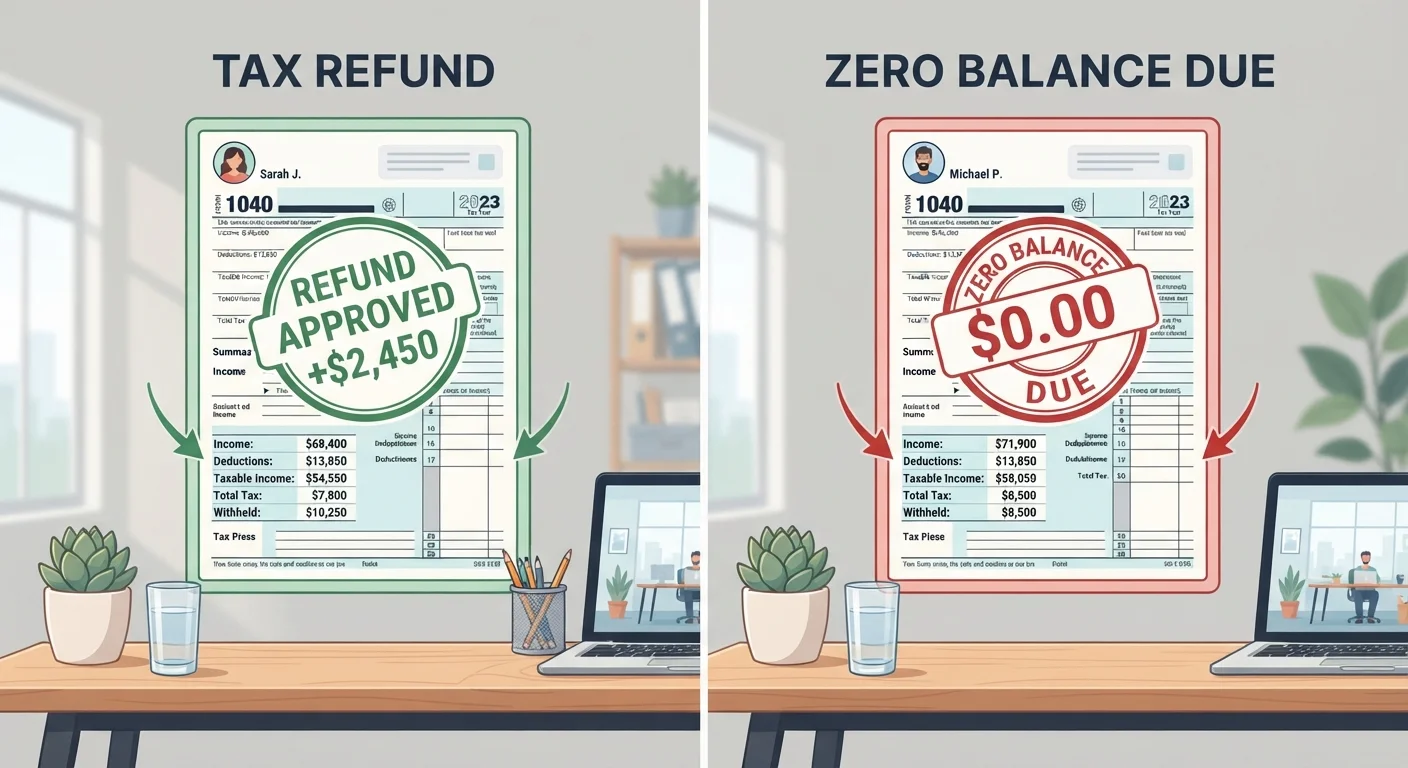
Think of your tax liability as a balance on a bill. A non-refundable credit can pay down that balance - but it can never take it below zero. If you owe $800 and have a $1,200 non-refundable credit, $800 is applied and the remaining $400 simply disappears. You save $800, but you don't see the leftover.
A refundable credit works differently. It can reduce your liability all the way to zero and then pay out the remainder as a refund. Using the same example: a $1,200 refundable credit against an $800 liability would eliminate the bill entirely and return $400 to you.
| Criterion | Refundable Credits | Non-Refundable Credits |
|---|---|---|
| Can reduce tax bill to zero | Yes | Yes |
| Can generate a cash refund | Yes - remainder paid out | No - excess is forfeited |
| Benefit if you owe no tax | Full credit returned | Little to no benefit |
| Common examples | EITC, AOTC (partial), Premium Tax Credit | Child & Dependent Care, Lifetime Learning, Saver's Credit |
| Who benefits most | Lower-to-moderate income earners | Taxpayers with meaningful tax liability |
Some credits fall in between - they're partially refundable. The Child Tax Credit, for instance, has a refundable component called the Additional Child Tax Credit (ACTC), which allows eligible families to receive some credit back even if it exceeds their tax liability. This is worth understanding before assuming a credit is all-or-nothing.
Common Examples of Each Type
Refundable credits you may encounter include:
- Earned Income Tax Credit (EITC): One of the largest refundable credits available to working individuals and families with low-to-moderate income. The amount depends on income, filing status, and number of qualifying children.
- American Opportunity Tax Credit (AOTC): Up to 40% of this education credit - worth as much as $1,000 - is refundable, even if you owe no tax.
- Premium Tax Credit: Helps eligible individuals and families offset the cost of health insurance purchased through the Health Insurance Marketplace.
Non-refundable credits include:
- Child and Dependent Care Credit: Offsets costs for childcare or care for a dependent adult while you work or look for work.
- Lifetime Learning Credit: Covers qualified tuition and education expenses, but is capped at your tax liability.
- Saver's Credit: Rewards contributions to retirement accounts, though only up to the amount you owe.
For a broader overview of credits aimed at everyday earners, see our article on tax credits for working families.
What This Means for Your Refund
Many taxpayers assume that claiming any tax credit will boost their refund. That's only reliably true for refundable credits. If you're counting on a non-refundable credit to generate a windfall but your tax liability is already low, you may be disappointed by the result - not because something went wrong, but because the credit was never designed to pay out beyond your bill.
It's also worth remembering that a refund isn't income - it's your own money returned to you after being withheld throughout the year. For a clearer picture of what refunds actually represent, see why your refund isn't free money.
The practical takeaway: when evaluating credits you might qualify for, ask whether the credit is refundable, and compare it against your estimated tax liability. That context shapes what you'll actually gain. A qualified tax professional can help you determine which credits apply to your specific situation.
This article is for general informational and educational purposes only and does not constitute personalized tax or financial advice. Tax rules are subject to change; consult a qualified tax professional for guidance specific to your circumstances.