
The Refund Feels Like a Windfall - Here's Why It Isn't
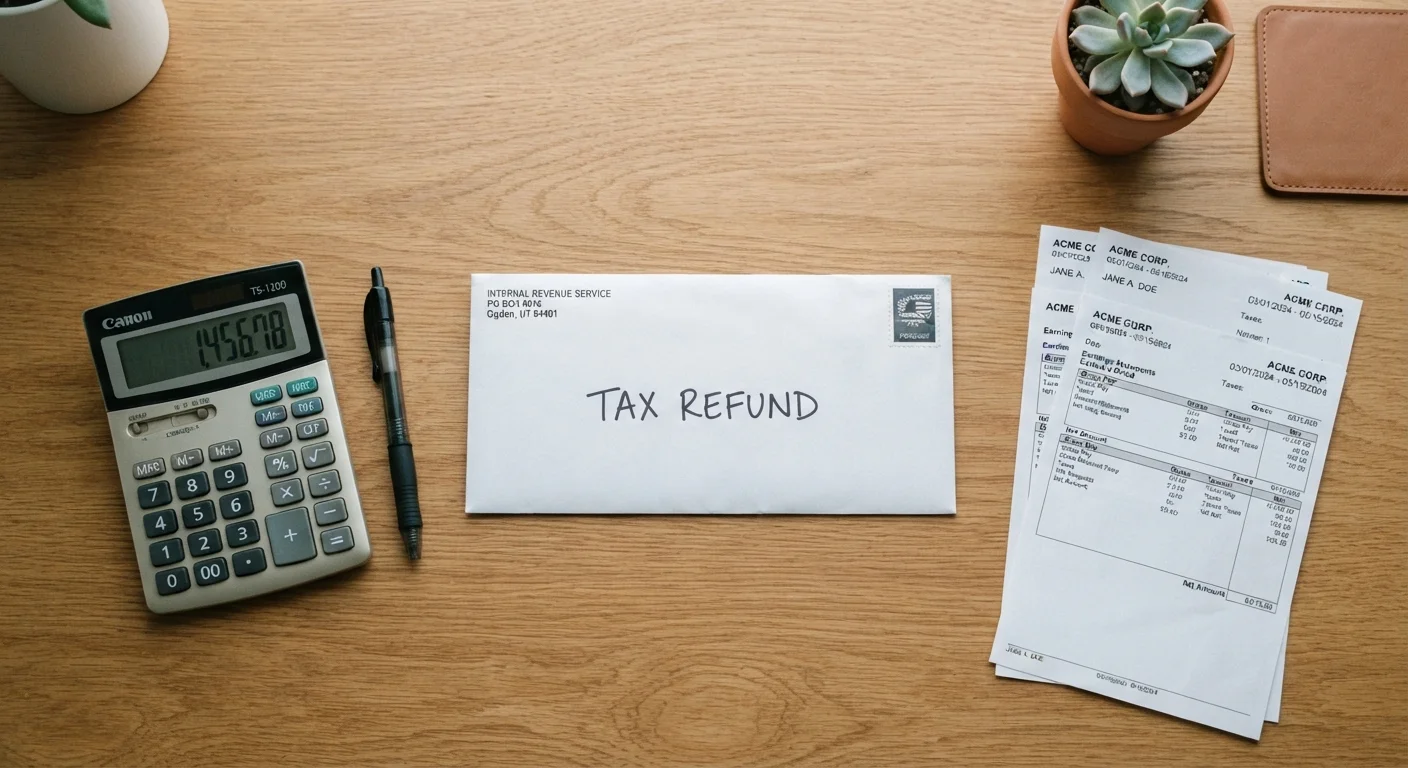
Every spring, millions of Americans check their refund status with excitement, treating the deposit like unexpected cash. But a tax refund is not a gift from the IRS. It is your own money, returned to you after you overpaid during the year.
Here is the basic mechanics: when you work as an employee, your employer withholds federal income tax from each paycheck based on instructions you provide on your W-4 form. That withheld money goes directly to the IRS throughout the year. When you file your tax return in the spring, you calculate what you actually owed. If withholding exceeded your real tax bill, the IRS refunds the difference.
To understand how your tax bill is calculated in the first place, it helps to know what counts as taxable income. See our guide to taxable income for a plain-language breakdown of what goes into that number.
Use the IRS Withholding Estimator
The free IRS Tax Withholding Estimator at irs.gov can help you figure out the right amount to have withheld from each paycheck. It takes about 10-15 minutes and can help you avoid a large refund - or an unexpected bill - next April. Have a recent pay stub and last year's tax return handy before you start.
The Hidden Cost of Overpaying All Year
Getting a large refund may feel satisfying, but consider what happened in the months before it arrived. That money sat with the federal government - not in your bank account. The IRS generally does not pay interest on refunds, meaning you handed over extra funds all year and got nothing in return for doing so.
A concrete way to think about it: if your refund is $2,400, that is roughly $200 per month that was missing from your paycheck. Had that $200 remained in your account each month, you could have used it to cover bills, build an emergency fund, or contribute to a savings account that earns interest.
~$3,000
Average federal tax refund amount
The IRS has historically reported average refund amounts in this range, reflecting widespread over-withholding among U.S. wage earners.
0%
Interest the IRS pays on most refunds
In most cases, the IRS pays no interest on refunded overpayments, meaning early withholding provides no financial return to the taxpayer.
This does not mean you did something wrong - withholding is an imperfect estimate. But it does mean that the goal of a perfectly calibrated tax situation is closer to breaking even than to getting the biggest refund possible.
What Your Refund Actually Tells You
A refund is a signal about your withholding accuracy, not your financial success. If you consistently receive large refunds, it likely means your W-4 settings are directing your employer to withhold more than necessary.
Conversely, if you owe money when you file, it usually means your withholding was too low - not that you did anything illegal. Owing a small amount at filing is common and, for many people, a sign that their paychecks were closer to correct all year.
It is also worth knowing that some refunds are partially or entirely driven by refundable tax credits, not just withholding overpayments. Credits like the Earned Income Tax Credit can produce a refund that exceeds what you paid in. Our article on refundable vs. non-refundable tax credits explains how this works in detail.
For a clearer picture of related terminology, see our article on the difference between a tax return and a tax refund - two phrases that mean very different things.
How to Bring Your Withholding Closer to What You Owe
If you would prefer to have more money each month rather than a large annual refund, the tool to use is your W-4 form. You can submit a new W-4 to your employer at any time - you do not need to wait for a new job or a new tax year.
The IRS provides a free Tax Withholding Estimator at irs.gov. It walks you through your expected income, deductions, and credits to suggest how much should be withheld each pay period. Adjusting your W-4 based on that estimate can reduce the gap between what you pay and what you owe.
Major life changes - getting married, having a child, taking on a second job, or starting freelance work - can significantly shift your tax picture. Revisiting your W-4 after any of these events is a straightforward way to stay aligned. And since tax brackets work differently than most people expect, understanding how your income is taxed at the margin can also help you estimate withholding more accurately.
This article is for general educational purposes only and does not constitute personalized tax advice. Tax situations vary. Consult a qualified tax professional for guidance specific to your circumstances.