
The Starting Point: What the IRS Means by Income
Before you can figure out what is taxable, it helps to understand how the IRS defines income in the first place. The IRS applies a broad definition: income generally includes any economic benefit you receive - money, goods, services, or property - unless a specific law says otherwise. That breadth surprises many first-time filers.
For a fuller picture of how income tax works and who collects it, see our plain-language breakdown of income tax. Understanding that foundation makes it much easier to see where taxable income fits.
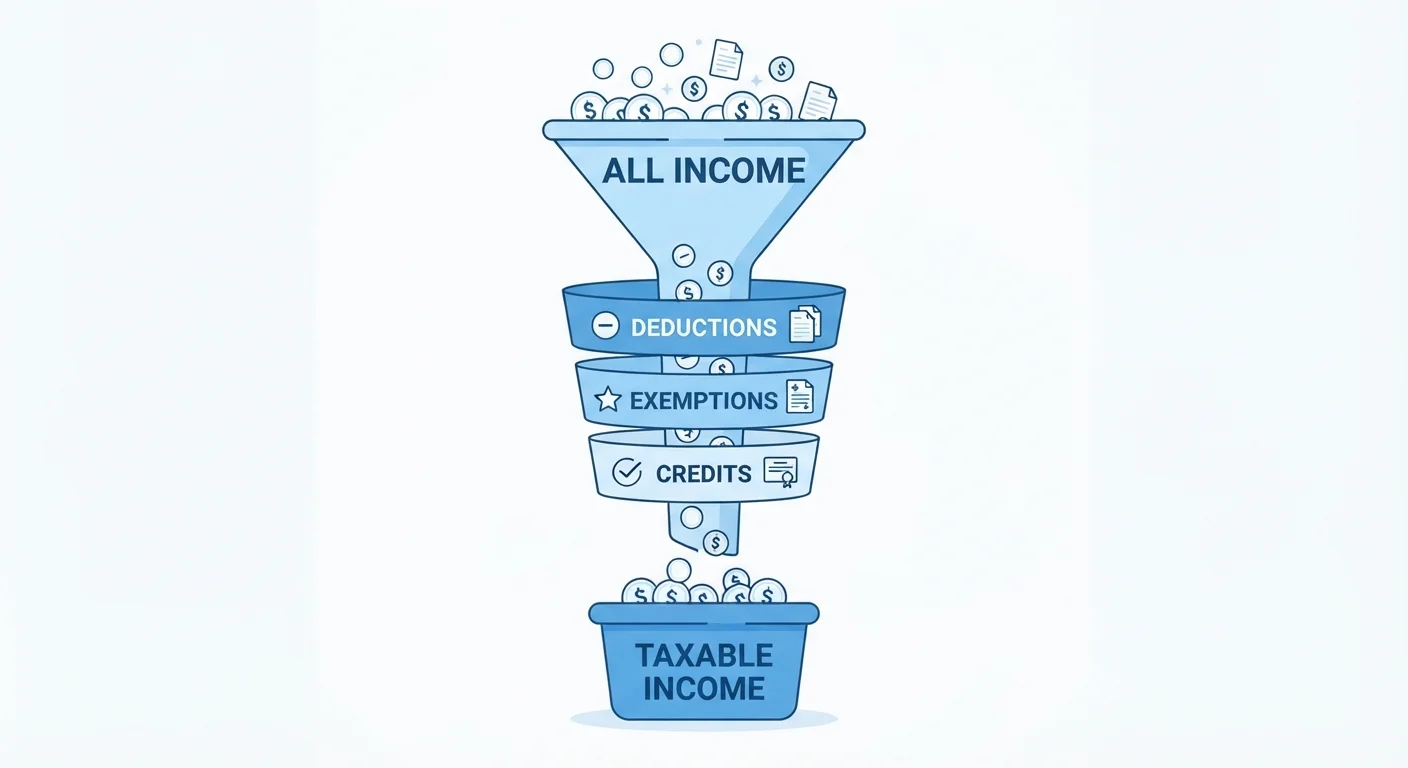
Taxable income is the end result of a filtering process - you start with everything you receive, subtract what the law excludes, make certain adjustments, and then subtract your deductions. What remains is the number the IRS uses to calculate your tax. For a clear walkthrough of how gross income, adjusted gross income, and taxable income relate to each other, the article Untangling the Three lays out each step.
What Generally Gets Counted as Taxable Income
The following income types are almost always included in your taxable income:
- Wages and salaries - your regular paycheck from an employer, before deductions like health insurance or 401(k) contributions.
- Self-employment and freelance income - money earned from side gigs, consulting, or any work where you are your own boss. This is taxable even without a 1099 form. See income types first-time filers often miss for more detail.
- Investment income - interest from savings accounts, dividends from stocks, and capital gains when you sell an investment for more than you paid.
- Unemployment compensation - fully taxable at the federal level.
- Rental income - rent collected from tenants, minus allowable expenses.
- Alimony received under pre-2019 divorce agreements - taxable for the recipient under agreements finalized before 2019.
~90%
Taxpayers who take the standard deduction
According to IRS Statistics of Income data, roughly nine in ten taxpayers claim the standard deduction rather than itemizing, significantly simplifying their taxable income calculation.
$14,600
2024 standard deduction for single filers
The IRS set the standard deduction for single filers at $14,600 for tax year 2024, reducing taxable income by that amount before any tax rate is applied.
Up to 85%
Social Security benefits potentially taxable
The IRS states that up to 85% of Social Security benefits may be included in taxable income depending on the recipient's combined income level.
Business income, tips, bonuses, and certain fringe benefits from employers are also included. The common thread: if you gained economic value and no specific exclusion applies, count it in.
What Is Generally Excluded - and Why
Congress has specifically excluded certain income types from taxable income, often for social policy reasons. Knowing these exclusions can prevent both over-reporting and under-reporting.
- Gifts and inheritances received - recipients generally owe no income tax, though very large estates may trigger separate estate tax rules.
- Life insurance death benefits - proceeds paid to a beneficiary upon the insured person's death are typically not included in taxable income.
- Qualifying scholarships - amounts used for tuition and required fees at an eligible institution are generally excluded; amounts used for room and board are not.
- Workers' compensation - payments received for a work-related injury or illness are generally excluded from federal taxable income.
- Child support received - not taxable to the recipient.
- Most employer-sponsored health insurance premiums - the portion your employer pays is not included in your taxable wages.
Keep in mind that state tax rules do not always mirror federal rules - some states tax income the IRS excludes, so check your state's guidance as well.
How Deductions Reduce Your Taxable Income
Even after applying exclusions, you can still reduce your taxable income further through deductions. Every taxpayer can claim either the standard deduction - a flat dollar amount set by the IRS - or itemized deductions, which are specific eligible expenses you add up individually. You choose whichever gives you the larger deduction.
Common itemized deductions include mortgage interest, state and local taxes (subject to a cap), and charitable contributions. For specifics on the charitable giving deduction, see what actually qualifies as a charitable deduction. For a broader look at legal ways to reduce your bill, explore the Deductions & Credits hub.
Maximize Deductions Before Filing
Review both the standard deduction and your potential itemized deductions each year before deciding which to claim. If you contributed to a traditional IRA or have significant mortgage interest, running the numbers could meaningfully lower your taxable income. A tax professional or free IRS resources like Publication 501 can help you identify what applies to your situation.
Once your taxable income is determined, that figure feeds directly into the tax bracket system to calculate what you owe. Our guide to how tax brackets actually work explains why a higher income does not mean every dollar gets taxed at the top rate.
This article is for general informational purposes only and does not constitute personalized tax or legal advice. Tax rules can change and individual situations vary. Consult a qualified tax professional for guidance specific to your circumstances.