
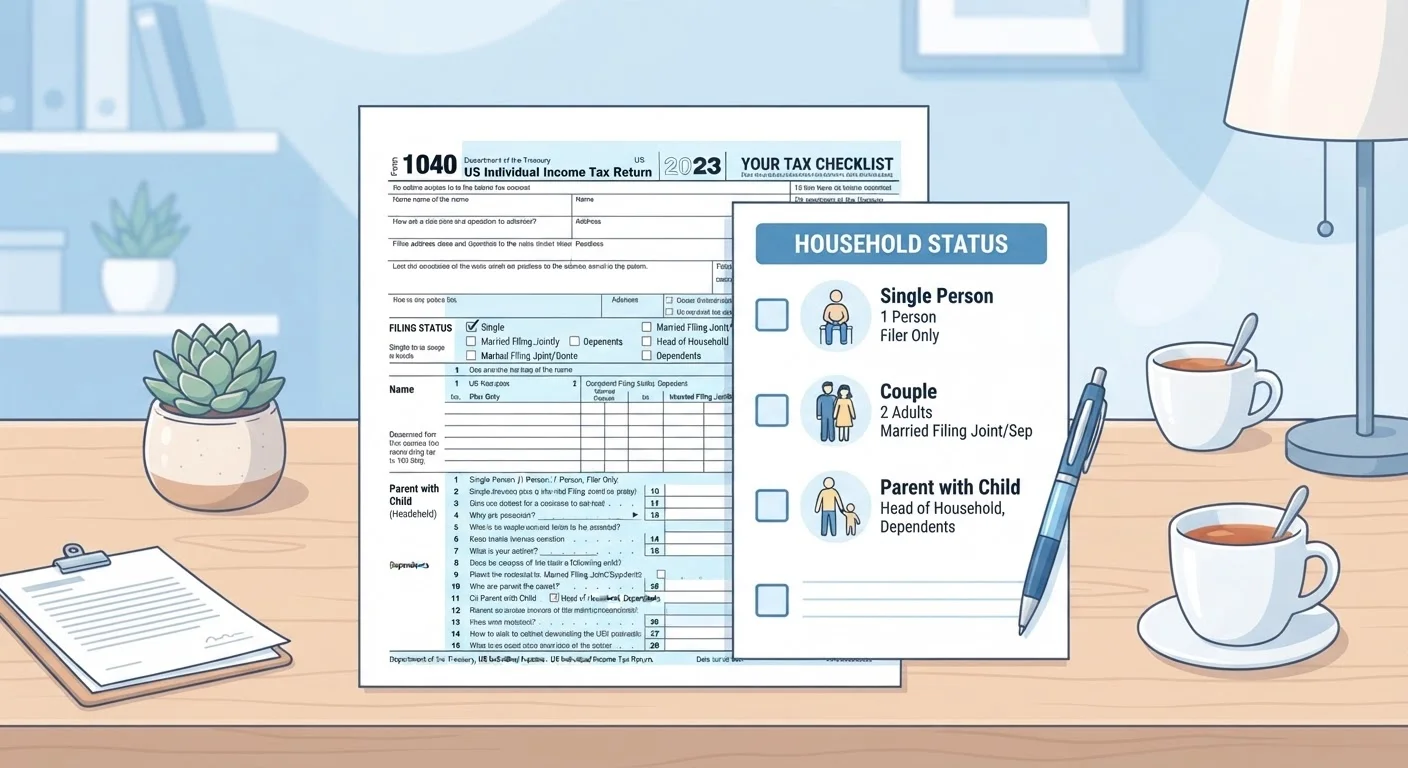
The Five Filing Statuses - What Each One Means
The IRS recognizes exactly five filing statuses. Understanding what distinguishes each one is the foundation of filing correctly.
- Single: You are unmarried, legally separated, or divorced as of December 31. This is the default status for people who do not qualify for any other category.
- Married Filing Jointly (MFJ): You and your spouse combine your income and deductions on one return. This is typically the most advantageous option for married couples.
- Married Filing Separately (MFS): Each spouse files an individual return reporting only their own income. This can be useful in specific circumstances but usually results in a higher combined tax bill and disqualifies you from several credits.
- Head of Household (HOH): You are unmarried, paid more than half the cost of maintaining a home, and had a qualifying person - typically a child or dependent relative - living with you for more than half the year. This status provides a larger standard deduction and lower tax rates than Single.
- Qualifying Surviving Spouse: Available for up to two years after a spouse's death if you have a dependent child and have not remarried. It mirrors the Married Filing Jointly brackets, providing meaningful tax relief.
Each status comes with its own standard deduction amount and its own set of tax brackets - which is precisely why the choice matters so much.
Why the Wrong Status Can Cost You Real Money
Filing status is not a technicality - it directly shapes your tax bill in at least three ways.
1. Standard Deduction Size
The standard deduction reduces the amount of income subject to tax. For a recent tax year, the Head of Household deduction was several thousand dollars higher than the Single deduction. Filing as Single when you actually qualify for Head of Household means you pay tax on more income than you legally owe tax on.
2. Tax Bracket Thresholds
Tax brackets - the income ranges taxed at each rate - are wider for some statuses than others. Married Filing Jointly filers move into higher brackets at much higher income levels than Single filers, reflecting a longstanding design feature of the tax code. Filing incorrectly as Single when you should file jointly could push more of your income into a higher bracket.
3. Credit Eligibility
Several valuable credits are restricted or eliminated based on filing status. Married Filing Separately filers cannot claim the Earned Income Tax Credit, the American Opportunity Credit, or the Child and Dependent Care Credit in most circumstances. Choosing that status without understanding these trade-offs can wipe out thousands of dollars in potential credits.
When in Doubt, Use IRS Publication 501
The IRS publishes a free, detailed guide - Publication 501 - that walks through every filing status with definitions, examples, and decision tables. It is updated annually and freely available at IRS.gov. Reading the relevant section before you start your return can prevent the most common status errors.
It is worth noting that common misunderstandings about filing status feed into broader tax misconceptions that trip up new filers every year - being clear on this one concept goes a long way.
How to Determine Your Correct Status
The IRS provides a straightforward decision path, and working through it in order prevents most errors.
- Were you married on December 31? If yes, you will generally file as Married Filing Jointly or Married Filing Separately. If your spouse died during the year, specific rules apply.
- If unmarried, do you meet the Head of Household tests? You must have paid more than half of household costs and had a qualifying person living with you. The IRS defines "qualifying person" carefully - not every relative qualifies.
- If you do not qualify for Head of Household, file as Single.
- If your spouse died within the past two years and you have a dependent child, check whether Qualifying Surviving Spouse applies before defaulting to Single or Head of Household.
5
IRS-recognized filing statuses
The IRS defines exactly five filing statuses, each with distinct standard deduction amounts and tax bracket thresholds.
~$6,000+
Potential deduction difference: HOH vs. Single
Head of Household filers typically receive a standard deduction several thousand dollars larger than Single filers, directly reducing taxable income.
Dec 31
Date your filing status is determined
The IRS evaluates your marital and household status as of the last day of the tax year, regardless of when you actually file your return.
If your situation is complex - for example, you separated during the year, you support a parent who lives in a different home, or your spouse has significant debt - consider working through IRS Publication 501 carefully or consulting a tax professional. See our overview of self-filing versus using a tax professional to decide which approach fits your situation.
Taking extra time on this single question - before touching anything else on your return - is one of the highest-value steps a beginner can take. And once you have your status right, make sure you are not rushing the rest of the process; waiting until the last minute to file creates its own set of costly problems.
This article provides general educational information about US federal tax concepts. It is not personalized tax advice. Tax rules can change, and individual circumstances vary. Consult a qualified tax professional for guidance specific to your situation.