
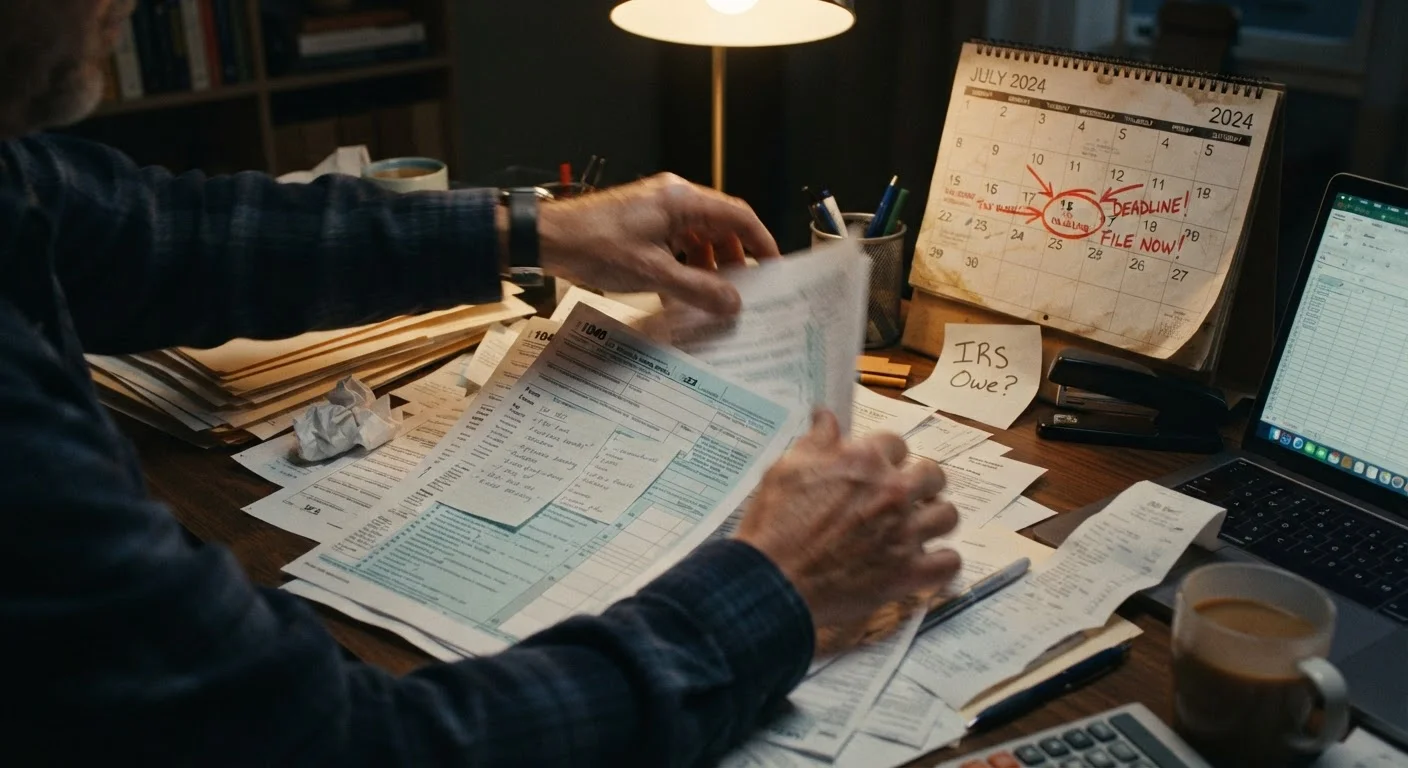
The Hidden Cost of Procrastinating on Your Tax Return
Every spring, millions of Americans scramble to file their federal tax returns in the final days before the April deadline. The rush feels manageable in the moment - until it isn't. Errors slip through, documents turn up missing, and deductions that could have reduced a tax bill get overlooked simply because there wasn't enough time to look for them.
The consequences range from minor inconveniences - like a delayed refund - to more serious problems, including IRS notices, penalties, and amended returns that cost additional time and money to file. None of these outcomes are inevitable. Most arise from a predictable set of mistakes that beginners make when they wait too long to start.
This article walks through those mistakes directly, explains why they happen, and shows what you can do instead. If you're also unsure whether to file on your own or get professional help, our guide on self-filing vs. using a tax professional can help you decide.
Common Last-Minute Filing Mistakes - and How to Avoid Them
The mistakes below aren't unusual or reckless. They're predictable results of filing under time pressure. Recognizing them ahead of time is the first step to avoiding them.
Filing with incomplete or missing tax documents, such as a W-2 or 1099 that hasn't arrived yet.
Why it happens: Employers and financial institutions have their own deadlines for mailing forms, and some arrive later than expected. When filers are rushed, they submit returns before all documents are in hand.
Making data entry errors - transposing Social Security numbers, mistyping income figures, or entering bank account details incorrectly.
Why it happens: Speed and stress are a poor combination. When filers rush through screens or forms, small typos go unnoticed until the IRS flags them or a refund fails to arrive.
Missing deductions or credits you're entitled to claim, such as the Earned Income Tax Credit, student loan interest, or educator expenses.
Why it happens: Identifying eligible deductions requires research and record-keeping. When time is short, filers default to what they know and skip anything unfamiliar, leaving money on the table.
Confusing a filing extension with a payment extension, and then facing unexpected penalties and interest.
Why it happens: Many filers assume that requesting more time to file also means more time to pay any balance owed. That's a common misconception - the IRS expects payment by the original deadline regardless of whether you've filed an extension.
Failing to sign and date the return, or - for joint filers - missing a spouse's signature.
Why it happens: After rushing through a lengthy form, the final step feels like a formality. E-filed returns have electronic signature prompts that are easy to skip when clicking quickly.
Before you submit your return, it's also worth working through a structured review. Our tax year-end checklist covers deductions and credits beginners frequently overlook.
What to Do If You're Already Running Out of Time
If the deadline is close and your return isn't ready, filing for an automatic extension using IRS Form 4868 gives you an additional six months to submit your return - moving the filing deadline to mid-October. This is a straightforward process and avoids the failure-to-file penalty, which is generally steeper than the failure-to-pay penalty.
An Extension to File Is Not an Extension to Pay
This is one of the most costly misunderstandings in tax filing. IRS Form 4868 grants extra time to submit your completed return, but any taxes you owe are still due by the original April deadline. Unpaid balances begin accruing interest and a failure-to-pay penalty immediately after that date. If you're unsure how much you owe, estimate conservatively and pay that amount by the deadline - you can reconcile the difference when you file.
An extension is not a reason to delay indefinitely. Use the extra time to gather missing documents, double-check figures, and review your return carefully before submitting. And if you've encountered one of the common tax misconceptions that trip up new filers, an extension gives you time to sort those out too.
If you've already missed the deadline without filing an extension, don't ignore the situation. What happens if you miss the tax filing deadline explains your options, the penalties involved, and the steps to take to limit further damage.
This article is for general informational purposes only and does not constitute personalized tax or legal advice. Tax rules change periodically. Consult a qualified tax professional for guidance specific to your situation.