
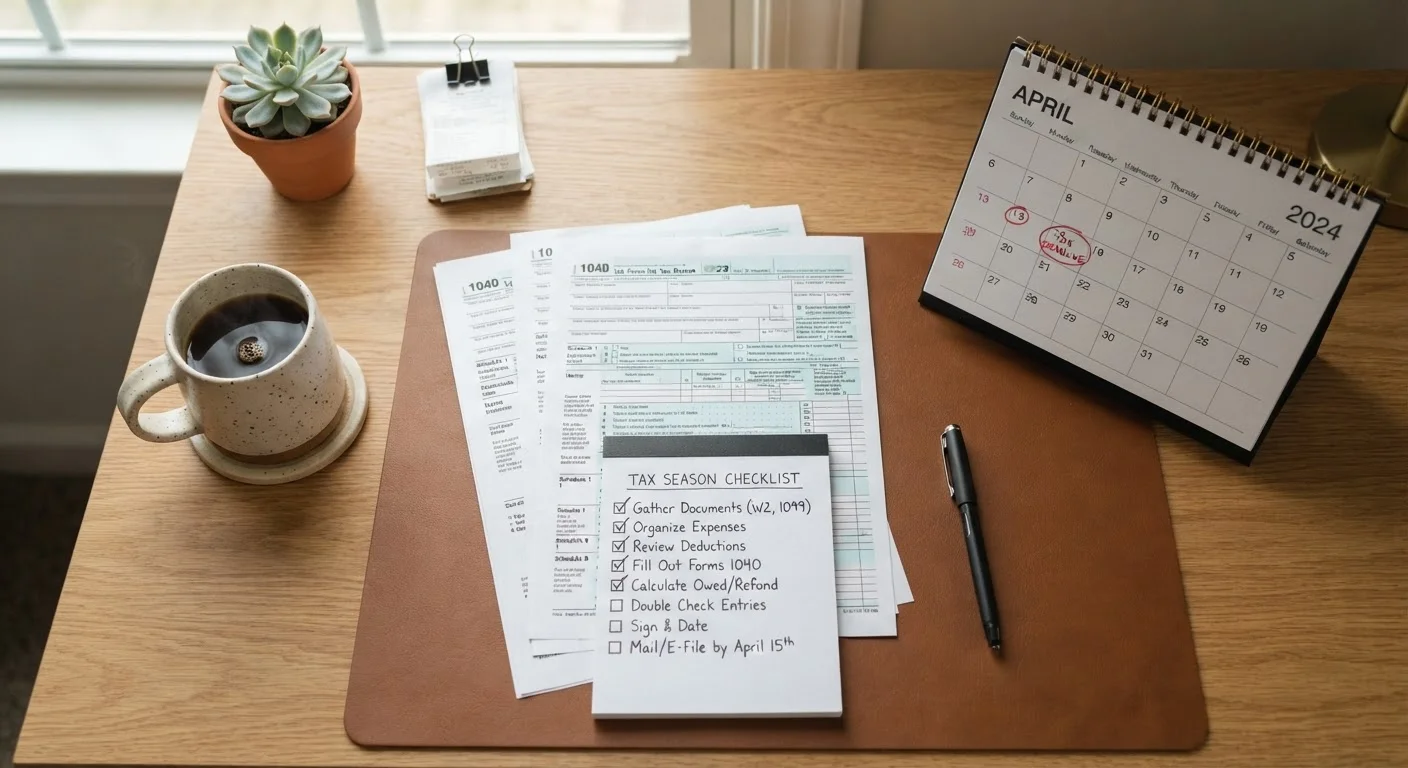
Why a Pre-Deadline Checklist Matters
Tax season doesn't have to feel overwhelming. Most filing mistakes - missing forms, incorrect Social Security numbers, overlooked deductions - happen not because taxes are impossibly complex, but because people start the process without a clear plan. A structured checklist turns a stressful task into a manageable sequence of steps.
The federal tax filing deadline typically falls on April 15 each year, though the IRS may adjust it when it falls on a weekend or holiday. Starting your preparation at least two to three weeks early gives you time to track down missing documents, correct discrepancies, and make informed decisions - rather than rushing through every screen at midnight on deadline day. For a deeper look at why rushing causes real problems, see why last-minute filing creates unnecessary problems.
Use the checklist below as a walk-through. Work from top to bottom, checking off each item as you complete it. You don't need to be a tax expert - you just need to be organized.
Gather Your Income Documents
Confirm Your Personal Information
Review Deductions and Credits
Organize Supporting Records
Final Pre-Filing Review
Tools You'll Need to Work Through This Checklist
Before you sit down with your documents, make sure you have the right tools available. Having these on hand will help you move through each step without unnecessary interruptions.
IRS Free File
A free federal filing option available through the IRS website for taxpayers who meet income eligibility requirements.
Prior-Year Tax Return
Used to retrieve your prior-year AGI, which is required to verify your identity when filing electronically.
Secure Document Storage (physical or digital)
A folder, binder, or encrypted digital folder to keep all tax forms and receipts organized and easy to access.
IRS Online Account
Lets you view tax records, confirm payment history, and check for any IRS correspondence directly on the IRS website.
IRS Form 4868
Used to request an automatic six-month extension to file your federal return if you cannot meet the original deadline.
What to Do If You're Not Ready in Time
If you work through this checklist and realize you're missing critical documents - such as a late-arriving W-2 or a 1099 that hasn't shown up yet - don't panic. The IRS allows taxpayers to request an automatic six-month extension using Form 4868. This gives you more time to file, but it does not extend the time you have to pay any tax owed. If you expect to owe taxes, you should still estimate and pay that amount by the original deadline to minimize interest and penalties.
An Extension to File Is Not an Extension to Pay
Many taxpayers misunderstand what a filing extension covers. Form 4868 gives you extra time to submit your completed return, but any taxes you owe are still due by the original April deadline. Failing to pay on time will result in interest charges and a late-payment penalty, even if you filed an extension. Estimate what you owe and pay it by the deadline to keep penalties as low as possible.
For a full breakdown of what happens when you miss the deadline - including the specific penalties involved - see what happens if you miss the tax filing deadline.
Completing this checklist well before April also gives you time to consult a qualified tax professional if your situation is complex - for example, if you had self-employment income, sold investments, or experienced a major life change during the tax year. This article provides general educational information; for guidance tailored to your circumstances, please speak with a licensed tax preparer or CPA.
This article is for informational and educational purposes only and does not constitute personalized tax, legal, or financial advice. Tax rules change frequently - always verify current IRS requirements or consult a qualified tax professional for guidance specific to your situation.