
How Each Method Works
Both envelope budgeting and digital spending trackers share the same goal: help you spend intentionally rather than reactively. But they get there in completely different ways.
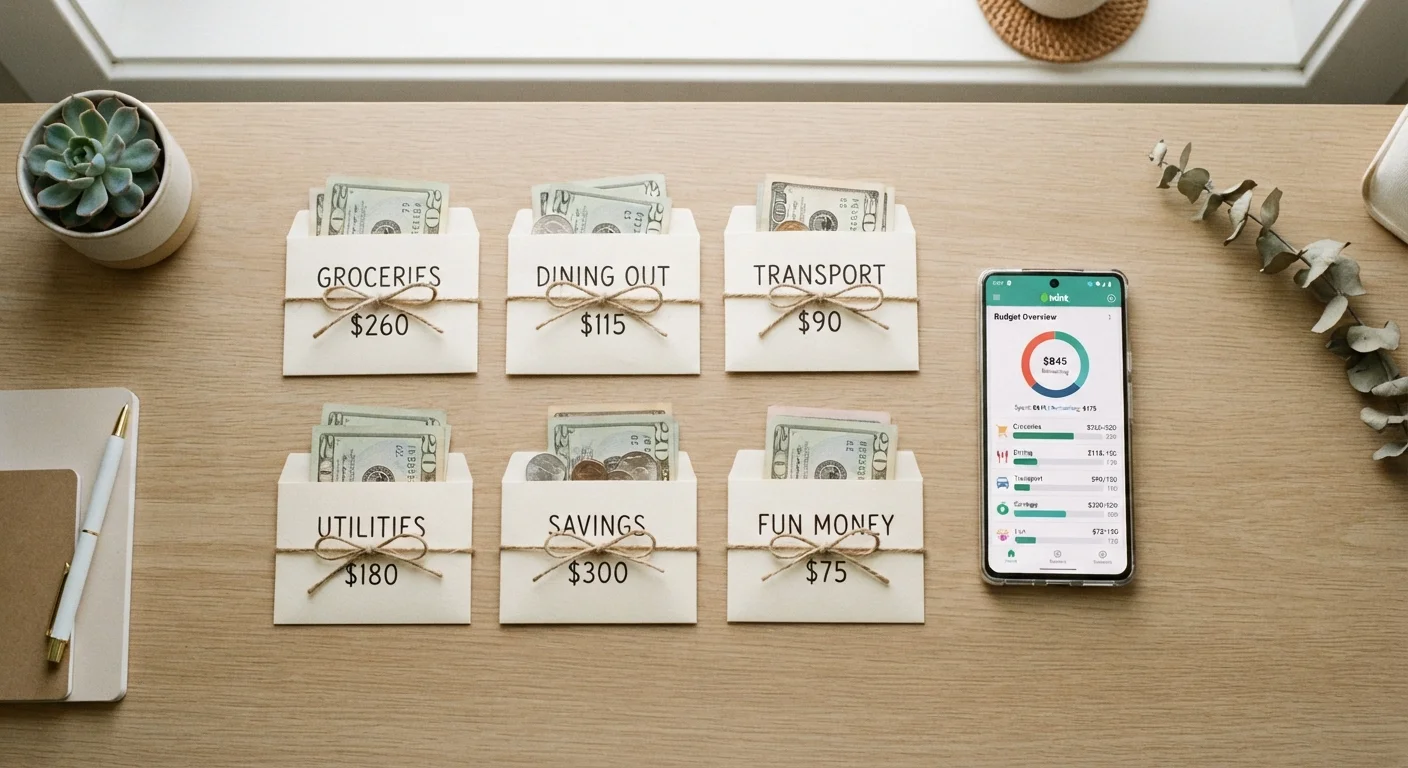
Envelope budgeting is a cash-based system with roots going back decades. After you get paid, you withdraw cash and divide it into labeled envelopes - one for groceries, one for gas, one for dining out, and so on. When an envelope is empty, spending in that category stops until next payday. There's no app to check, no bank balance to misread. The limit is right there in your hand.
Digital spending trackers work differently. Most connect to your bank accounts and credit cards, automatically pulling in every transaction and sorting it into categories. You review your spending through charts, graphs, and running totals on your phone or computer. Some apps let you set category limits and send you alerts when you're close to them. The data does the heavy lifting - you just have to act on what it shows you.
For a broader look at how different budgeting philosophies compare, see our overview of Zero-Based Budgeting vs. the 50/30/20 Method.
| Criterion | Envelope Budgeting | Digital Spending Trackers |
|---|---|---|
| Setup effort | Low - envelopes and cash | Moderate - account linking and app configuration |
| Works with card payments | No - cash only | Yes - syncs automatically |
| Hard spending limits | Yes - empty envelope stops spending | No - alerts only, card still works |
| Spending reports and trends | Manual review required | Automatic charts and breakdowns |
| Cost | Free | Free to paid subscription |
| Privacy and data security | No digital exposure | Account data shared with third party |
| Beginner-friendliness | Very high - no tech required | Moderate - some learning curve |
Strengths and Weaknesses Side by Side
Neither method is perfect. Understanding the trade-offs helps you choose what fits your actual life - not just what sounds good in theory.
Envelope budgeting strengths: The physical act of handing over cash makes spending feel real in a way that tapping a card simply doesn't. Research in behavioral economics consistently suggests that paying with cash leads to more mindful purchases. Setup costs nothing beyond envelopes and a pen. There's no data security risk, no subscription, and no learning curve.
Envelope budgeting weaknesses: Carrying cash isn't always practical or safe. It doesn't work well for online shopping or recurring digital bills. Tracking shared household spending across envelopes can get complicated fast.
Digital tracker strengths: Automation saves time. If your transactions sync automatically, you get a complete spending picture without logging every coffee manually. Reports help you spot trends - like realizing you spend three times more on takeout in winter than summer.
Digital tracker weaknesses: A notification saying you've hit your dining budget doesn't actually stop you from swiping your card. Self-discipline has to fill the gap the app can't. Some apps also require a paid subscription for full features, and connecting financial accounts means trusting a third party with sensitive data.
For more practical approaches to logging what you spend, our guide on why expense tracking changes everything walks through the core habit in plain steps.
Choosing What Will Actually Stick
The honest truth about budgeting tools: the one you'll actually use consistently is the right one. A perfectly designed app that you abandon after two weeks helps less than a simple envelope system you maintain for months.
Ask yourself a few honest questions before committing. Do you mostly pay with cash or card? Do you feel comfortable sharing account access with a third-party app? When you've tried to budget before, did you give up because it felt complicated, or because you kept forgetting to track things?
If forgetting is your pattern, automation is your friend - lean toward a digital tracker. If complication is the problem, a physical system with just three or four envelopes keeps things manageable. You can always add categories as the habit builds.
Many people also find that a hybrid approach works well: digital tracking for fixed expenses like rent and utilities (which are predictable and easy to automate), plus cash envelopes for the variable categories where overspending tends to happen - groceries, dining, and entertainment.
Whichever direction you go, spending a few minutes reviewing your budget weekly - not just monthly - makes a significant difference. Small course corrections are far easier than trying to fix a whole month of drift at once. The Tracking Your Progress hub has more on building that review habit into your routine.
This article is for general informational purposes only and does not constitute personalized financial advice. For guidance tailored to your situation, consider speaking with a qualified financial professional.