
Why Tracking Changes the Game
Most of us have a rough idea of what we spend each month. The problem is that rough ideas are almost always wrong - and almost always too low. A $4 coffee here, a $12 streaming service there, an impulse purchase at checkout: these small amounts feel harmless in the moment but add up to hundreds of dollars a month that simply vanish without explanation.
Expense tracking fixes this by replacing guesswork with facts. When you can see exactly where every dollar went, two things happen. First, you stop being surprised at the end of the month. Second, you gain real choices - because you can only cut spending in categories you can actually see. Research in behavioral economics consistently shows that people who track spending make more intentional financial decisions, not because they earn more, but because awareness changes behavior.
This article walks you through a straightforward method for recording your spending and - just as importantly - what to do with that information once you have it. If you're curious how different tools compare, our guide to envelope budgeting vs. digital trackers is a useful companion read.
What you will need
How to Start Tracking Your Spending
Follow the steps below in order. The system works whether you prefer writing things down, using a spreadsheet, or tapping entries into an app. Pick the method that creates the least friction for your daily habits - the best tracker is the one you'll actually use.
Choose your recording method
Decide whether you'll track spending with a paper notebook, a spreadsheet (such as a free template in Google Sheets), or a budgeting app. Each works - what matters is consistency. If you prefer tactile methods, pen and paper has the advantage of slowing you down enough to notice each entry. Apps can automate the import of bank transactions, which reduces forgetting. Compare the two approaches in detail if you're unsure which fits your habits.
Record every transaction the same day it happens
Log each purchase as close to the moment it occurs as possible - amount, merchant, and a brief note of what it was for. Waiting until the end of the week means you'll forget or misremember small cash purchases. If you use a card for most spending, you can cross-check against your bank's transaction list each evening, which takes about two minutes.
Assign each transaction to a spending category
At the end of each day or every few days, assign a category to each transaction. Start with broad labels - Food, Transport, Bills, Fun - and add sub-categories later if you want more detail. Consistent categorization is more valuable than perfect categorization, so don't agonize over edge cases.
Do a short weekly review
Set aside ten minutes once a week - the same day and time each week works best - to total up each category and compare it to your expectations. Ask yourself: Was there anything I didn't see coming? Are any categories trending higher than I'd like? This brief check keeps small overruns from becoming large ones and turns your data into actionable insight. You can track how your progress evolves over time using the principles in tracking your financial progress.
Complete a full monthly summary
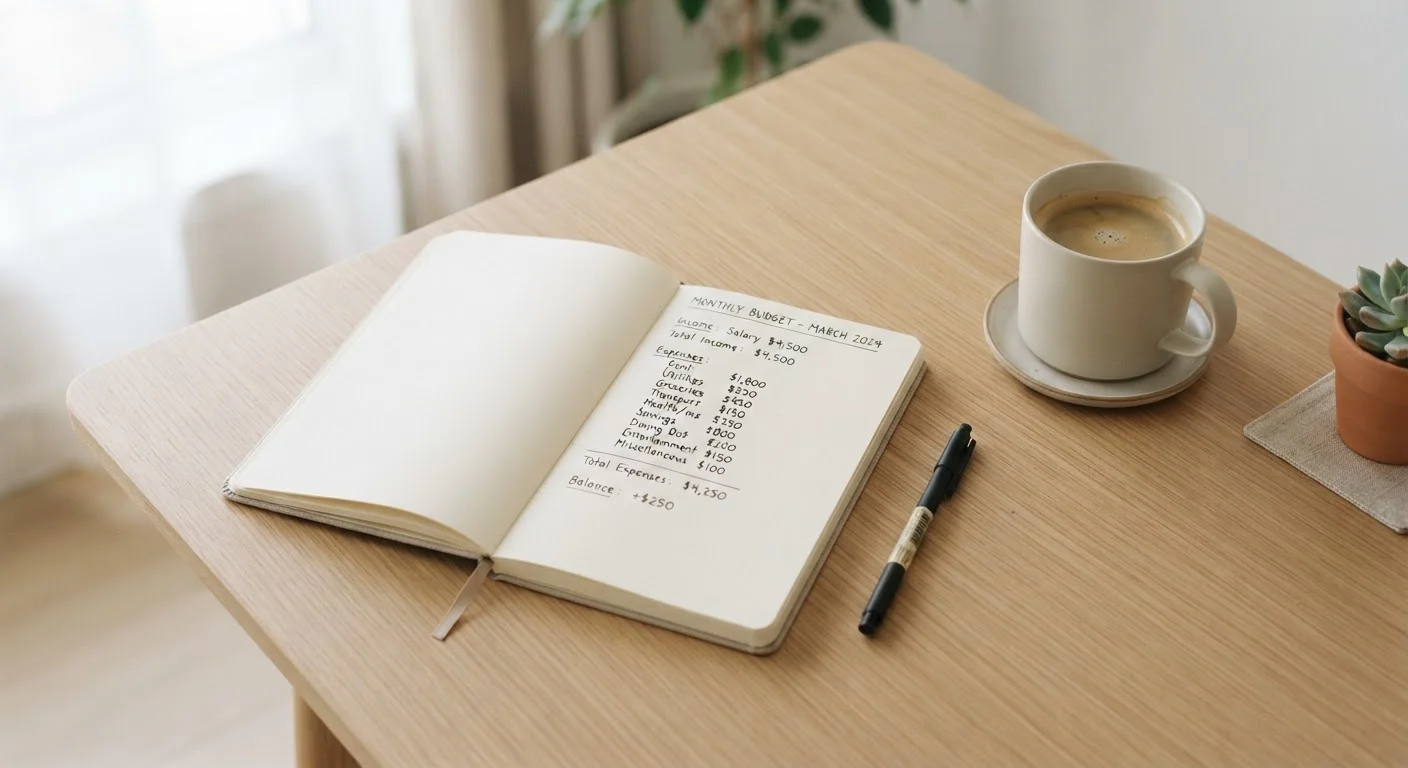
At month's end, total every category and add them together for your overall spending. Compare this to your take-home income. The gap - or the absence of one - tells you whether you're living within your means. Use this monthly snapshot to set realistic targets for the following month. Even reducing one category by $20 is a meaningful, measurable win when you're just starting out.
Once you've built a few weeks of data, you'll be ready for the next phase: using what you've found to reduce everyday spending without upending your lifestyle.
Making Sense of What You Find
Raw numbers only become useful when you organize them into categories. Common ones include housing, groceries, transportation, dining out, subscriptions, personal care, and entertainment. Your categories don't need to match anyone else's - they just need to reflect how you actually spend.
Once categorized, look for two things: spending that surprises you (subscriptions you forgot, habits that cost more than you thought) and categories where spending feels misaligned with your priorities. If you're paying $80 a month on apps you rarely open but can't afford to build an emergency fund, that's a clear signal.
A single month of data gives you a starting point. Two or three months gives you a reliable pattern. For a deeper look at uncovering hidden spending leaks, see where your money actually goes each month.
Tracking alone won't fix your finances - but it creates the self-knowledge that every other good money habit depends on. Once you can see your spending clearly, you're ready to build the routines that make budgets stick. The habits behind budgets that actually stick is a natural next step from here.
This article is for general informational and educational purposes only. It does not constitute personalized financial, tax, or legal advice. For guidance specific to your situation, consult a qualified financial professional.