
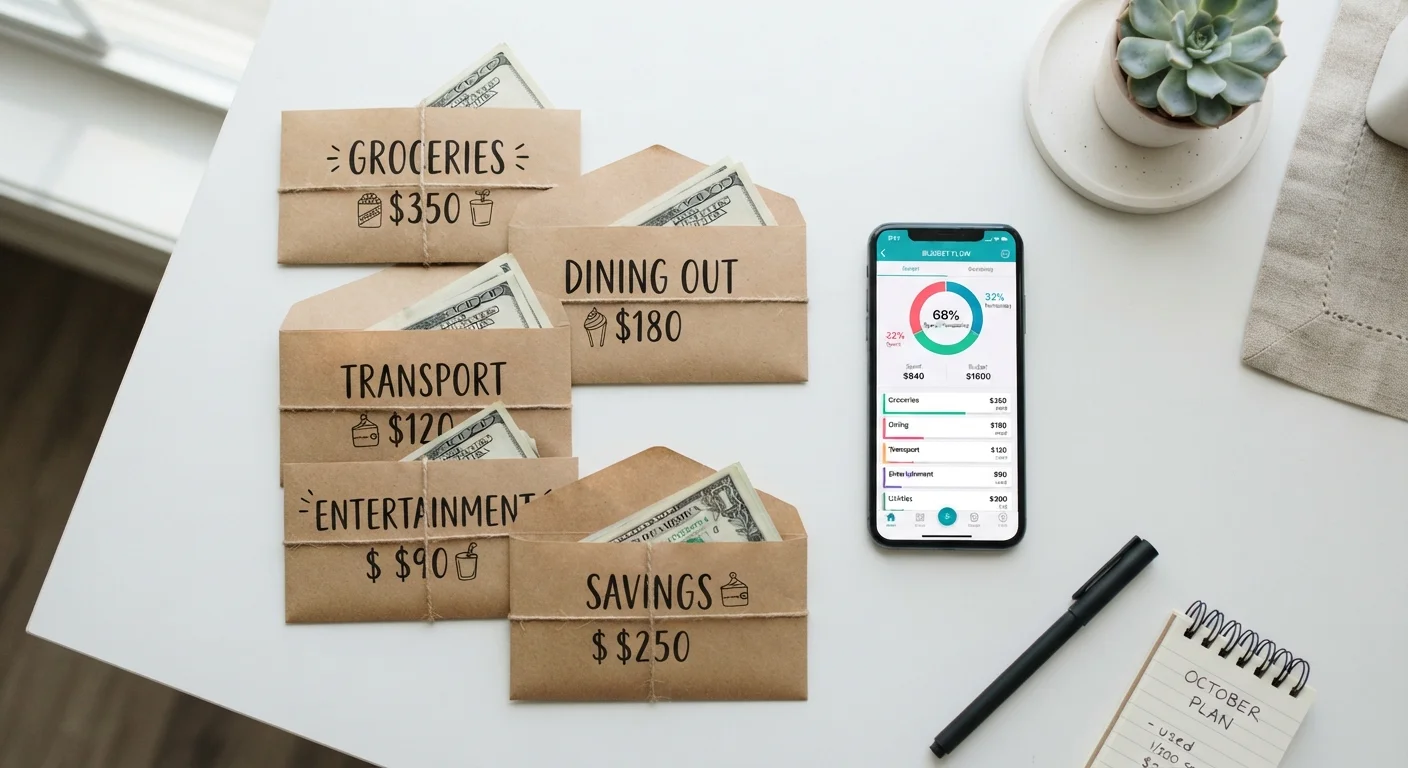
How Each Method Actually Works
Envelope budgeting is straightforward: at the start of each pay period, you withdraw cash and divide it into labeled envelopes - one for groceries, one for gas, one for eating out, and so on. Each envelope holds the maximum you've decided to spend in that category. When it's empty, you stop spending. No transfers, no borrowing from next month. The physical constraint is the whole point.
Digital spending trackers work differently. Most connect to your bank accounts and credit cards, automatically pulling in transactions and sorting them into categories. You review your spending in an app or dashboard rather than counting bills. Some trackers let you set category limits and send alerts when you're close to a cap - functioning like a virtual envelope, but without the cash.
Both methods are grounded in the same core idea: give every dollar a job and know where it's going. The difference is entirely in execution. For a broader look at how these methods compare to other frameworks, see budgeting frameworks compared.
Where Each Method Has the Edge
Envelope budgeting's biggest strength is friction - deliberate, helpful friction. Handing over physical bills makes spending feel real in a way that tapping a card simply doesn't. Research in behavioral economics consistently shows that people spend less when paying with cash, because the loss feels more immediate. The envelope method also requires zero technology, zero subscription fees, and works even if your bank's app goes down.
Its weaknesses are just as clear. Cash is inconvenient - you can't use an envelope to pay a streaming subscription or split a bill online. It can also feel unsafe to carry large amounts of cash. And if you spend across multiple people in a household, coordinating physical envelopes gets complicated fast.
Digital trackers shine when your life is mostly cashless. They capture everything automatically, flag unusual transactions, and let you review a full month of spending in under five minutes. They're also much better at revealing slow-burn patterns - the subscription you forgot you signed up for, or the way restaurant spending quietly doubled over three months.
The trade-off: a tracker only works if you actually look at it. Many people download a budgeting app, connect their accounts, and then never open it again. The data is there; the habit isn't. Why consistent tracking changes your financial picture explains why the review habit matters as much as the tool itself.
| Criterion | Envelope Budgeting | Digital Spending Trackers |
|---|---|---|
| Core mechanism | Physical cash divided by category | Automatic transaction categorization |
| Works for digital payments | No - cash only | Yes - links to accounts |
| Spending friction | High - physical limit is absolute | Low - easy to override alerts |
| Setup effort | Low - just envelopes and cash | Moderate - account linking, categories |
| Ongoing time commitment | Low - count cash periodically | Low if reviewed weekly; high if neglected |
| Trend analysis | Difficult - no historical data | Strong - charts and monthly summaries |
| Cost | Free | Free to paid (varies by tool) |
| Best for overspenders | Yes - hard physical stop | Only if alerts are acted on |
Choosing Based on Your Habits, Not Hype
The best budgeting method is the one you'll actually use. A few honest questions can help you decide:
- Do you mostly pay with cash or card? If nearly all your spending is digital, envelope budgeting will leave gaps in your picture.
- Where do you most often overspend? If it's one or two specific categories - restaurants, say - targeted cash envelopes can fix that without overhauling everything.
- Do you enjoy reviewing data, or does it stress you out? A tracker gives you more information, but more information isn't always useful if it leads to avoidance.
- How much time will you realistically spend on this each week? Envelopes take a little setup upfront; trackers take a few minutes of weekly review to stay meaningful.
A hybrid approach works well for many beginners: use a digital tracker for overall awareness, and keep one or two physical envelopes for whichever categories tend to blow your budget. You get the data and the discipline without fully committing to either system alone.
Whatever you choose, the goal isn't perfection - it's progress. Even an imperfect budget that you engage with regularly beats a perfect system you abandon after two weeks. If you want to compare this decision to other goal-tracking tools, spreadsheet vs. app for financial goals is a useful next read.
This article is for general informational purposes only and does not constitute personalized financial advice. For guidance tailored to your circumstances, consult a qualified financial professional.