
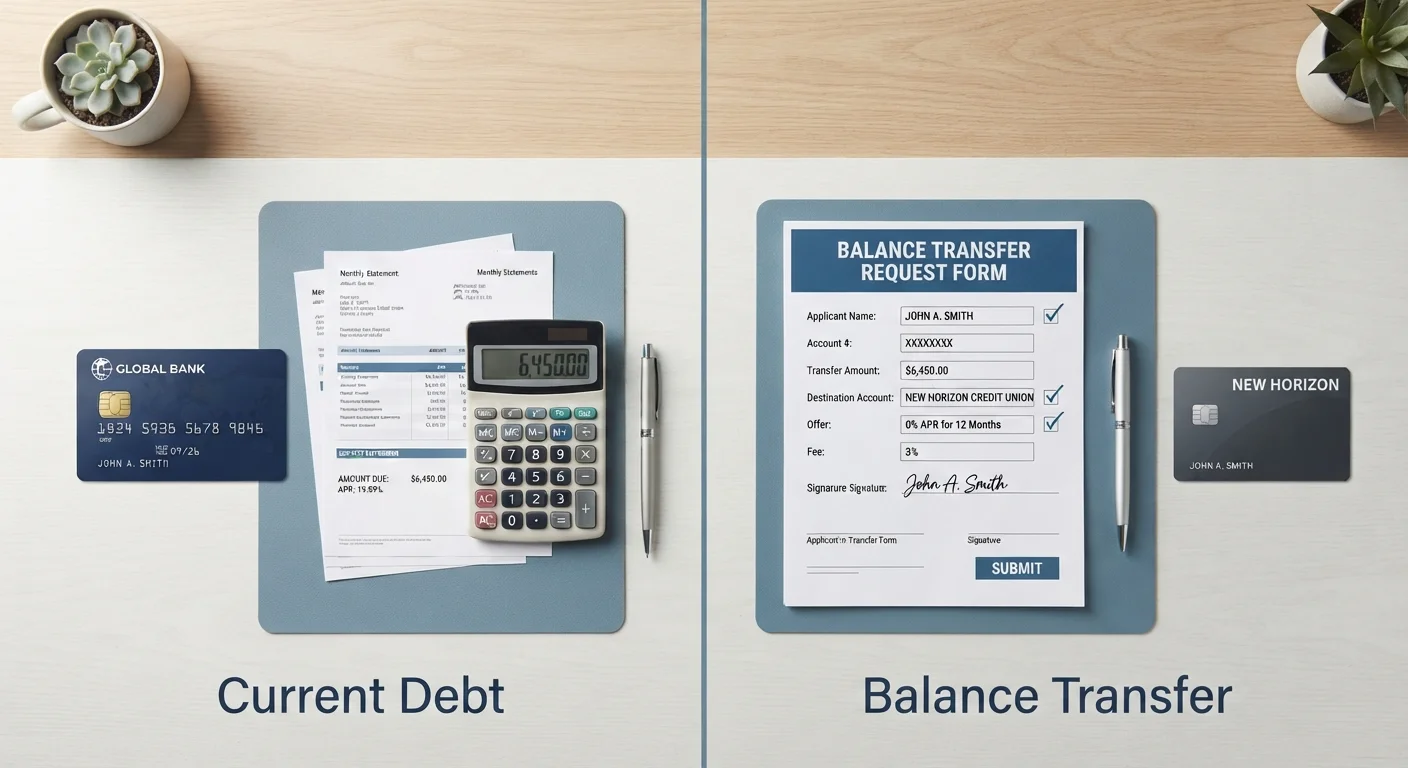
What a Balance Transfer Actually Is
A balance transfer is the process of moving an existing credit card balance from one card to another - usually one offering a low or 0% introductory APR for a set period, commonly 12 to 21 months. The goal is to pause or slow interest accumulation so more of each payment reduces the actual debt rather than covering interest charges.
To understand why this matters, consider that a high-APR card (20%+ is common) can add hundreds of dollars in interest annually to a balance you're actively trying to pay off. Our article on how credit card interest compounds daily explains just how quickly a balance can grow - even when you're making regular payments.
Balance transfers are not the same as debt elimination. The debt still exists; you've simply changed where it lives and, temporarily, what it costs to carry it.
The Pros: Where Balance Transfers Genuinely Help
Used strategically, a balance transfer offers several real advantages for someone committed to paying down debt.
Reduces or eliminates interest during the promotional period
A 0% introductory APR means every dollar you pay goes directly toward reducing your principal balance, not covering interest charges. This can substantially shorten the time it takes to become debt-free.
Consolidates multiple balances into one payment
Transferring balances from several cards to one simplifies your repayment by creating a single due date and a single target balance to track each month.
Creates a defined repayment deadline
The promotional window - often 12 to 21 months - functions as a built-in deadline that can motivate more disciplined, consistent monthly payments than an open-ended repayment plan.
Can reduce total interest paid significantly
Depending on the original APR, balance size, and promotional period length, a successful transfer can save hundreds of dollars in interest - money that stays in your pocket instead of going to a lender.
These benefits are most pronounced when you enter the transfer with a written repayment schedule. Divide the transferred balance by the number of months in the promotional period; that figure is your minimum monthly target to clear the debt interest-free.
The Cons: Real Risks to Weigh Carefully
Balance transfers are not a straightforward win. Several factors can erode - or entirely eliminate - the financial benefit.
Upfront balance transfer fee reduces net savings
Most cards charge a fee of 3-5% of the transferred amount. On a $5,000 balance, that's $150-$250 due immediately - a cost that must be weighed against anticipated interest savings.
Standard APR can be very high after promotion ends
If any balance remains when the introductory period expires, it begins accruing interest at the card's regular APR - which can be 25% or higher - potentially erasing earlier savings quickly.
Approval and transfer limits are not guaranteed
Eligibility depends on your credit score, and the credit limit offered may not cover your full balance. Partial transfers still leave you managing interest on the remainder.
Risk of accumulating new debt on vacated cards
Once an old card's balance is cleared, it can be tempting to use it again. This can leave you with more total debt than when you started - the opposite of the intended outcome.
Applying triggers a hard inquiry on your credit report
A hard inquiry can temporarily lower your credit score by a few points - a minor concern for most, but worth noting if you plan to apply for a loan or mortgage soon.
It's also worth noting that opening a new credit card can have short-term effects on your credit score through a hard inquiry and changes to your average account age. If you're considering closing the old card afterward, review the considerations first - our piece on the trade-offs of closing a credit card you no longer use walks through what's at stake.
How Balance Transfers Compare to Other Repayment Approaches
A balance transfer is one tool among several. Debt consolidation - which may involve a personal loan rather than a credit card - is a related strategy worth comparing, particularly if your credit card debt is large or spread across multiple accounts.
If you're also weighing whether to build savings while carrying this debt, that involves its own trade-offs. Understanding how to balance debt repayment with saving can help you think through priorities without a one-size-fits-all answer.
Balance Transfers and Your Credit Score
Opening a new credit card for a balance transfer affects your credit in several ways: a hard inquiry is recorded, your average account age may decrease, and your overall credit utilization could shift. These effects are generally modest and temporary for most people, but they are worth factoring into your timing - especially if a major credit application (like a mortgage) is on the horizon. The Consumer Financial Protection Bureau (CFPB) offers free resources explaining how credit scores are calculated.
The right tool depends on your specific balance size, credit profile, income stability, and repayment timeline. A licensed credit counselor or financial advisor can help you model which approach reduces your total cost of debt most effectively in your situation.
Making a Balance Transfer Work: Key Steps
If you decide a balance transfer aligns with your situation, approach it methodically:
- Calculate the fee upfront. Multiply your balance by the transfer fee percentage (typically 3-5%) to know your immediate cost. Subtract this from your estimated interest savings to confirm the transfer is worth it.
- Set a monthly payment target. Divide the transferred amount by the number of promotional months. Automate this payment if possible.
- Stop adding to the old card. Continuing to spend on existing cards undermines the repayment plan.
- Calendar the promotional end date. Know exactly when the standard APR kicks in so you can reassess before it happens.
- Avoid spending on the new card. New purchases may not receive the same promotional rate and can complicate your repayment tracking.
This article is for general informational purposes only and does not constitute personalized financial or legal advice. Please consult a qualified financial professional before making decisions about your specific debt situation.