
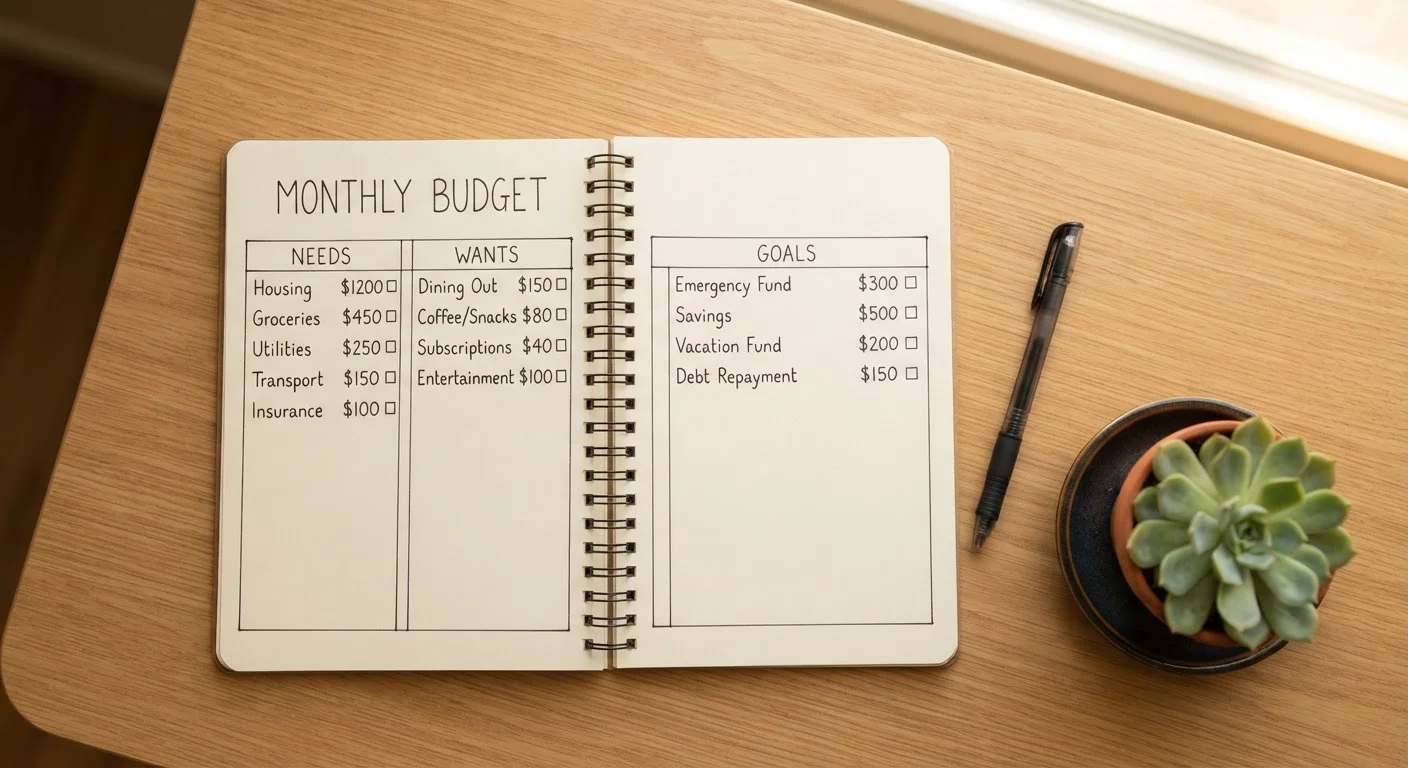
What Needs and Wants Actually Mean
Most budgeting advice starts with a simple instruction: separate your needs from your wants. It sounds obvious, but in practice the line gets surprisingly blurry. Understanding both categories honestly is what makes the framework genuinely useful.
Needs are expenses you cannot reasonably avoid without significant consequences - rent or mortgage, groceries, utilities, basic transportation to work, essential healthcare. If going without it would put your housing, health, or income at risk, it qualifies as a need.
Wants are everything else. That doesn't mean wants are bad or wasteful - it just means they're discretionary. Streaming subscriptions, dining out, new clothes beyond basic coverage, gym memberships - these improve quality of life and are perfectly reasonable to include in a budget, as long as they're chosen consciously.
The tricky part is that context shapes the category. A car is a need if you live in a rural area with no public transit; it may be a want if you live in a walkable city with multiple commuting options. A smartphone might feel essential for work communications, placing it closer to the need column for many people. Separating needs from wants without guilt takes honest self-assessment rather than a universal checklist.
For a deeper look at how these categories interact with your overall budget structure, the needs, wants, and savings budget framework is a useful next step.
| Criterion | Needs & Wants | Financial Goals |
|---|---|---|
| Time orientation | Present - today's spending | Future - tomorrow's outcomes |
| Primary question | Do I have to spend this? | What am I saving toward? |
| Flexibility | Needs are fixed; wants are adjustable | Targets can be adjusted over time |
| Role in a budget | Describes where money currently goes | Directs where money should go |
| Motivation source | Necessity or preference | Values and future priorities |
| Measurement | Tracked as monthly expenses | Tracked as progress toward a target |
What Financial Goals Are - and Why They're Different
Needs and wants describe where your money is going right now. Financial goals describe where you want your money to take you in the future. That forward-looking orientation is what makes goals a distinct and equally important category.
A financial goal is a specific, intentional outcome you're working toward - building a three-month emergency fund, paying off a credit card balance, saving a down payment on a home, or accumulating enough to retire comfortably. Goals share a few defining features: they have a target amount, a time horizon, and require consistent, deliberate action.
Goals aren't just big dreams. They range across timelines and scales. Short-term, medium-term, and long-term goals each require different strategies and urgency levels. A short-term goal - like building a small emergency cushion - might be achievable in a few months. A long-term goal like retirement could span decades.
What goals add to a money plan is purpose. When you know exactly what you're saving toward, it becomes much easier to make trade-offs. Skipping an impulse purchase feels different when you can connect that decision to a real target you care about. That's why naming and writing down your goals - rather than leaving them as vague intentions - is so powerful.
Once you have goals defined, it's worth understanding whether each one calls for saving or investing, since they serve different roles. The distinction is explained clearly in this guide to saving goals vs investment goals.
How All Three Work Together in a Real Money Plan
The most effective personal finance plans don't treat needs, wants, and goals as competing priorities - they treat them as a layered system. Here's how to think about building that system.
- Cover needs first. Before anything else, your income should reliably cover your essential expenses. If it doesn't, addressing that gap - whether through expense reduction or income growth - is the highest-priority task.
- Assign a deliberate amount to wants. Completely cutting wants is rarely sustainable and often leads to budgeting burnout. Instead, set a conscious limit that reflects both your income and your goals. This turns discretionary spending from an afterthought into an intentional choice. The grey area between needs and wants is where many budgets quietly fail - acknowledging it is a strength, not a weakness.
- Direct remaining money toward goals. Whatever is left after needs and an allocated want budget becomes the fuel for your goals. The key is to treat this contribution like a bill - something you pay consistently rather than whatever happens to remain at month end.
This layered approach is the foundation of building a money plan that holds up over time. It creates structure without rigidity, and clarity without deprivation.
This article is for general informational and educational purposes only. It is not personalised financial advice. Please consult a licensed financial adviser for guidance tailored to your individual situation.