
What a Bond Actually Is
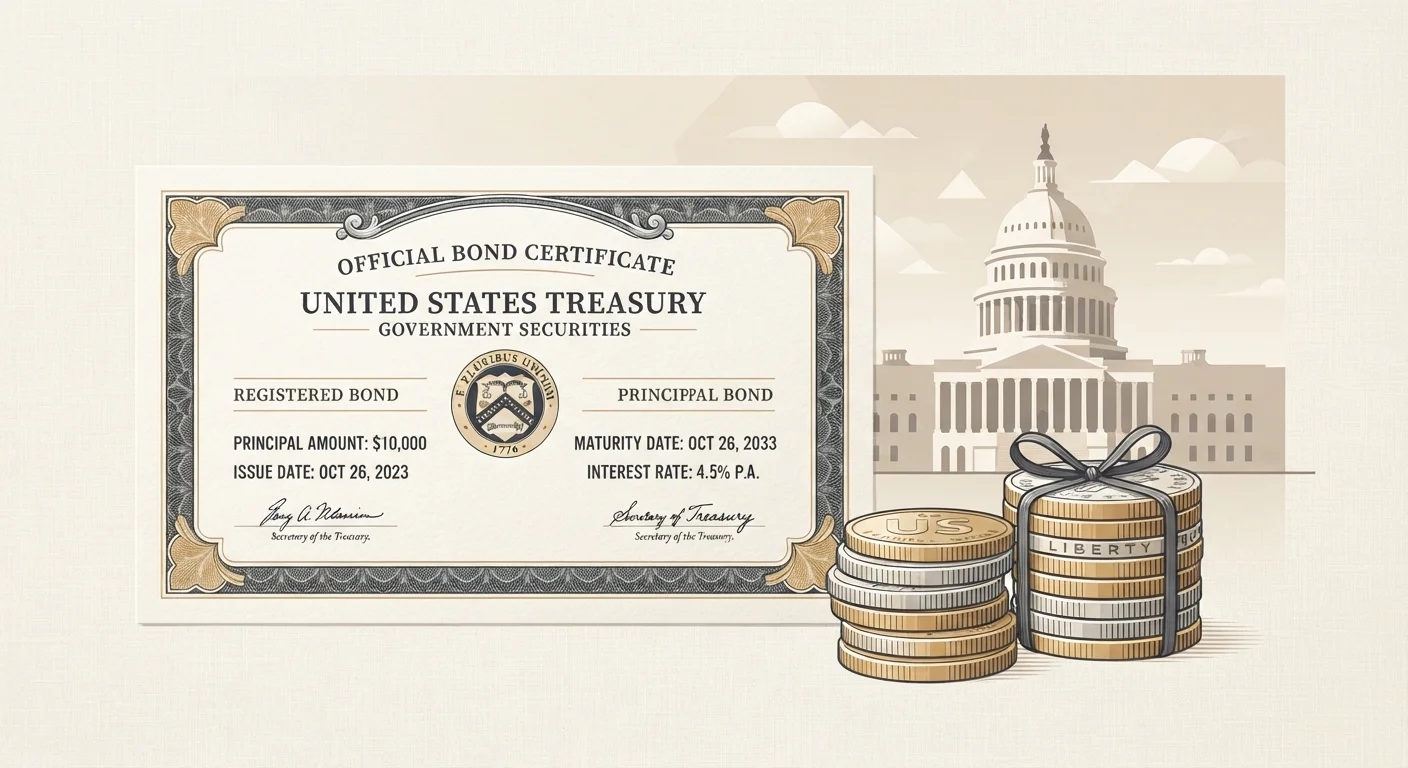
When a government needs to fund infrastructure or a company needs capital to expand, one option is to borrow from the public - and that's exactly what bonds are. You, as the investor, hand over a sum of money for a defined period. The borrower (called the issuer) agrees to pay you interest at a fixed rate on a regular schedule, then return your full principal when the bond matures.
Think of it like a formal IOU with a payment plan attached. The key terms set at the start are:
- Face value (par value): The amount you'll receive back at maturity - typically $1,000 per bond.
- Coupon rate: The annual interest rate expressed as a percentage of face value.
- Maturity date: The date on which the issuer repays the principal.
Understanding how money grows through these kinds of predictable mechanisms is a great foundation - see our beginner's guide to how money grows for a broader view of the principles at work.
Types of Bonds You'll Encounter
Not all bonds work the same way or carry the same risk. The major categories include:
- U.S. Treasury bonds: Issued by the federal government and widely considered among the lowest-risk investments available because they're backed by the full faith and credit of the U.S. government.
- Municipal bonds (munis): Issued by state or local governments, often to fund public projects. Interest income is frequently exempt from federal income tax, which can be an important consideration.
- Corporate bonds: Issued by companies. They typically pay higher interest than government bonds to compensate for greater risk - the possibility the company could struggle financially.
- High-yield bonds: Corporate bonds from issuers with lower credit ratings. They offer higher coupon rates, but the default risk is meaningfully higher.
Bond Ratings: A Quick Reference
Major credit rating agencies assess the financial strength of bond issuers and assign letter grades. Investment-grade bonds (generally BBB/Baa and above) carry lower default risk; high-yield bonds carry greater risk but typically offer higher interest rates. Ratings are opinions, not guarantees - they can change over the life of a bond if an issuer's circumstances shift.
The rating assigned to a bond matters. Investment-grade bonds (rated BBB or higher by major agencies) signal lower default risk; high-yield bonds signal higher risk. Understanding this spectrum helps you evaluate what a bond's interest rate is actually compensating you for.
Key Risks Every Bond Investor Should Know
Bonds are often described as the cautious investor's tool - and while they tend to be more stable than stocks, calling them risk-free would be inaccurate. There are three main risks to understand:
- Credit (default) risk: The issuer may be unable to make interest payments or return your principal. This risk is lowest for U.S. Treasuries and highest for low-rated corporate bonds.
- Interest rate risk: When market interest rates rise, existing bonds with lower fixed rates become less attractive, so their market price falls. If you need to sell before maturity, you could receive less than you paid.
- Inflation risk: If inflation rises faster than your bond's interest rate, the purchasing power of your fixed payments effectively shrinks over time.
None of these risks make bonds a bad option - they simply mean bonds work best when chosen with clear goals and a solid understanding of what you're accepting in exchange for that stability. For a direct comparison of how bonds stack up against stocks, explore the core trade-off between stocks and bonds.
This article is for informational and educational purposes only. It is not personalized investment, tax, or legal advice. All investing involves risk, including the possible loss of principal. Past performance does not guarantee future results. Consult a qualified financial professional before making decisions about your own financial situation.