
What Does It Mean for Money to "Grow"?
When people say money can "work for you," they mean something specific: money placed in the right environment generates more money over time - without you trading additional hours for it. This is fundamentally different from earning a wage.
Think of it this way. If you keep $1,000 under a mattress, you still have $1,000 in ten years. But if that same $1,000 is in an account or investment that earns a return, you end up with more than you started with. The mechanism behind that difference is what this guide explains.
Before going further, it helps to be clear on one thing: growing money through investing always involves some degree of risk. Money is not guaranteed to grow. Markets go up and down, and past performance does not guarantee future results. Understanding growth and understanding risk are two sides of the same coin. See a plain-language overview of investment types for context on the different options available.
Principal
The original amount of money you deposit or invest, before any growth or earnings are added.
Interest
Money paid to you at a set rate in exchange for letting someone else - like a bank or bond issuer - use your money for a period of time.
Return
The gain (or loss) on an investment, expressed as a percentage of what you originally put in. Returns can come from price increases, dividends, or both.
Compounding
The process by which your earnings are added to your principal, so that future earnings are calculated on the combined total - growth building on growth.
Dividend
A portion of a company's profits paid out to shareholders, usually on a regular schedule. Dividends can be taken as cash or reinvested to buy more shares.
Risk tolerance
Your personal capacity - financially and emotionally - to accept the possibility that an investment might lose value in exchange for the chance of higher growth.
Diversification
Spreading money across different types of investments so that a loss in one area does not wipe out your entire portfolio.
Dollar-cost averaging
Investing a fixed amount of money at regular intervals regardless of market prices, which reduces the risk of investing a large sum at a bad time.
The Two Core Engines: Interest and Returns
Money grows through two broad mechanisms, and most beginner investors encounter both.
Interest
Interest is money paid to you for letting someone else use your money. When you deposit money in a savings account, the bank pays you interest because it uses those funds in its own operations. When you lend money by purchasing a bond, the borrower pays you interest at a stated rate. Interest is generally predictable and relatively low-risk - but in exchange, the potential gains are modest.
Investment Returns
Investment returns come from owning assets - such as shares of a company - that may increase in value or generate income like dividends. Returns are less predictable than interest. A stock may rise significantly in value, stay flat, or lose value. In exchange for accepting that uncertainty, investors have historically - though not consistently - earned higher long-run growth than interest alone would provide.
Both engines can be combined. A diversified portfolio might include savings-type instruments (generating interest) alongside equity-type investments (generating returns). For a deeper look at goal-setting before you invest, visit your first financial goals guide.
Compounding: When Growth Builds on Itself
Compounding is the most important concept in personal finance for long-term wealth building. Here is the core idea: your earnings generate their own earnings.
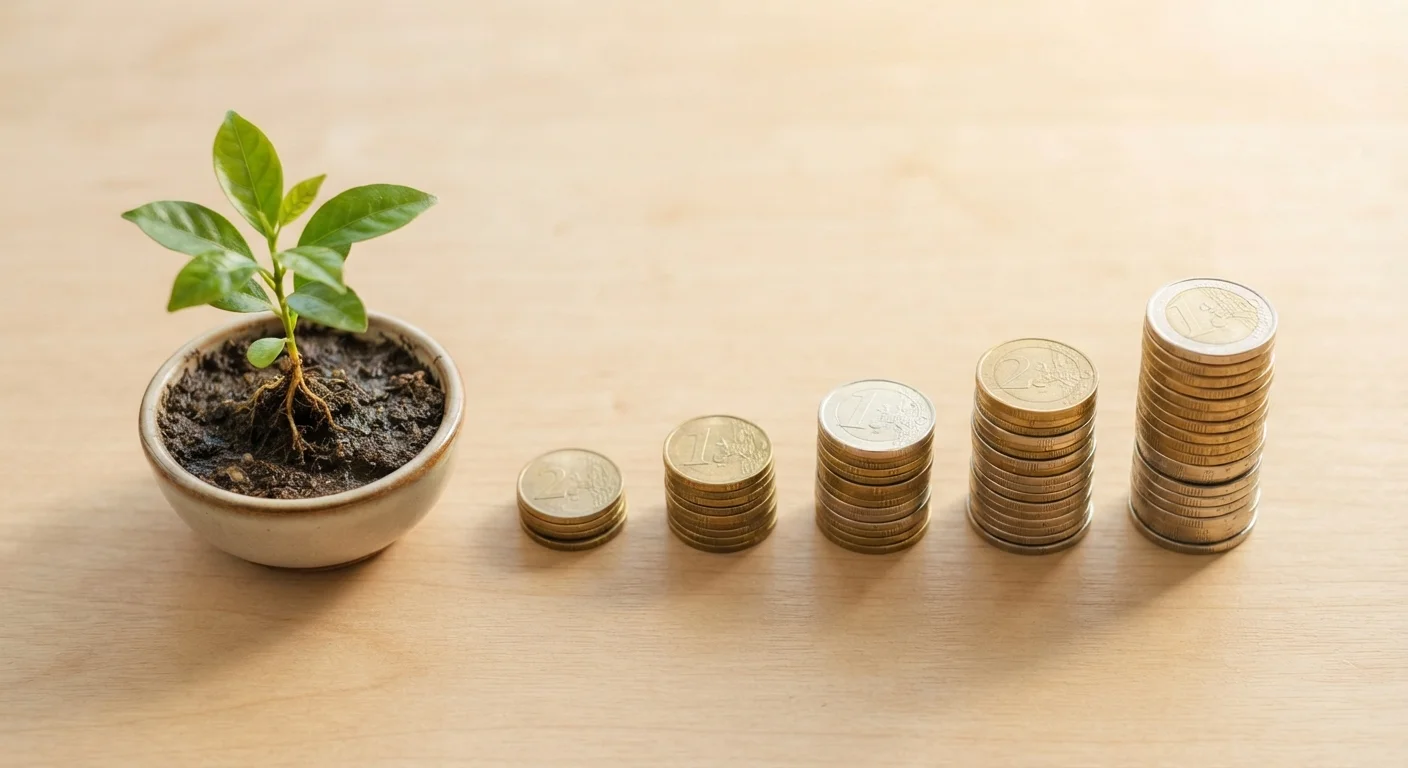
With simple interest, you earn a fixed return only on your original amount. With compound interest or returns, each period's earnings are added to your base, and the next period's earnings are calculated on that larger total. Over time, this creates a snowball effect.
A simplified example: Suppose you invest $5,000 and earn 6% annually, compounded. After year one, you have $5,300. In year two, you earn 6% on $5,300 - not the original $5,000 - giving you $5,618. The extra $18 may seem small, but over decades, that compounding effect grows dramatically. After 30 years at 6%, that $5,000 grows to approximately $28,717 - without adding another cent.
To understand exactly how simple and compound interest differ in practice, see compound interest vs. simple interest explained.
Reinvesting Earnings Supercharges Compounding
One of the most effective habits for long-term growth is automatically reinvesting any dividends or interest you receive rather than withdrawing them. When those earnings are reinvested, they immediately start generating their own returns. Over a decade or more, the difference between reinvesting and withdrawing earnings can be substantial.
Why Time Is Your Most Powerful Asset
Compounding's power is not linear - it is exponential. That means the longer money compounds, the faster the growth accelerates in later years. The first decade of growth looks modest. The third or fourth decade can be remarkable.
This is why financial educators consistently emphasize starting early over starting with a large amount. Someone who begins investing modest sums in their twenties may accumulate more by retirement than someone who waits until their forties and invests larger amounts - even if the total dollars contributed are similar. Time in the market matters more than most beginners expect.
Of course, not everyone starts young, and starting later is always better than not starting. The principle still applies: every additional year of compounding adds meaningful potential. For a focused look at how this connects to retirement planning specifically, read how compound growth interacts with retirement milestones.
Consistency also matters. Regular contributions - even small ones - keep adding new principal for compounding to work on. This approach, sometimes called dollar-cost averaging, means you invest a fixed amount regularly regardless of market conditions, which can reduce the emotional pressure of trying to pick the "right" moment to invest.
Putting It All Together: Your Next Steps
Understanding how money grows is not just academic - it changes how you think about time, decisions, and habits. Here is a practical summary:
- Start with a financial foundation. Before investing, it generally makes sense to have an emergency fund and a handle on your budget. Building good saving habits is a natural precursor to investing.
- Set clear goals. Knowing what you are investing for - a home, retirement, education - shapes every decision about time horizon and risk tolerance. Building a money plan can help you create that structure.
- Learn before you commit capital. Concepts like asset allocation, diversification, and tax-advantaged accounts all build on the foundation this guide introduced. Take time to understand them. See compound growth explained without the jargon as a natural next read.
- Consult a professional. General financial education is a starting point, not a substitute for advice tailored to your circumstances. A licensed financial adviser can help you develop a plan aligned with your specific goals, income, and risk tolerance.
This article is for informational and educational purposes only and does not constitute personalised financial, investment, tax, or legal advice. All investing involves risk, including the possible loss of principal. Consult a qualified financial adviser before making investment decisions specific to your situation.