
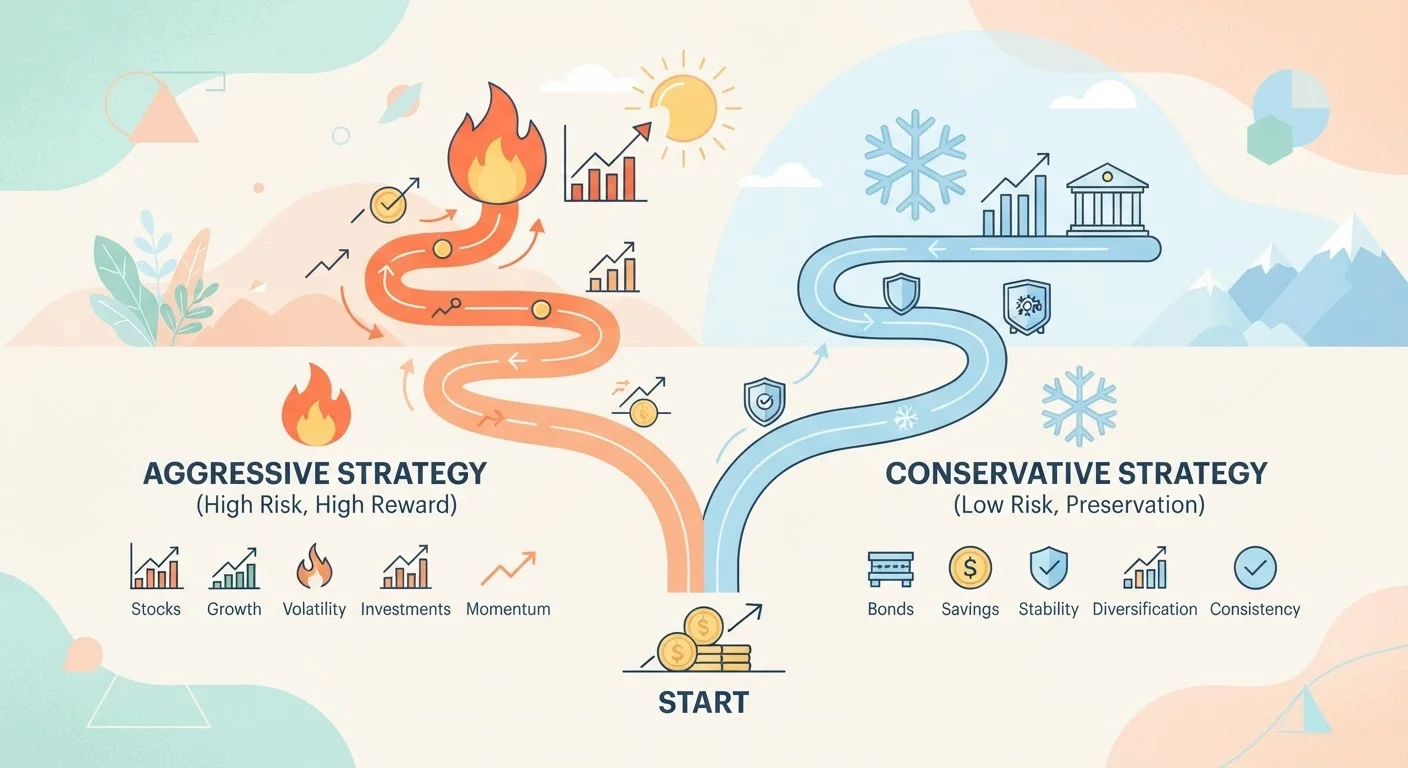
The Core Idea Behind Both Methods
Both the debt avalanche and the debt snowball share the same basic structure: you make the minimum required payment on every debt you owe, then put any extra money toward one specific debt at a time. When that debt is gone, you roll its payment into the next one. The difference is entirely in how you choose which debt gets that extra attention first.
This focused approach - sometimes called a "debt rollup" - is more effective than spreading extra dollars thinly across all balances, because it eliminates individual debts faster and reduces the number of accounts accumulating interest. For a broader look at how debt accumulates and how to take stock of what you owe, see our guide on managing debt without letting it manage you.
Before choosing a method, list all your debts. Note each balance, interest rate (APR), and minimum payment. That information is what both strategies use - just in a different order.
How the Debt Avalanche Works
With the avalanche method, you rank your debts from highest interest rate to lowest. Your extra money goes toward the debt at the top of that list first. Once it's paid off, you move to the next-highest rate, and so on.
The logic is straightforward: high-interest debt is the most expensive to carry. Every month you hold a balance at 24% APR, a significant portion of your payment is going to the lender rather than reducing what you owe. Paying that debt off sooner limits how long interest compounds at that rate.
The trade-off is patience. If your highest-interest debt also happens to have a large balance, it can take many months before you see a balance reach zero. For some people, that wait erodes motivation. For others - especially those who find number-based goals energizing - the knowledge that they're saving the most money possible is enough to keep going.
| Criterion | Debt Avalanche | Debt Snowball |
|---|---|---|
| Payoff order | Highest interest rate first | Smallest balance first |
| Total interest paid | Less (mathematically optimal) | Potentially more |
| Time to first $0 balance | Can take longer if high-rate debt is large | Faster - smallest balance clears first |
| Motivational style | Math and savings focused | Progress and momentum focused |
| Best when | High-rate debts are a major concern | Motivation or habit-building is the challenge |
| Complexity | Requires tracking APRs | Simple - just sort by balance |
How the Debt Snowball Works
The snowball method ranks debts from smallest balance to largest, regardless of interest rate. Extra payments go to the smallest balance first. Once it's cleared, that payment amount "snowballs" into the next account.
This approach was popularized by personal finance educators as a way to harness behavioral momentum. Paying off a full debt - even a small one - provides a concrete sense of progress that can be harder to feel when chipping away at one large account for months. Fewer open accounts also simplifies your financial picture.
The cost of this approach is that you may pay more in total interest over time, particularly if your smallest balances happen to carry lower rates than larger ones. The gap between methods can be modest or significant depending on your specific debt mix.
Building sustainable repayment habits matters regardless of which method you choose - the snowball's early wins can help establish those habits for people who are just getting started.
Side-by-Side Comparison
The table below summarizes the key differences. Keep in mind that the real-world cost gap between the two methods depends heavily on your specific debt balances and interest rates - it's worth running the numbers for your own situation using a free online debt payoff calculator.
~$1,000+
Potential interest savings with avalanche vs. snowball
The exact difference varies widely by debt mix; a Consumer Financial Protection Bureau (CFPB) resource notes that interest rate matters significantly to total repayment cost.
80%
Of financial behavior is psychological, not mathematical
Personal finance educators widely cite behavioral consistency - not just math - as the primary driver of successful debt repayment outcomes.
2-3 months
Typical time to first win with the snowball method
For people with small balances under $500, clearing one account in the first few months is realistic if extra payments are applied consistently.
For decisions about the right strategy for your personal circumstances, consider speaking with a nonprofit credit counselor or a licensed financial professional who can review your full financial picture.
Which Method Is Right for You?
Choosing between these methods comes down to two honest questions: How much does the total cost matter to you versus how much does staying motivated matter? And which approach are you actually more likely to follow through on consistently?
If you're analytical, track your spending closely, and find the idea of minimizing interest genuinely motivating, the avalanche is likely your fit. If you've started debt repayment before and given up, or if you need to see concrete progress to believe you're making headway, the snowball may be more effective in practice - even if it costs a bit more on paper.
Some people start with the snowball to clear one or two small accounts, then switch to the avalanche. That's a legitimate hybrid approach, though it adds some complexity to track.
Debt repayment also intersects with other financial goals. If you're weighing whether to pay down debt or build savings at the same time, our article on the debt-versus-saving trade-off walks through the key considerations. And if you're thinking about keeping an emergency fund while repaying debt, repaying debt while building an emergency fund covers how to balance both.
Your next step today: List every debt you owe with its balance and interest rate. Then decide which ordering - by rate or by balance - feels more sustainable for you to act on. Pick one, set up the minimum payments on all accounts, and direct any extra you can toward your chosen priority debt this month.
This article is for general informational and educational purposes only. It is not personalized financial, tax, or legal advice. Everyone's financial situation is different - consult a qualified financial professional before making decisions about debt repayment or any other aspect of your finances.