
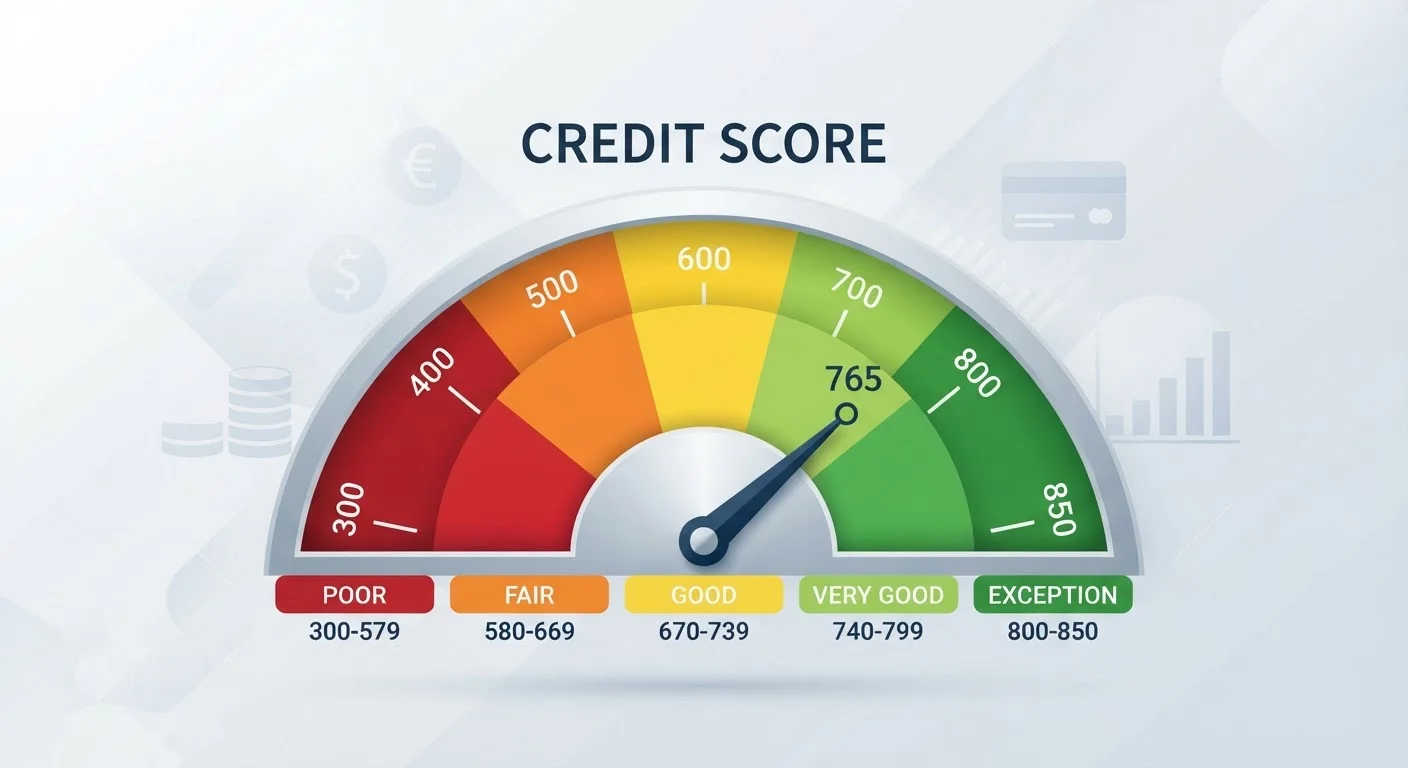
The Credit Score Scale at a Glance
Most consumer credit scores in the U.S. - including the widely used FICO® Score - run on a scale from 300 to 850. The higher your number, the more favorably lenders tend to view you as a borrower. But a single number can feel abstract without context. What really matters is understanding which band your score falls into and what that band signals to the people making decisions about your credit applications.
| Score Range | 300 - 850 (FICO® and VantageScore) |
| Poor Score Band | 300 - 579 (FICO® score range definitions) |
| Fair Score Band | 580 - 669 (FICO® score range definitions) |
| Good Score Band | 670 - 739 (FICO® score range definitions) |
| Very Good Score Band | 740 - 799 (FICO® score range definitions) |
| Exceptional Score Band | 800 - 850 (FICO® score range definitions) |
| Major Credit Bureaus | Equifax, Experian, TransUnion (Consumer Financial Protection Bureau (CFPB)) |
If you're new to this topic, our primer on what a credit score actually represents is a helpful starting point before diving into the ranges below.
Breaking Down Each Score Band
Poor: 300-579
A score in this range typically signals a history of missed payments, high debt relative to credit limits, collections, or very little credit history. Lenders generally consider this high risk. Approval for new credit is difficult, and if credit is extended, interest rates are usually significantly higher to offset that perceived risk. Secured credit cards and credit-builder loans are common tools people use to begin rebuilding from this band.
Fair: 580-669
Sometimes called subprime, this range indicates some negative marks but also signs of improvement or limited history. Loan approval is possible but typically comes with higher interest rates and stricter terms. Some landlords and employers who check credit may also view this range with caution. Consistent on-time payments and reducing credit card balances are the most reliable levers for moving upward from here.
Good: 670-739
This is near or above the U.S. median FICO® Score, which the credit bureau Experian has historically reported around the low 700s. A good score opens more doors - borrowers in this range generally qualify for standard loan products and competitive rates, though not always the very best terms available. This band rewards the habits that built it: low utilization, clean payment history, and a mix of account types.
Very Good: 740-799
Lenders view scores in this range as low risk. Borrowers here typically qualify for better interest rates, higher credit limits, and more favorable loan terms. If you're in this band, you've demonstrated sustained responsible credit behavior. Small differences within this range rarely affect outcomes dramatically - the goal is maintaining the habits that got you here.
Exceptional: 800-850
The top tier. Borrowers with scores in this band represent the lowest default risk to lenders and typically receive the most favorable terms available. Reaching 800+ generally requires years of on-time payments, very low credit utilization, a long credit history, and minimal recent hard inquiries. Note that the difference in real-world loan rates between a 780 and an 820 is often marginal - a very good score already unlocks most of the practical benefits.
To understand what a low score can affect beyond just loan approvals, see what a low credit score actually affects in your life.
What These Ranges Mean in Practice
Credit score ranges are guidelines, not rigid cutoffs. Individual lenders set their own approval thresholds and weigh other factors - income, employment history, existing debts - alongside your score. A score of 675 might qualify you for a mortgage with one lender and be declined by another. That's why understanding your full credit profile matters as much as knowing your number.
Credit Score
A three-digit number, typically ranging from 300 to 850, that summarizes how reliably you've managed borrowed money. Lenders use it to assess the risk of lending to you.
Credit Utilization
The percentage of your available revolving credit (such as credit card limits) that you're currently using. Lower utilization generally helps your score.
Hard Inquiry
A check on your credit report that occurs when you apply for new credit. Too many hard inquiries in a short period can temporarily lower your score.
Subprime
An industry term for borrowers whose credit scores fall below the lender's standard threshold, typically below 670. Subprime loans usually carry higher interest rates to account for greater perceived risk.
Scoring Model
The algorithm used to calculate a credit score. FICO® and VantageScore are the two most common models in the U.S., each using a slightly different formula applied to your credit report data.
Score ranges also vary slightly by scoring model. FICO® and VantageScore both use the 300-850 scale but calculate scores differently using the information in your credit reports. You may see minor variation across the three major credit bureaus - Equifax, Experian, and TransUnion - because not all creditors report to all three.
For a deeper look at what factors shape your score within any of these bands, our end-to-end guide to credit score factors walks through each component in detail. And if you're completely new to credit, your complete starting point for understanding credit scores is the right place to begin.
This article is for general informational and educational purposes only and does not constitute personalized financial, credit, or legal advice. Your individual circumstances vary - consult a qualified financial professional for guidance specific to your situation.