
Why Year-Round Organisation Matters
For many people, tax season feels like an emergency - a frantic search through shoeboxes and email inboxes for documents that should have been filed months ago. The good news is that this stress is almost entirely preventable. When you build simple record-keeping habits throughout the year, filing becomes a straightforward review rather than a stressful hunt.
Good organisation also reduces errors. Missing a deduction because you can't find a receipt, or misreporting income because you didn't save a 1099 form, can mean overpaying - or facing unwanted attention from the IRS. Consistent habits protect both your money and your peace of mind. For a deeper look at what to keep and for how long, see our guide to keeping tax records.
Build a Simple Filing Structure
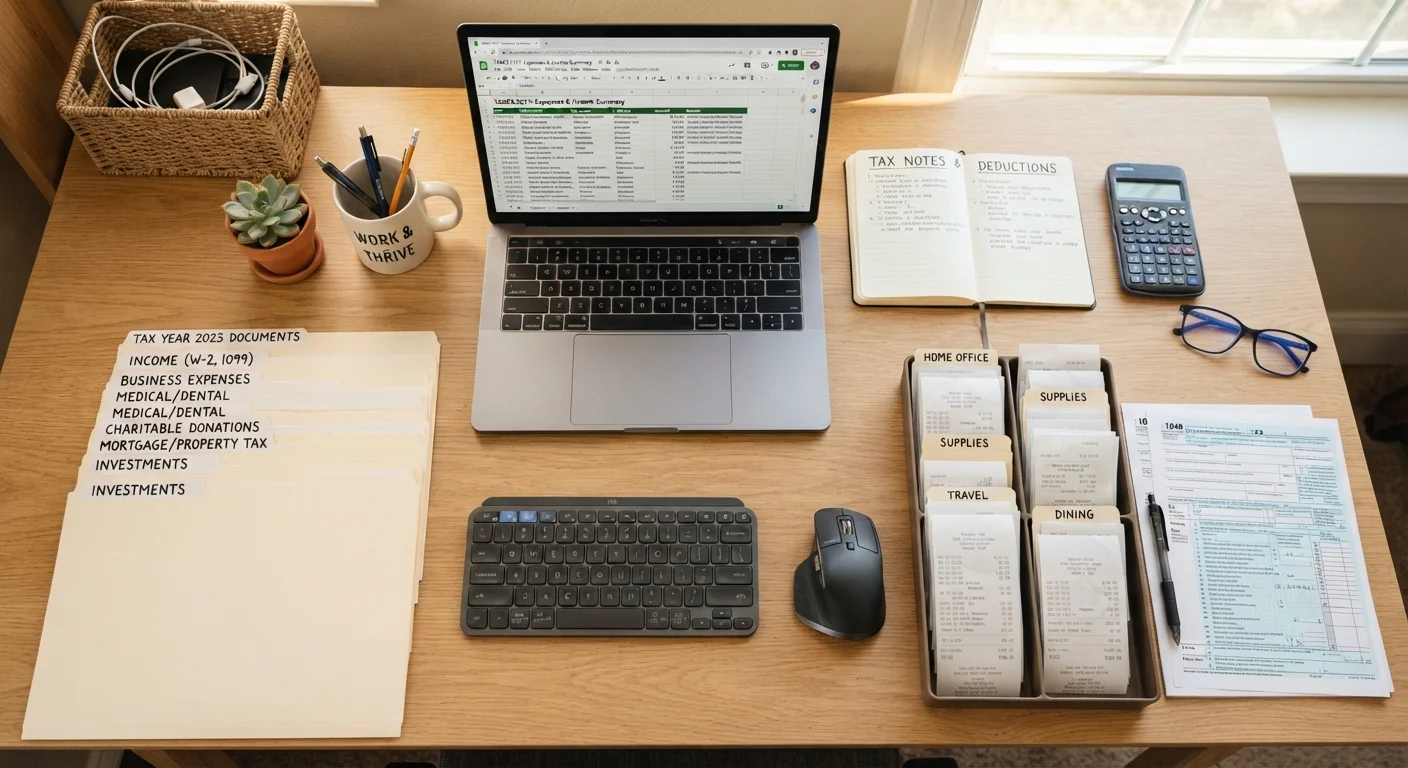
You don't need expensive software or elaborate systems. A clear folder structure - physical, digital, or both - is enough for most people. The key is consistency: every document goes into its designated place as soon as it arrives.
Once your system is in place, spend a few minutes each month filing new documents rather than letting them pile up. Pair this habit with your monthly budgeting review so it fits naturally into your routine.
What to Track and Where to Keep It
Think of your records in three broad groups: income documents, deduction and credit support, and official tax forms. Each group needs its own dedicated space.
Income documents include W-2s from employers, 1099 forms for freelance or investment income, and records of any other earnings. These typically arrive between January and early February each year.
Deduction and credit support covers receipts for charitable donations, mortgage interest statements, medical expense records, education costs, and business expenses if you're self-employed. For detailed guidance on what qualifies, visit keeping records that support your deductions and credits.
Official tax forms are the returns, schedules, and payment confirmations from prior years. The IRS generally recommends keeping these for at least three years from the date you filed, though some situations call for longer retention.
Going Digital Without Losing Control
Paper receipts fade, get lost, and take up space. Scanning or photographing documents as you receive them - and storing them in a clearly labeled cloud folder - creates a reliable backup that's easy to search come filing time.
Name files descriptively: 2024_charity_receipt_redcross_jan.pdf is far more useful than scan0047.pdf. Keep one master folder per tax year with subfolders mirroring your physical filing structure.
Before you sit down to file, use the documents checklist to confirm everything is accounted for. And once you're ready to review potential savings, the year-end deductions and credits checklist helps ensure you haven't overlooked anything you're entitled to claim.
This article is for general informational purposes only and does not constitute personalised tax or legal advice. Tax rules can change, and individual circumstances vary. Consult a qualified tax professional for guidance specific to your situation.