
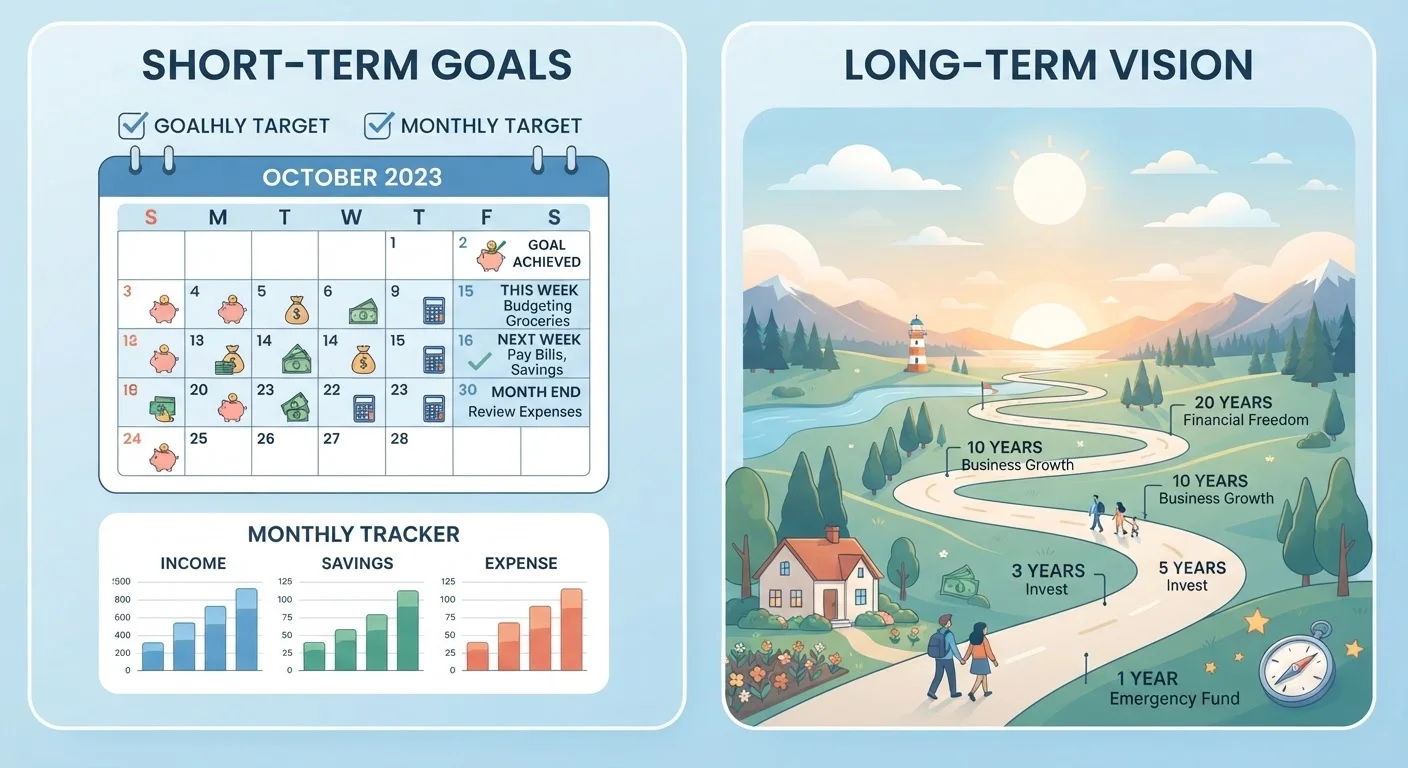
What Makes a Goal 'Short-Term' or 'Long-Term'?
The simplest way to categorise any financial goal is by how soon you need the money. Short-term goals are generally those you plan to reach within one to three years - building an emergency fund, paying off a credit card, or saving for a vacation. Long-term goals extend five years or more into the future - retirement savings, buying a home outright, or funding a child's college education.
Some goals fall in between, often called medium-term goals (roughly three to five years), such as saving for a car or a home down payment. For a fuller breakdown of all three tiers, see how to categorise goals by time horizon.
Why does the label matter? Because the timeline determines the tools you should use, the risk you can afford to take, and how you track progress. Treating a short-term goal like a long-term one - or vice versa - is one of the most common planning mistakes beginners make.
How Each Goal Type Works - and Why They Differ
Short-term goals demand liquidity and stability. Because you need access to the money soon, you generally keep it in lower-risk places - a high-yield savings account or a money market account - where the balance won't drop sharply right before you need it. The trade-off is modest growth, but that's acceptable when safety and access matter most.
Long-term goals, by contrast, can tolerate more ups and downs because you have time to recover from market dips. This is why many people direct long-term savings into investment accounts - though all investing carries risk and past performance does not guarantee future results. For a deeper look at how time horizon shapes investment choices, explore short-term vs. long-term investing approaches.
| Criterion | Short-Term Goals | Long-Term Goals |
|---|---|---|
| Typical timeframe | Up to 3 years | 5+ years |
| Primary priority | Access and stability | Growth over time |
| Common vehicles | Savings or money market accounts | Retirement or investment accounts |
| Risk tolerance | Low - can't afford big drops | Higher - time to recover |
| Examples | Emergency fund, debt payoff, vacation | Retirement, home purchase, education fund |
| Measurement | Monthly savings milestones | Annual contribution targets |
Understanding your fixed and variable expenses is a helpful first step before committing dollar amounts to any goal - you need to know what's left over each month to allocate.
Running Both at the Same Time
Many beginners assume they must choose between saving for now or saving for later. In practice, a healthy financial plan includes both - just in different proportions based on your current situation.
A common starting framework:
- First: Build a small emergency fund (even $500-$1,000) before aggressively tackling other goals. This prevents debt spirals when unexpected costs arise. See how an emergency fund differs from general savings.
- Next: If your employer offers a retirement match, contribute at least enough to capture it - that's a long-term goal with an immediate benefit.
- Then: Direct remaining funds toward your most pressing short-term goal while continuing steady long-term contributions.
The key insight is that short-term wins aren't a detour from long-term success - they are the foundation. Consistent savings habits, reduced debt, and a financial cushion all make it easier to stay committed to a long-horizon plan. For practical guidance on structuring measurable milestones for both goal types, breaking big goals into checkpoints can keep motivation high.
Finally, understanding when a goal calls for saving versus investing is worth exploring: saving goals and investment goals serve different purposes, and matching each goal to the right approach avoids unnecessary risk.
This article is for general informational purposes only and does not constitute personalised financial, investment, tax, or legal advice. Please consult a qualified financial adviser for guidance tailored to your individual circumstances.